Skip to content

Animals

  • Blue surgeonfish

    Blue surgeonfish

    order: Perciformes
    family: Acanthuridae

    Paracanthurus hepatus
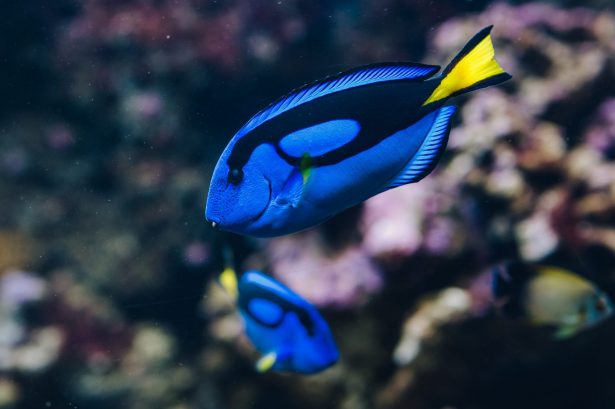
    The only representative of the genus Paracanthurus.

    The Blue surgeonfish is found in the coastal waters of the Indo-Pacific Ocean, from the coasts of East Africa to Oceania, excluding the Red Sea. It has a wide extent of occurrence, but is not common. We can meet it, among others, on the coral reefs of the Philippines, Indonesia, Japan, Australia, New Caledonia, Samoa, as well as Sri Lanka. It is associated with coral reefs, it lives mainly near their outer parts, where sea currents are stronger. The extent of occurance is related to its love of swimming. It inhabits coastal waters with a bottom covered with vegetation. It can be observed at depths from 1 to 40 meters. Its maximum length is 31 cm, but they usually grow up to 20 cm. It can live up to 30 years in the wild, and 8 to 20 years in captivity. Its food is comprised mainly of zooplankton and algae. Juveniles feed exclusively on plankton. It is a very important inhabitant of the reefs, because he cleanses corals of algae growing on them, thus keeping them in good condition. Most often, this species lives in pairs or form small groups of 8 to 14 animals.

    Its characteristic feature is its coloration, blue body with black back and yellow fins. The attractive colors makes it a popular aquarium fish. Until recently, all individuals that we could admire in aquariums were caught directly from their natural environment. Currently, this species is successfully propagated in laboratory conditions, but not on a global scale. The larvae differ significantly in color from adults. Their body is almost transparent and silvery. It gradually turns blue, yellow pigmentation appears at the very end of development. At night its blue color pales, presumably avoiding the attack of nocturnal predators. Another characteristic feature of the Blue surgeonfish is the presence of sharp, poisonous spikes located on the tail, one on each side, which are used for defense. It is not of great commercial importance, but it can account for a significant proportion of inshore fisheries.

    Its meat has an unpleasant smell and is poisonous. After ingesting it, the symptoms of food poisoning may occur.

    This surgeonfish does not produce a toxin (ciguatoxin) by itself. It is accumulated in its body along with the consumed algae that produce toxin.

    Why is it blue?

    The fish do not have blue pigment in their skin. The blue color that we can see is nothing but a light phenomenon. Isidophores, i.e. pigment cells that reflect light, are responsible for this phenomenon. In the light they create iridescent colors, but by proper orientation of the schematochromes (prism-like structures, refracting and dispersing visible light to the surroundings,) and using biochromes (biological pigments) as a filter, they create a blue color.
     

  • Spotted sharpnose

    Spotted sharpnose

    order: Tetraodontiformes
    family: tetraodontidae

    Canthigaster solandri

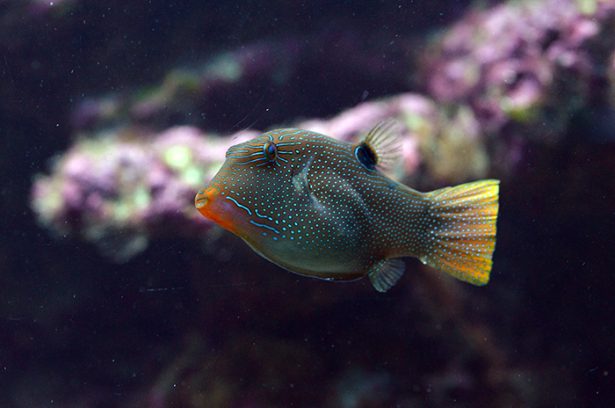
    This species is found in the Indo-Pacific, from East Africa east to the Tuamotu Archipelago, north to the Ryukyu Islands, and south to New Caledonia and Tonga. Its presence has also been reported in Hawaii, but is not numerous. Populations from the Philippines, Indonesia, New Guinea, Queensland and Belau differ slightly in coloration. Species from the Pacific seem to be slightly darker compared to those in the Indian Ocean. Puffer inhabits a variety of habitats, including open sea areas, vegetated areas, lagoons, coral reefs and artificial reefs. Its depth range is 10 to 36 meters. Like the other representatives of the genus Canthigaster, it is rather small, it only grows up to 12 cm in length. It feeds mainly on thread-like algae, but also sponges, corals, tunicates, molluscs, echinoderms, polychaetes and crustaceans. It uses its four impressive, strong teeth for nutrition. Teeth grow all their lives, and to grate them, the Spotted sharpnose eats hard food. It is often seen in pairs, sometimes in small groups. It is an optional monogamist, which means that the male is forced to associate with one female due to the limited number of individuals. They are oviparous. Females build nests to lay their eggs in and look after them. This fish has an interesting coloration. Its body is greenish brown and is covered with many light blue spots and lines. Bright colors inform predators about its toxicity. It makes characteristic noises.
    How does the puffer defend against predators?

    The Spotted sharpnose creates a symbiotic relationship with the bacteria Pseudoalteromonas tetraodonis, which produce tetradotoxin – a potent neurotoxin. Fish accumulates the toxin in the skin, gonads and liver. The degree of animal toxicity depends on the geographical area and the season of the year. When it is stressed or dies, it releases a toxin into the water. Despite its toxicity, it is consumed by people, but it must be prepared in certified restaurants. Inappropriate preparation of the fish may result in the death of the person who consumed it. Another form of defense against predators is to increase in body size. When it feels threatened, it pumps water into its stomach, thereby increasing its volume, which in most cases discourages a predator which is unable to swallow it. An additional form of protection is the presence of a ‘false eye’ located at the dorsal fin. Its task is to confuse predators about the actual location of the fish head.


  • Ocellaris clownfish

    Ocellaris clownfish

    Order: Perciformes
    Family: Pomacentridae

    Amphiprion ocellaris

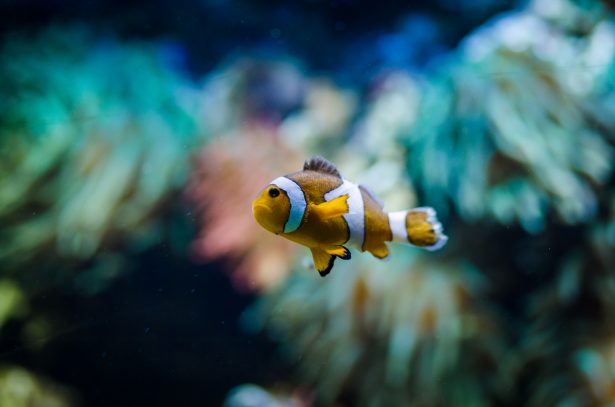
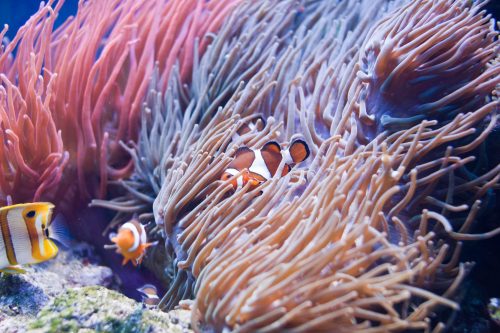
    Certainly Andrew Stanton contributed to the promotion of this fish, seeking inspiration for his new work, looking for a picture that would embody the magic of the ocean. While viewing photos of marine fauna, he came across two individuals of the spotted clown who live in symbiosis with anemones in their natural environment, which makes them a grateful object for observation both at home and in many zoos.

    When breeding clownfish, remember about sex variability. Within the herd, the largest and dominant individual becomes a female, and the next largest in size becomes male. Other fish persist in asexual form and stop their growth. Sex dimorphism is very pronounced in this fish. When the female dies, the mature male will change sex and become a female, and the next size individual matures sexually and becomes male. If in the breeding conditions a pair or several clownfish of the same size appears in the tank, the time is required for the emergence of the dominant individual due to competition in the group.

    The female lays eggs in the chosen place, which are fertilized by the male. Spawning is associated with the phases of the moon and should take place about every 27 days. Mature couple in favorable conditions will spawn periodically every several days. The standard factor that stimulates fish to breed is high food quality, which should be diverse. Parents should not be separated from laid eggs because they remove impurities and aerate the eggs by fanning their fins, which protects them from mold. Adult fish should be left with eggs for as long as possible. The juveniles hatch after about a week and intensively feed. If an aquarist would like to control the hatching time to some extent, one can darken the aquarium, because in nature the hatching occurs after dark. Growth is very slow. Properly fed clownfish reach 3-4cm in size at 6-8 months of age. The success in raising young clowns lies in frequent but reasonable feeding with living food.

    It is worth remembering to secure all filter inlets with a very fine plastic mesh or aquarium sponge so that increased water circulation does not lead to large losses in breeding. In larger aquariums (more than one species) other inhabitants of the tank can treat larvae and small fry as potential food.

    The ocellaris clownfish is one of the best known species of the genus Amphiprion, thanks to the movie “Finding Nemo?” Clownfish live in close symbiosis with anemones. It has been proven that thanks to a certain ingredient in the clown’s mucus, it is protected against burns by anemones. If the fish moved away from the host, it could quickly become a victim of predators. For protection, clowns repay by keeping the coral in good condition.

  • Midas cichlid

    Midas cichlid

    Amphilophus citrinellus

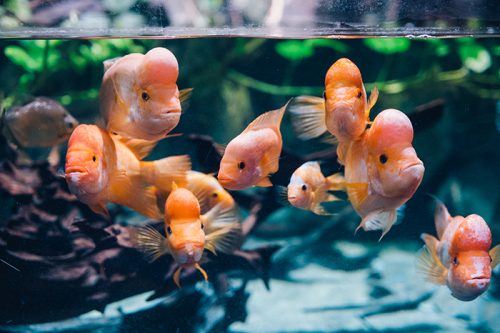
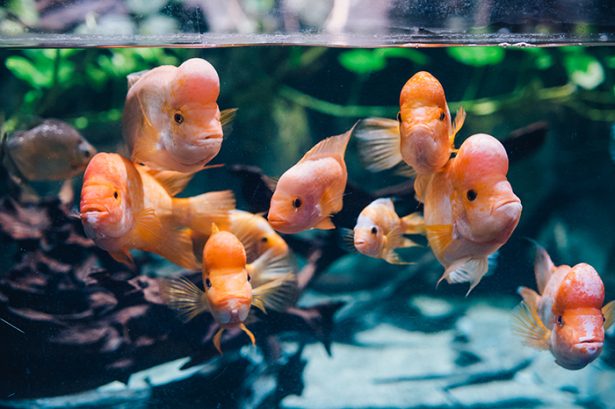
    The Midas cichlid belongs to the cichlid family (Cichlidae) – freshwater fish (except for one marine species). Most species of this family resemble perch – a stocky body, slightly jagged. As the family name suggests, these are fish that are characterized by exceptional care for offspring. Also interesting are their adaptations in terms of seeking a partner for reproduction. Among this family we will find various sizes, shapes and colors. The range of occurrence of some species is limited to one lake (strongly developed endemism).

    This freshwater fish in natural conditions usually has a less colorful coloration, however, most of them are bright orange and orange-red. Males appear with a tumor on the forehead, which indicates age and position in the herd. Cichlids reach a size of 25 cm. Couples of cichlids diligently guard their eggs and later offspring. While the female is guarding them, the male attacks every intruder who approaches them.

  • Butterlyfishes

    Butterlyfishes

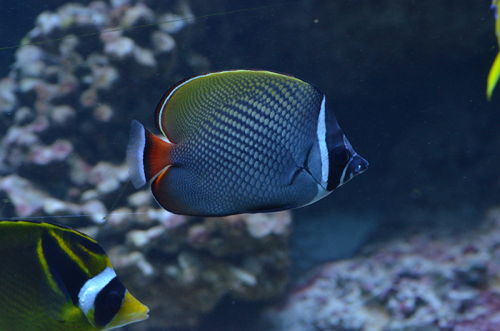
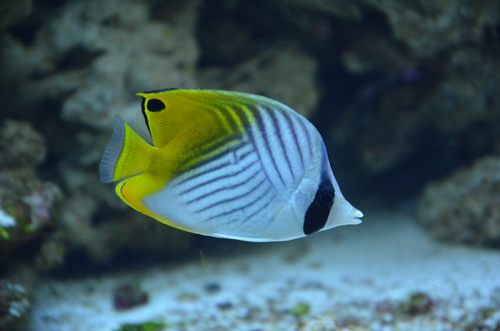
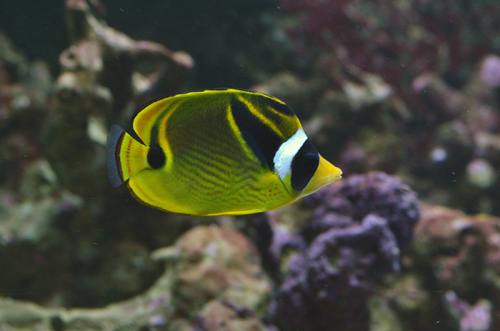
    Colorful representatives of the butterlyfishes (Chaetodontidae family) live among coral reefs, most commonly in the western Indo-Pacific. They differ in terms of color, but have common morphological features, such as laterally flattened body, characteristic fin shape, more or less elongated jaws. The shape of the mouth depends on the type of food consumed. They feed on small invertebrates, coral polyps, and algae.

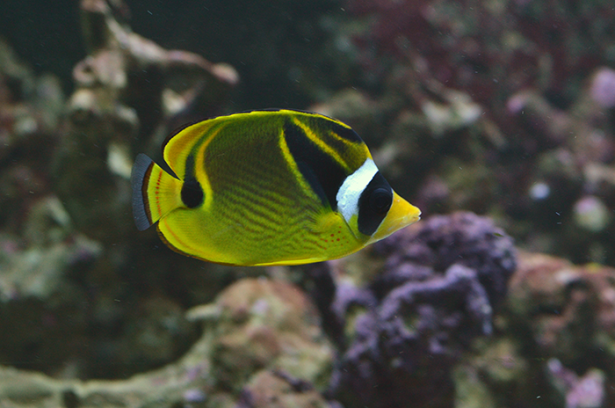
    Chaetodon lunula

    The Raccoon butterflyfish is very easily recognizable due to the black mask he has, which is why he is often called a bandit. During the day, under natural conditions, it usually remains hidden, while at night it looks for food. His relatively large eyes are an adaptive effect to night life.

  • Electric eel

    Electric eel

    Electrophorus electricus

    Order: Gymnotiformes | Family: Gymnotidae

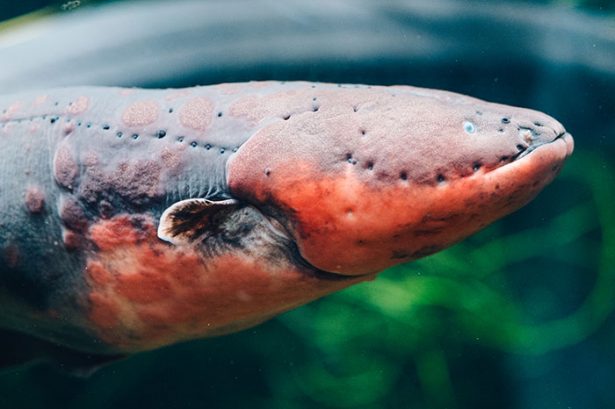
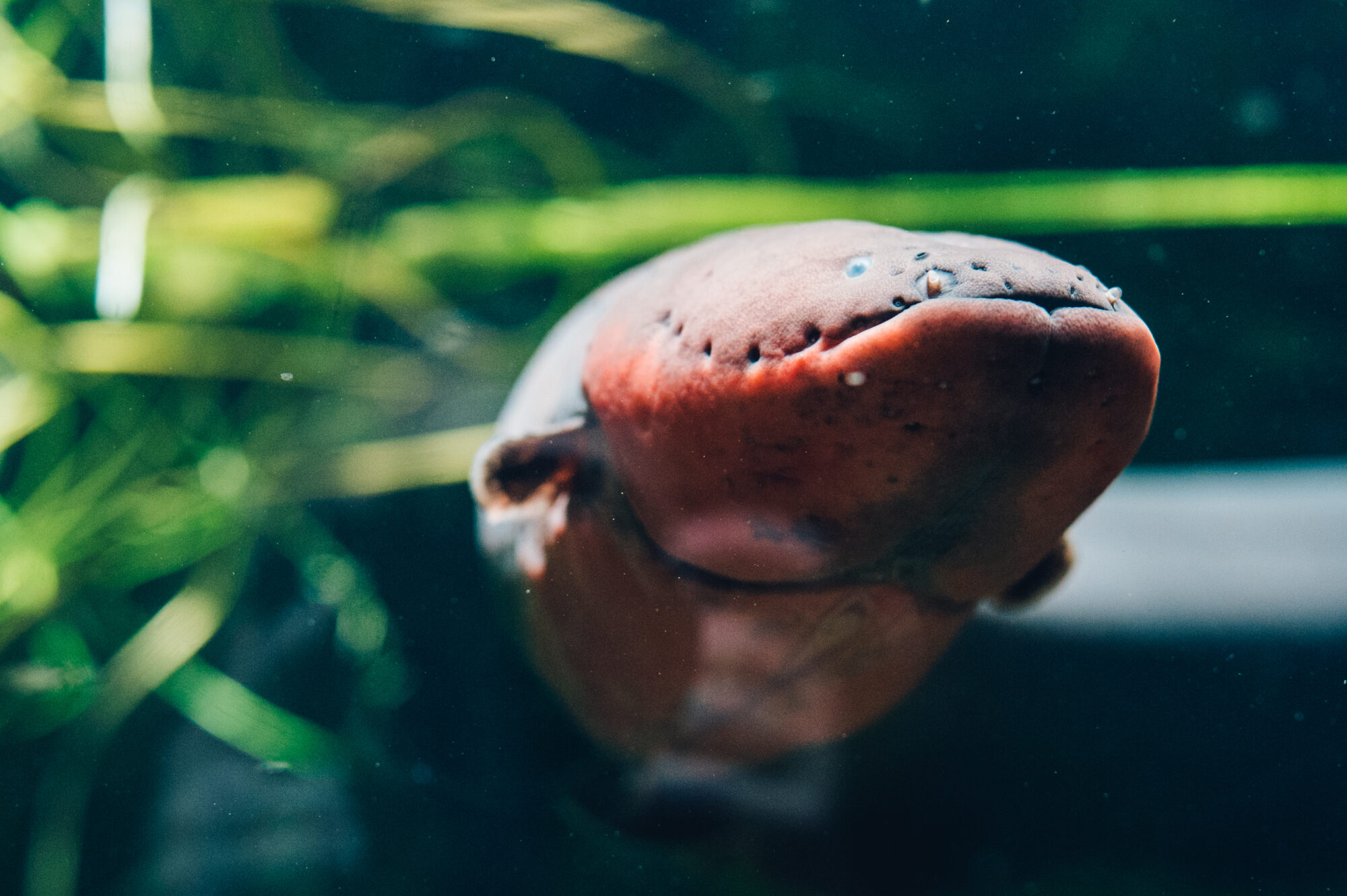
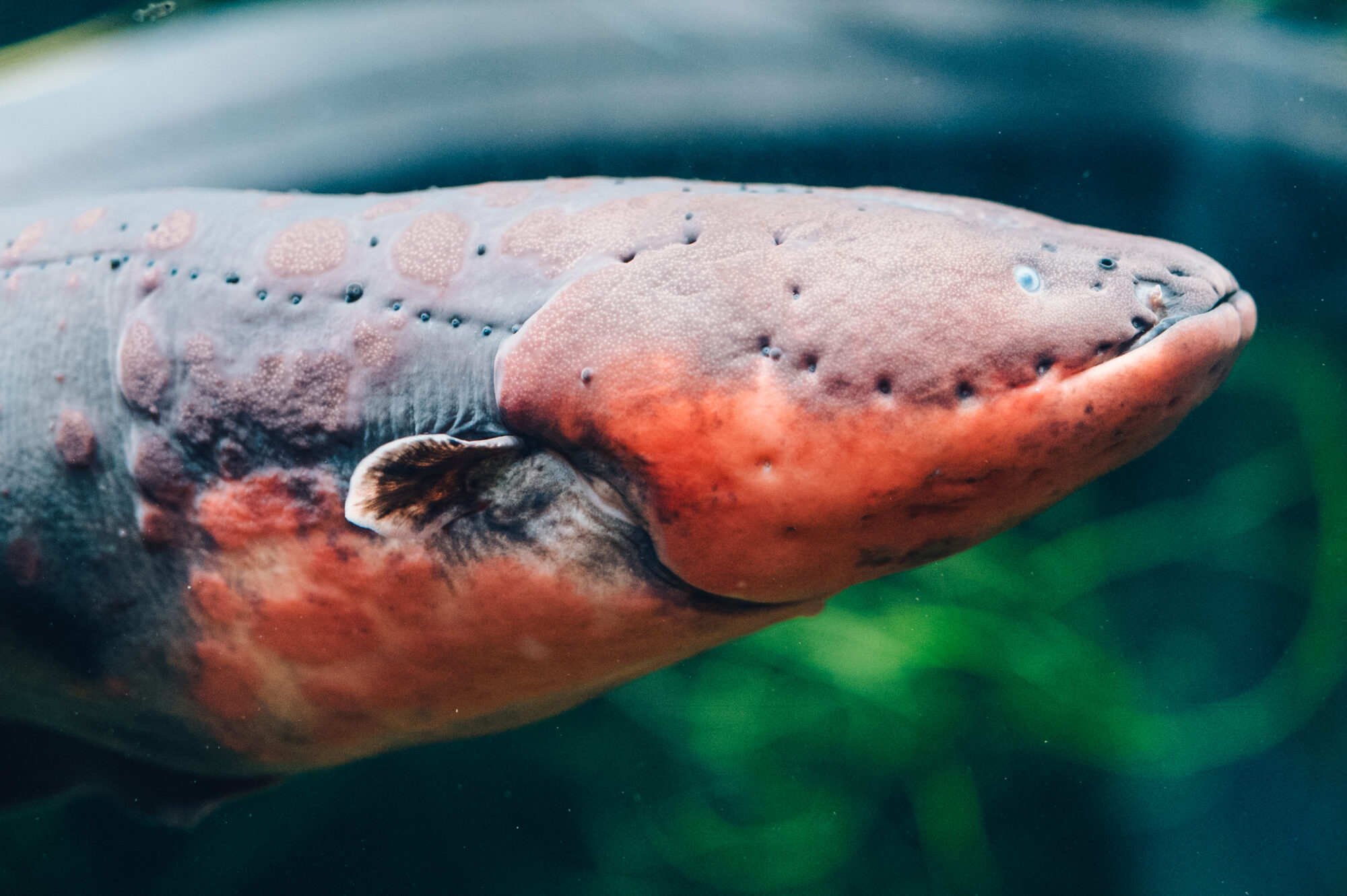
    This fish is commonly known as the electric eel. The name comes from the characteristic body shape that resembles an eel, but this fish is actually more closely related to the families Cyprindae and Siluriformes. These fish can be found in the waters of the Amazon River and the Orinoco River. They live in muddy currents enriched in salts and minerals that conduct electricity really well.

    They have a positive charge near their head and a negative one close to their tail end. They produce an electric charge at the front of their body that comes back through the water to the tail. This creates a closed circuit that has the shape of an electric cloud which paralyzes or kills everything around.

    There are electrolytes on the body of this fish, which receive electric stimuli from their surroundings. This is called electroreception. With the use of their special Hunter and Sachs organs, they send two types of electric discharges. Sachs’ organ is used as radar for electrolocation. The lower voltage of this organ helps them move through the muddy waters, which is especially useful because they lose their sight with age. Sachs’ organ is also used for sensing potential prey and partially blinding it, if the prey is small. This organ also plays a major role in finding a partner. When attacking larger prey, the eel activates Hunter’s organ, which produces a stronger discharge.

    This fish can regulate the strength of discharges according to its needs and the size of the prey. The strongest discharge ever captured was in a zoo in the United States and measured 600 V.

Skip to content