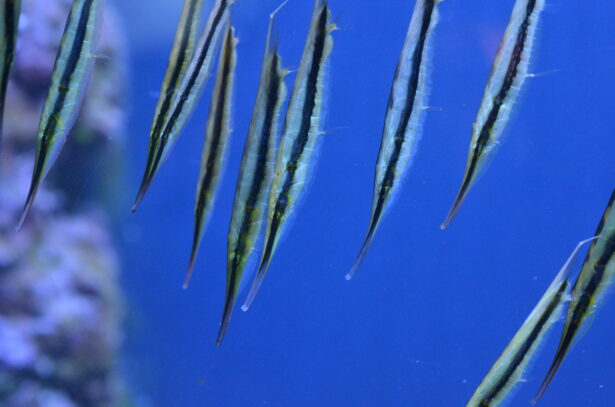
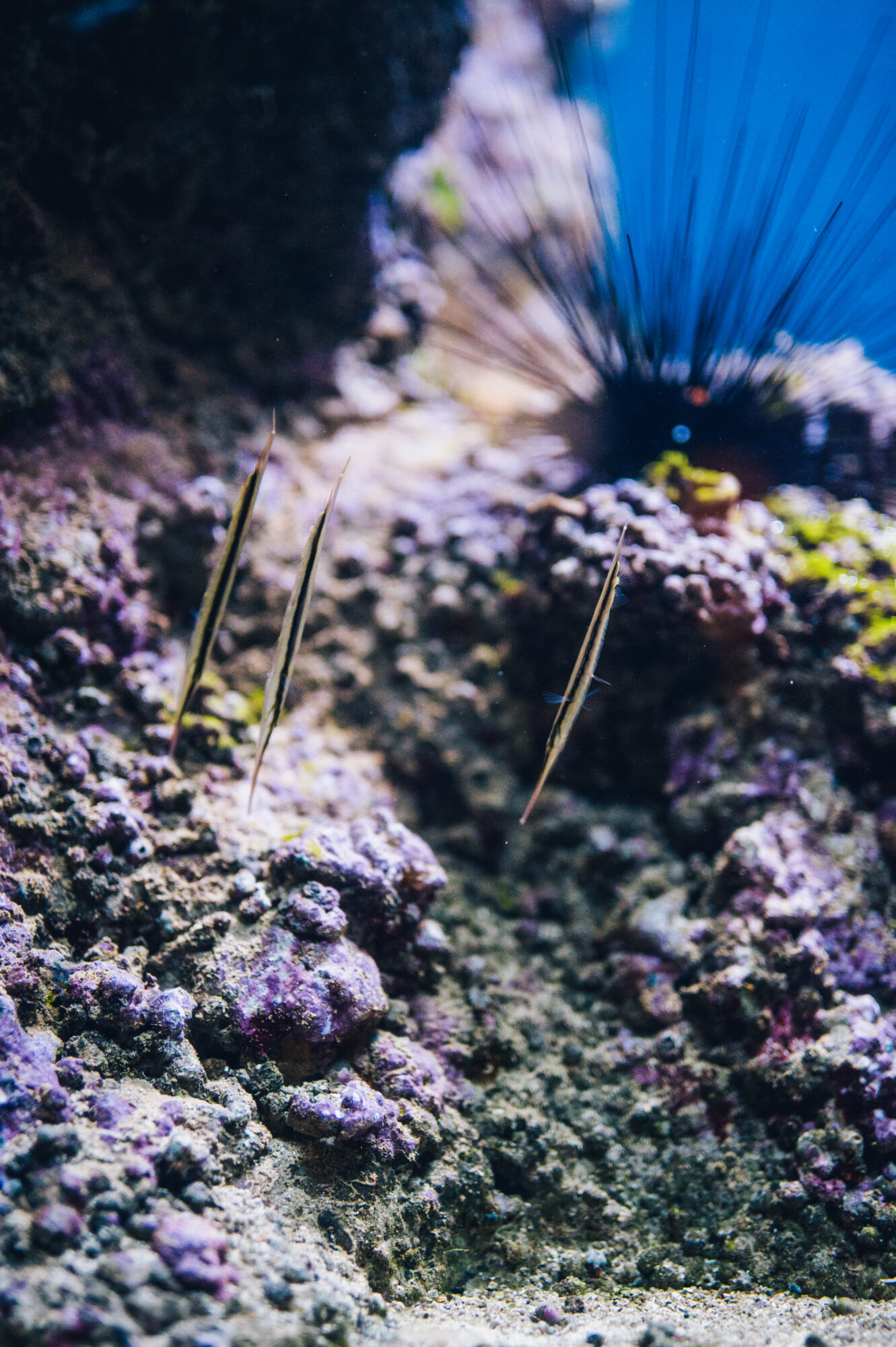
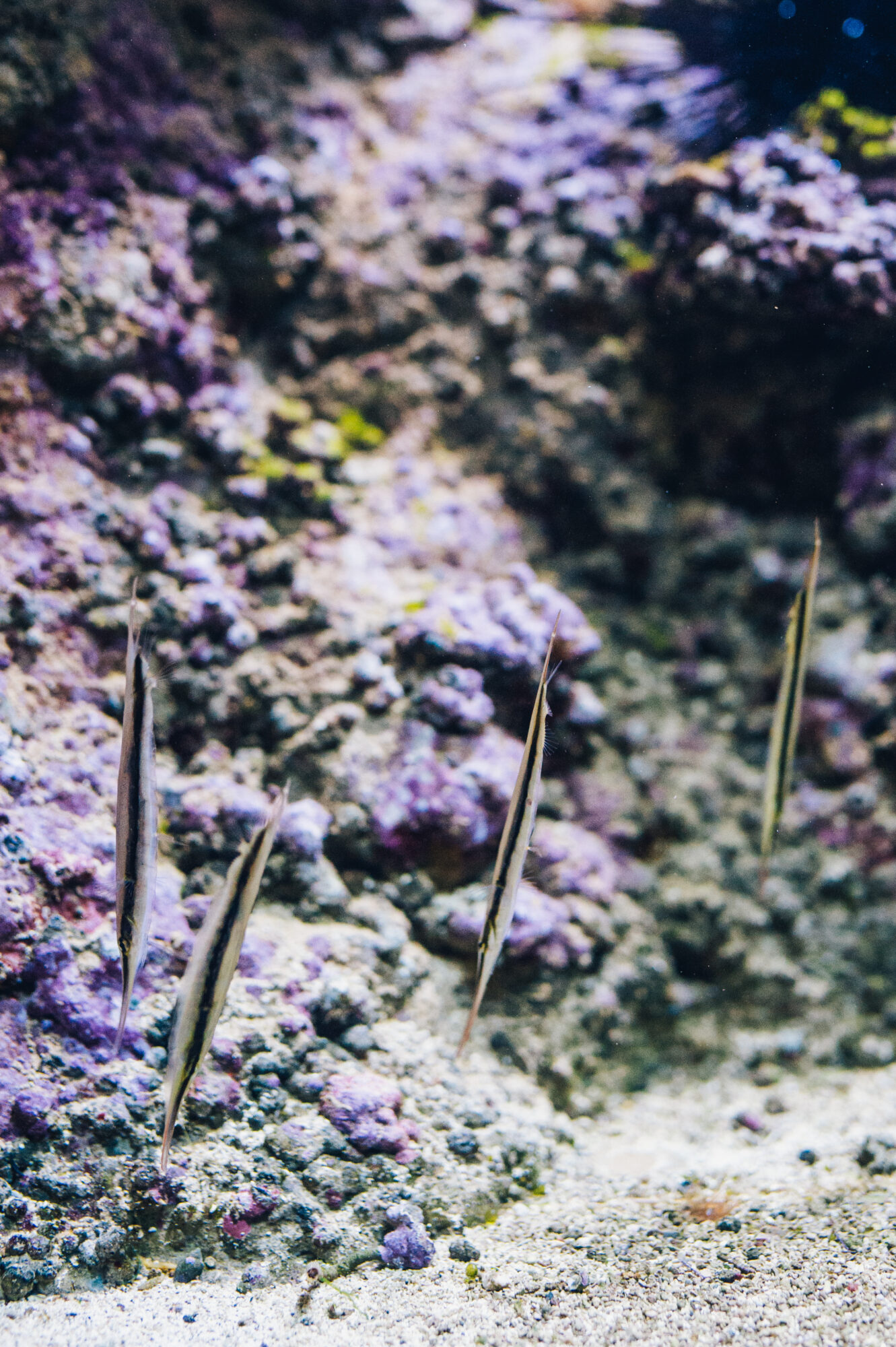
This species inhabits the tropical waters of the Indo-West Pacific, from East Africa to Australia, including Southeast Asia. Its habitat includes coastal waters ranging in depth from 1 to 42 meters, where coral reefs, seagrass, or Black long spine urchins are present. The razorfish swims in large, synchronized schools and seeks shelter among coral or sea urchin spines.
Appearance
This fish is remarkable due to its peculiar body shape and its unique swimming behavior, where it swims head-down with its back oriented in the direction of movement. Its 15-centimeter-long body is surrounded by armor composed of thin, transparent plates. It is elongated and has a long tubular snout without teeth. The ventral edge is strongly compressed and sharp. The razorfish lacks a lateral line. The fins of the razorfish are significantly reduced, transparent, and positioned unusually. The tail fin is located on the ventral side, while the dorsal fin, which possesses a long first spine, is situated at the end of the body where the tail fin typically is. The spine has a distinctive bend, and its tip is movable and usually curved at an angle towards the body.
The color of the fish’s body varies depending on the habitat, ranging from silvery-greenish to yellowish-brown or fairly pale. Individuals living among seagrass typically have a more greenish-yellow dorsal side with a scattered light brown stripe running from the snout to the tail fin. Those inhabiting sandy or rubble-covered habitats or near coral reefs have a light silver body with a black or brown stripe on the sides.
Feeding
This fish is carnivorous and feeds on small planktonic and benthic invertebrates. Larger individuals mainly consume amphipods from the Gammaridae family, while smaller ones prefer planktonic copepods.
Black long spine urchin – is its role solely to provide shelter for the razorfish?
The razorfish is a dioecious species, but without clear sexual dimorphism. External fertilization results in pelagic eggs and larvae. When the larva reaches a length of about 20 mm, it usually settles among the spines of the sea urchin. In contrast to the mature individuals, the bodies of juvenile specimens are stout, almost rectangular, with an undeveloped beak and the absence of a visible dark stripe on the sides of the body. Similar to the mature individuals, they are capable of changing body color depending on the habitat. This species has no commercial use. It is caught as bycatch and collected for sale in the aquarium industry.
In its natural environment, the razorfish hides among the spines of the sea urchins, and its coloration and mode of movement assist in this behavior. It serves as both a defensive and hunting mechanism. When faced with threats from larger fish, the razorfish seeks refuge among the spines of nearby sea urchins or coral. Its hunting strategy is also associated with hiding among the spines of the sea urchin, where it awaits small invertebrates. When the prey approaches, the fish attacks and attempts to capture it.
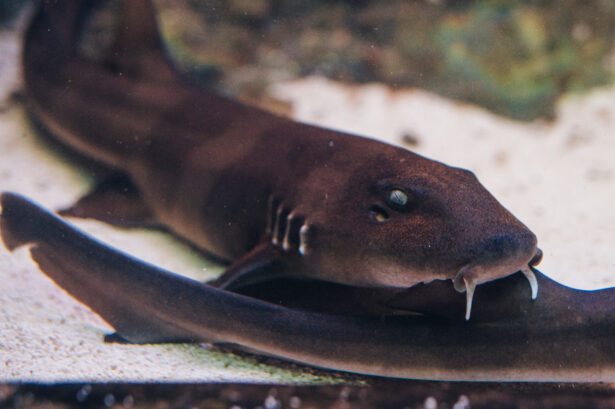
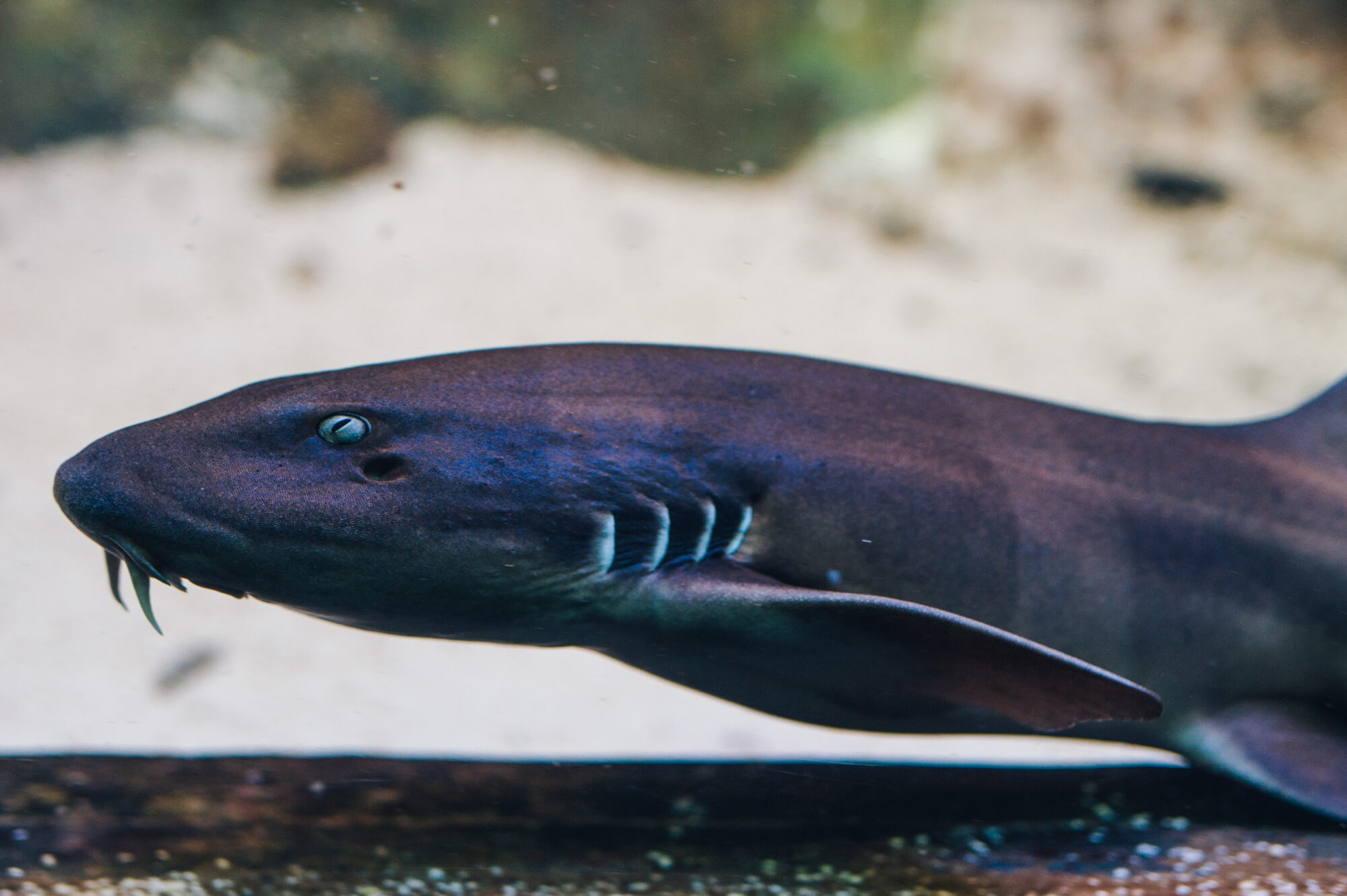
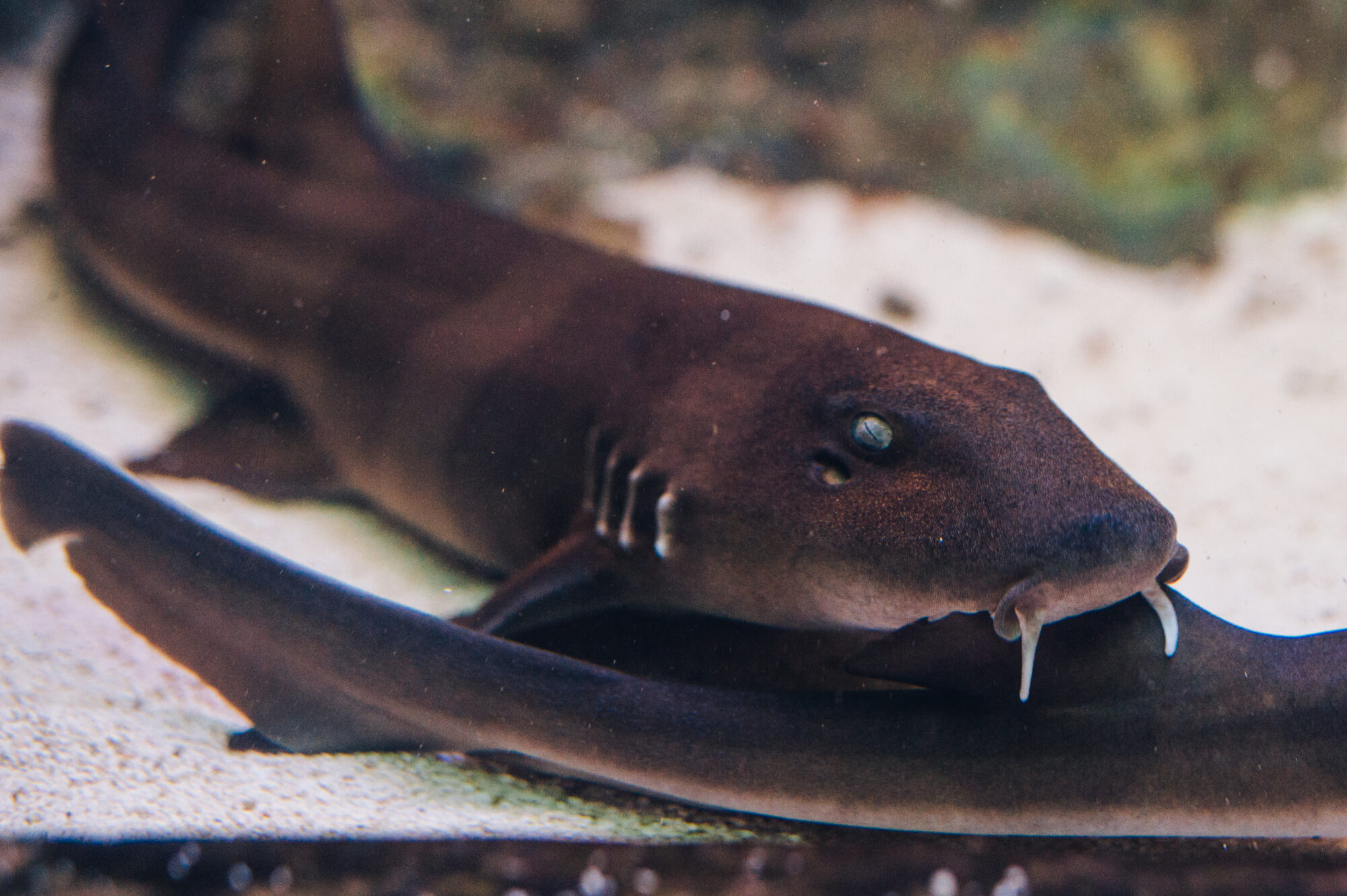
This is a small shark that lives on the seabed and inhabits the coral reefs and coasts of the western Indo-Pacific, from Australia to India and Japan. This shark is oviparous. It is quite popular in the aquarium scene due to its simple needs and tolerance to habitat changes, especially hypoxia (low oxygen levels in water).
It leads a nocturnal life, spending its days hidden in the nooks of coral reefs. Although sexual dimorphism is not especially apparent, the male can still be easily distinguished from the female by the presence of the clasper, composed of two elongated structures formed from pelvic fin parts.
Research conducted by the Steinhart Aquarium in California revealed that females can store the male’s sperm for a long period of time, making delayed fertilization possible. Juveniles have distinct black and white stripes on their bodies, which match the coral reef structures and serve as camouflage. These stripes are no longer visible in adults.
These sharks live up to approximately 25 years. Destructive fishing methods and habitat destruction threaten the population of this species.
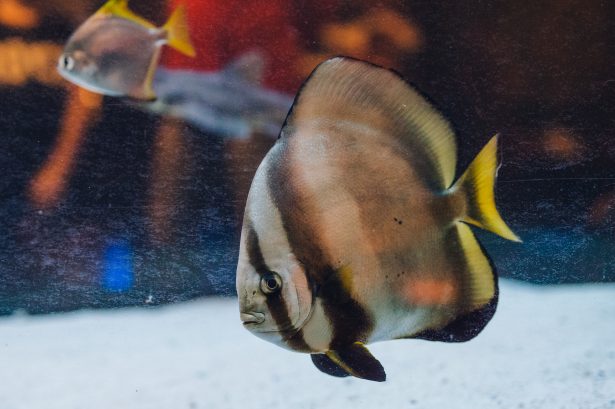
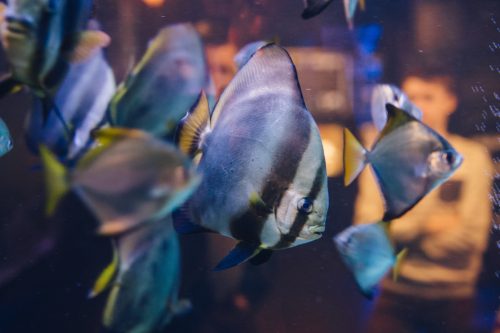
The Orbicular batfish inhabits the brackish and marine waters of the Indo-Pacific coral reefs. It is a species with a wide range of occurrence, but may be rare locally. The batfish is characterized by strong lateral compression of the body, a small head and a fine mouth. Its eggs are pelagic, meaning they float in the water, thanks to a drop of fat making them lighter than water. Juveniles occur singly or in small groups in mangrove habitats or sheltered lagoons. During the day, they pretend to be floating leaves that both serve as a source of food and a hiding place. The ventral, dorsal and anal fins are triangular, while the caudal fin is rounded. The body of adult specimens is yellow-silvery with two dark stripes visible, while the body of juveniles is dull orange with fine light dots. Adult specimens appear more frequently in mangrove environments. The maximum body length of the batfish is about 50 cm. This species is characterized by allometric growth, which means an uneven rate of development of body parts. This development is important for the camouflage of individuals at different stages of life. It is valued in China and Polynesia for its delicate meat with an interesting taste. As this species is prone to overfishing, attempts are made to breed it in aquaculture, among others, in French Polynesia and Tahiti, however, these aquaculture suffer from significant mortality due to bacterial contamination.
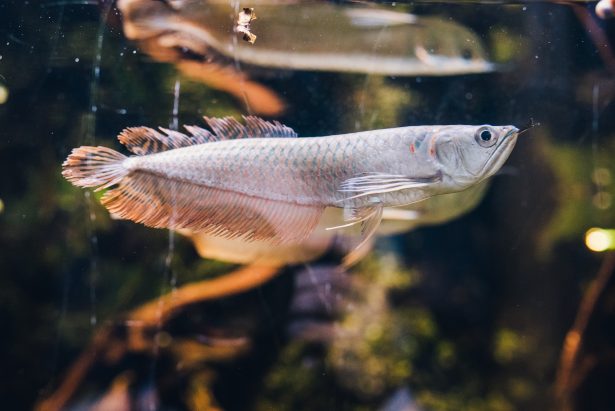
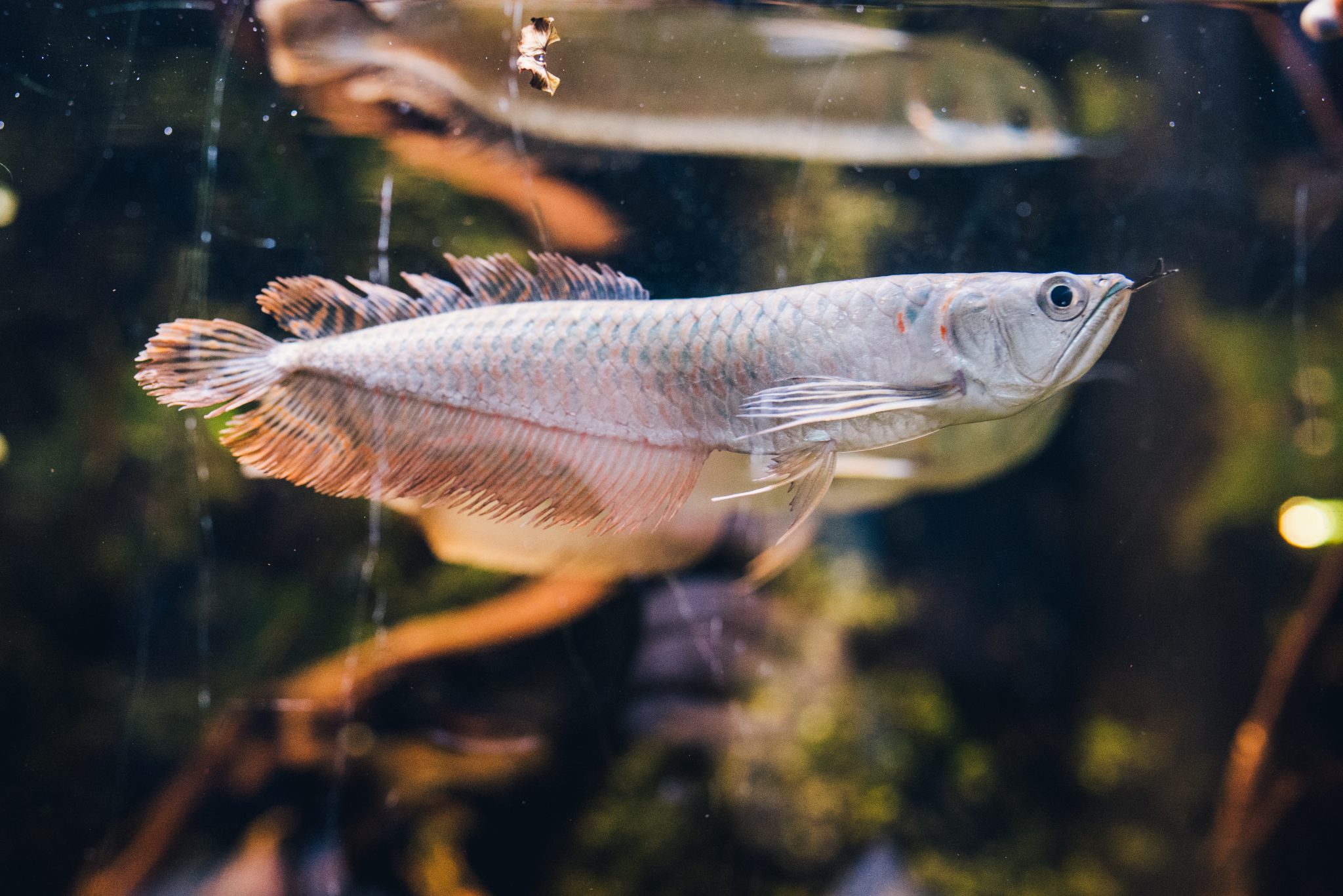
Ryba ta występuje w słodkich wodach Ameryki Południowej, a konkretnie w dorzeczach Amazonki, Essequibo i Oyapock. Zasiedla zarówno rzeki białe (o wodach bogatych w substancje mineralne), jak i czarne (z woda o bardzo niskim odczynie pH i dużej zawartości kwasów huminowych i fulwowych). W porze suchej zamieszkuje wolno przemieszczające się lub nieruchome dopływy, rozlewiska i laguny, zaś w porze mokrej przemieszcza się na obszary zalewowe. Ze względu na swoje drapieżne zachowania preferuje płytsze wody. Jest w stanie przystosować się do środowiska o niskim poziomie tlenu rozpuszczonego w wodzie. Używają wówczas swojego pęcherza pławnego jako dodatkowego narządu oddechowego.
Wygląd
Arowana osiąga długość wynoszącą 90 cm, chociaż są doniesienia o osobnikach dorastających do 1,2 m. Maksymalna udokumentowana waga wynosiła 6 kg. Jej wydłużone ciało pokryte jest bardzo dużymi, zdobionymi łuskami, skierowany ku górze pysk jest zwieńczony 2 kolcami, zaś płetwa grzbietowa i odbytowa rozciągają się praktycznie od połowy długości ryby, aż do płetwy ogonowej. Ubarwienie zmienia się wraz z wiekiem ryby. Na ciele osobnika młodocianego widoczne są niebieskie refleksy oraz żółto-pomarańczowy pasek, zaś osobnik dojrzały jest srebrzysty. Cechą charakterystyczną jest jej kościsty język, który jest pomocny w chwytaniu ofiary. Ponadto wiele elementów jamy ustnej zaopatrzonych jest w zęby, w tym szczęka, podniebienie, język oraz gardło.
Odżywianie
Jest to ryba wszystkożerna, która żeruje na powierzchni. Pozycja jej otworu gębowego pozwala jej chwytać zdobycz od dołu. Ma wyjątkowe zachowania drapieżne. Pozostaje blisko brzegu i czeka na przepływającą ofiarę. Zwykle ustawia się bokiem przy powalonym drzewie, wówczas jest mniej widoczna. W trakcie ataku potrafi wyskoczyć ponad powierzchnię wody. To szczególne zachowanie przyniosło jej przydomek „małpy wodnej” lub „ryby małpy”. Pomimo tego, że jej główną dietę stanowią owady, mięczaki, skorupiaki, mniejsze ryby i inne zwierzęta unoszące się na powierzchni wody, w jej żołądku znajdowano również szczątki ptaków, nietoperzy i myszy.
Rozmnażanie
Arowana jest gatunkiem rozdzielnopłciowym z tarłem odbywającym się na początku pory mokrej, czyli w grudniu i styczniu. W ciągu całego sezonu lęgowego samica jest w stanie wyprodukować od 50 do 250 jaj, zaś typowa wielkość pojedynczego lęgu wynosi od 12 do 30. Rola samicy ogranicza się do złożenia jaj. Opiekę nad potomstwem przejmuje samiec, który najpierw jaja, a później larwy i osobniki młodociane przenosi w swoim pysku. Narybek jest zwykle dość duży i już po wylęgu ma długość 50-75 mm. Młode przebywają w pysku samca do momentu wchłonięcia się ich woreczka żółtkowego, czyli około 2 miesięcy. W tym czasie rybacy wyławiają samce, wyjmują młode i przeznaczają je na sprzedaż. W handlu bardzo często dostępne są młode z widocznym woreczkiem żółtkowym.
Znaczenie gospodarcze
Wspólne korzystanie z zasobów populacji arowany srebrnej mieszkańców Brazylii i Kolumbii było przyczyną sporu między władzami w 2005 roku. Kolumbijczycy pozyskiwali młode arowany do sprzedaży jako ryby akwariowe, zaś mieszkańcy brazylijskiej Amazonii łowili dorosłe ryby na pożywienie. Spowodowało to gwałtowny spadek liczebności arowany. Wprowadzono zakazy połowów w Brazylii od 1.09. do 15.11., zaś w Kolumbii od 1.11. a 15.03. Arowana ma dużą wartość gospodarczą dla miejscowej ludności. Stanowi największe źródło białka w porównaniu z innymi rybami amazońskimi. Ponadto, ze względu na niską zawartość tłuszczu, jest uważana za najbardziej strawną i najmniej podatną na choroby. Mieszkańcy Coboclo z Amazonii uważają ją za jedyny dopuszczalny pokarm dla kobiet w okresie połogu. Arowana ma również wielką wartość w branży akwarystycznej, o czym świadczy jej sprzedaż na wielu komercyjnych stronach internetowych oraz ceny jakie osiąga. Jest to jednak najtańszy spośród wszystkich gatunków arowan. Okaz znacznie rzadszej arowany azjatyckiej został sprzedany za 300 tysięcy dolarów. Kostnojęzykowe to jedyna rodzina ryb słodkowodnych, której przedstawiciele żyją po obu stronach Linii Wallace’a, z czterema ważnymi gatunkami w Ameryce Południowej, jednym w Afryce, jednym w Azji Południowo-Wschodniej i dwoma w Australii.
Czy arowana może przetrwać w wodach Polski?
W 2016 roku zaobserwowano pojedynczego przedstawiciela arowany srebrnej w Jeziorze Powsinkowskim. Osobnik ten miał 40 cm długości i był w kiepskiej kondycji. Jego ciało było poranione, najprawdopodobniej po atakach innych ryb. Nie ma szans, aby przetrwał on w zbiornikach słodkowodnych Polski, ze względu na niską temperaturę w nich panującą.
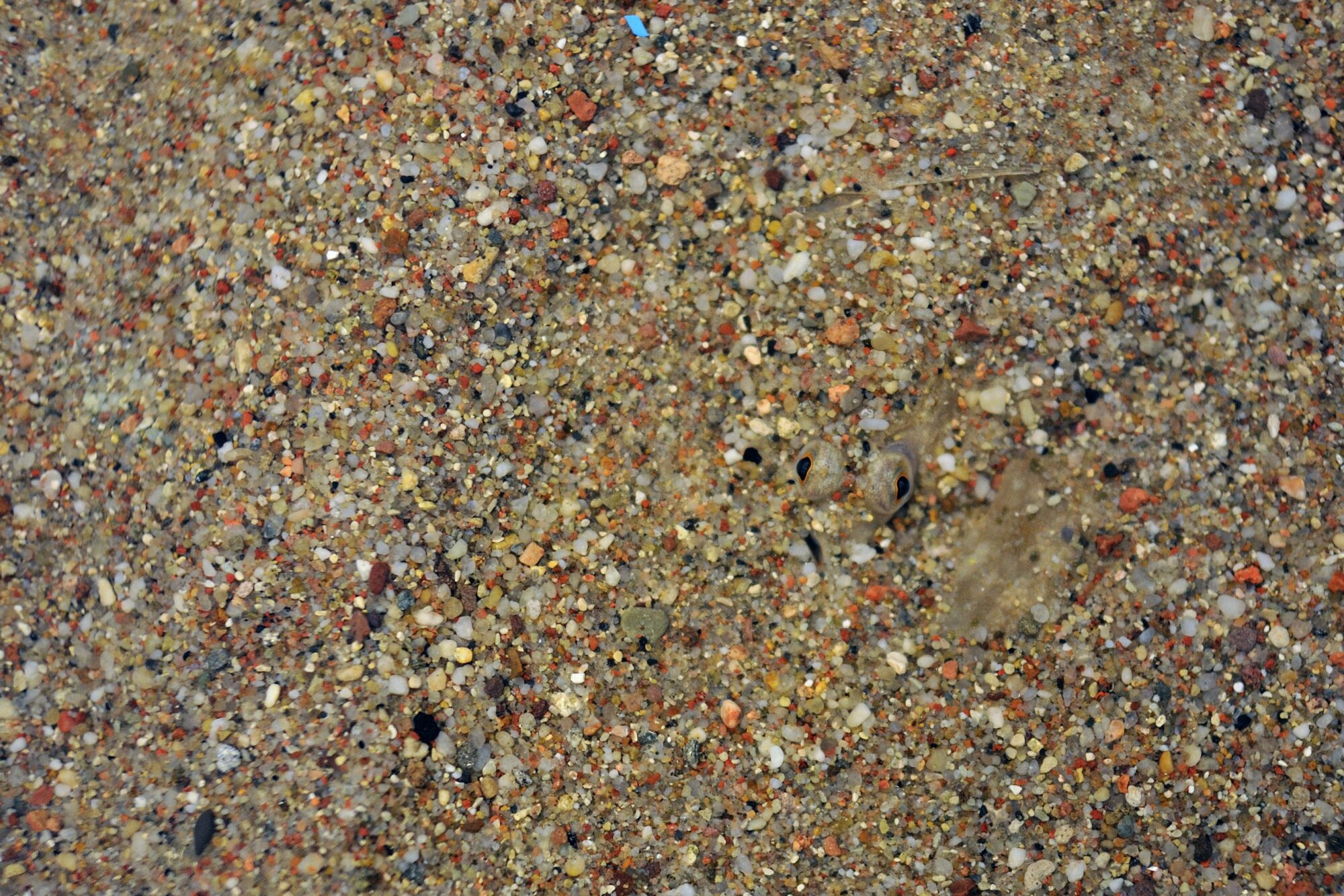
This flat fish inhabits European coastal waters, ranging from the Barents Sea and the White Sea, through the Norwegian Sea, the North Sea, the Baltic Sea, and the Bay of Biscay, to the Mediterranean Sea. It was introduced to the United States and Canada by pure chance, probably through transport in ballast water. Although it is a sea species, it can also be found in salt waters and up rivers, where it lives near the bottom at depths of up to 100 m. It is a nocturnal species that buries itself in sand during the day to wait for prey or hide from predators.
Appearance
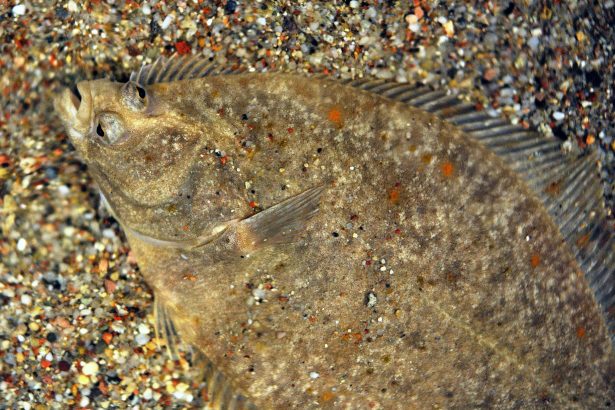
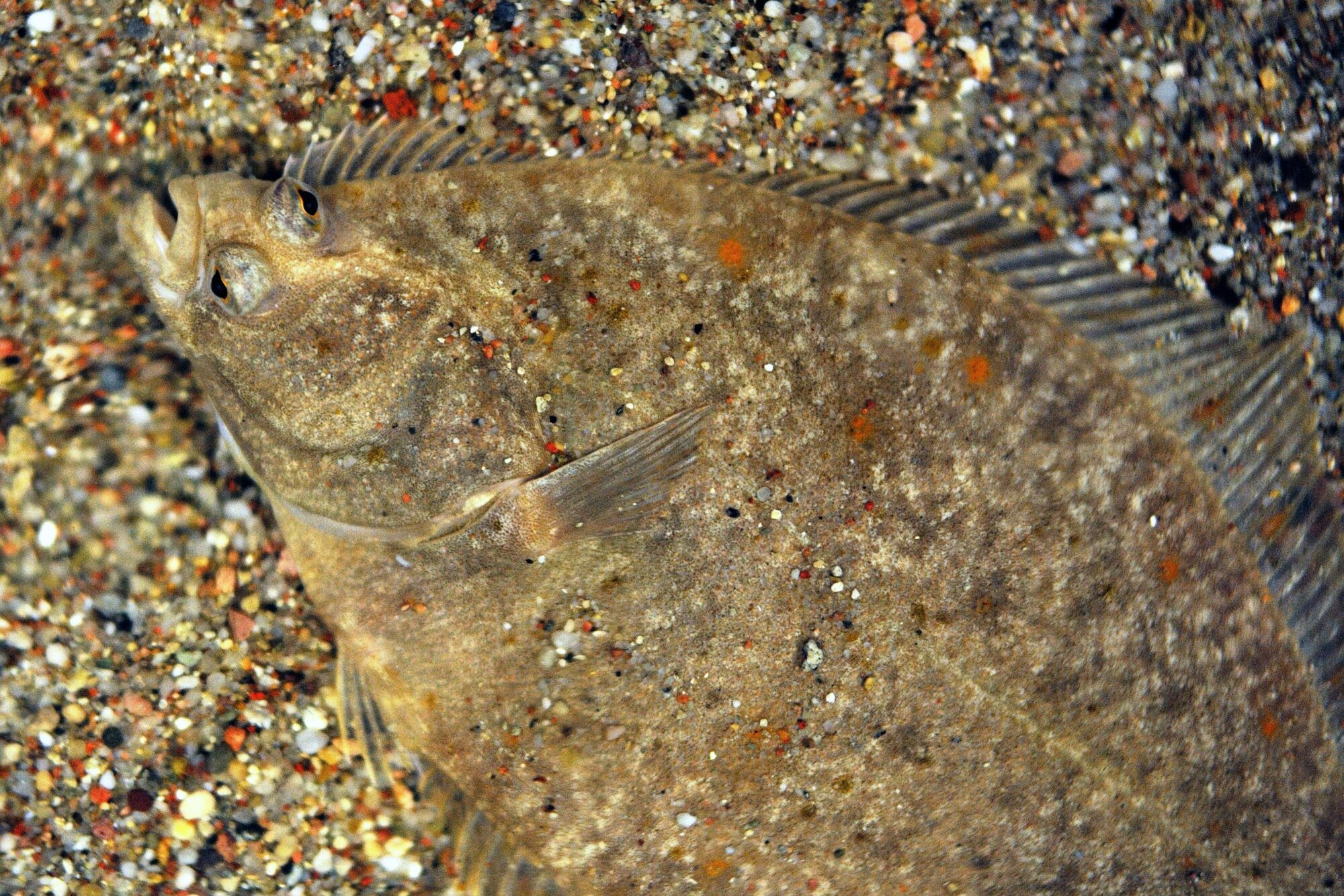
Adults of the species typically grow up to 50 cm in length, although they can reach up to 60 cm and weigh up to 14 kg. The European flounder found in the Baltic Sea is much smaller, reaching around 35 cm in length and living from 8 to 9 years. The flounder has an asymmetrical and heavily flattened oval-shaped body, with a height that is half of its length. As this fish swims and lays on its side, we cannot discern a dorsal and pelvic side when we talk about its coloration. Therefore, we have to describe the visible top and bottom parts. The top is dyed with colors ranging from olive to deep brown with red and brown spots, depending on the habitat. The bottom side is always white. This fish can change its coloration to blend in. For example, flounders at sea bottoms with rocks will be darker than those at sea bottoms made entirely out of sand. Its body is covered in scales, some of which are rough bone plates, especially sharp along the lateral line and at the base of its odd fins. This distinguishes the European flounder from other plaice. Its small mouth limits its diet to small organisms.
Sustenance
The European flounder looks for food near the sea bottom above which it swims, comprising of polychaetes, mollusks, snails, crustaceans, and small fish. The juveniles, which are planktonic, eat plankton and the larvae of insects. It is a gonochoristic animal, reaching sexual maturity at the age of three. Individuals that spend their summer in fresh waters start their journey to the open sea in the fall to spawn. Spawning takes place in very salty waters, at temperatures between 3 and 7°C, and at a depth of 30 to 300 meters. In the southern part of the Baltic Sea, the spawning occurs from March to May and takes place in the Słupsk Furrow and the depths of the Gdańsk and Bornholm Basins, and coś Arkońskiego. The female lays from 100,000 to 2 million grains of roe, which float on the surface. Hatching is dependent on the temperature and takes place during the 5th and 11th day of the laying. The larvae’s length after hatching is around 3 mm, and its body is symmetrical. The transformation begins when it reaches 7 mm. The juveniles migrate to the shallows and up rivers. The flounder is an important species in the fishing industry and is valued for its meat. It can also be found in aquariums. The P. flesus species has six discernible subspecies, depending on the habitat. These are the nominative subspecies (upon which the European flounder was first described), White Sea, Northern, Baltic, Mediterranean, and Black Sea flounder.
Flounder – a fish with eyes on one side
The larva of this fish is symmetrical after hatching. Its body begins to transform when it reaches a length of 7 mm, and the eye starts its journey. By the time a juvenile reaches a length of 1 cm, one of its eyes is already in the middle of its head. The eye moves simultaneously with the fish’s growth and eventually nears the second eye. The symmetry of the fish’s body changes at the same time as the eye’s journey. Initially, the larva moves like any other fish, with its back up. However, over time, the symmetry shifts either to the right or left, and ultimately, the juvenile swims and lies on its side. In 70% of the cases, the left side becomes the bottom side, which means that both eyes are on the right side. Although plaices are distinguishable from other fish today, they probably evolved from forms similar in shape to modern Percidae fish. Their ancestors had symmetrical bodies, which is evident from the presence of symmetrical larvae that undergo an extraordinary transformation.
In the Chetonidae family, 132 species of fish were distinguished, belonging to 12 different genera, most of them included in the genus Chaetodon. These animals are associated with the tropical waters of the Pacific, Atlantic and Indian Oceans. Some also prefer warm temperate waters. The greatest diversity and abundance of Chetonidae is found in the Indo-West Pacific, from Australia to Taiwan. Only 4 species are found in the eastern waters of the Pacific Ocean and 13 species in the Atlantic Ocean.
Habitat
These fish are closely related to coral reefs. They can also live among seagrass, in deep muddy plains or in shallow lagoons. Juveniles of many species inhabit areas other than mature ones, such as tidal basins, rock reefs, and shallow coral-free areas. Chaetodontidae are most commonly found in shallow waters below 20 meters deep, but some species are seen at depths around 200 meters. Although they are typically marine animals, some are also found in brackish waters of estuaries.
Life
These animals move around the reef very actively during the day and then forage, while at night they hide in crevices and change their coloration to a more subdued one. They usually live in pairs. Fish that eat zooplankton form herds, while juveniles are loners. The body size of the fish varies depending on the species between 9 and 22 cm in length. The largest species, such as the Lined butterfly (Chaetodon lineolatus) and the Saddle butterflyfish (Chaetodon ephippium), can grow up to 30 cm in length. Sources do not provide specific information on the lifespan of these fish. On the basis of information that they reach sexual maturity after one year, it can be concluded that most species live for at least 3 years.
Appearance
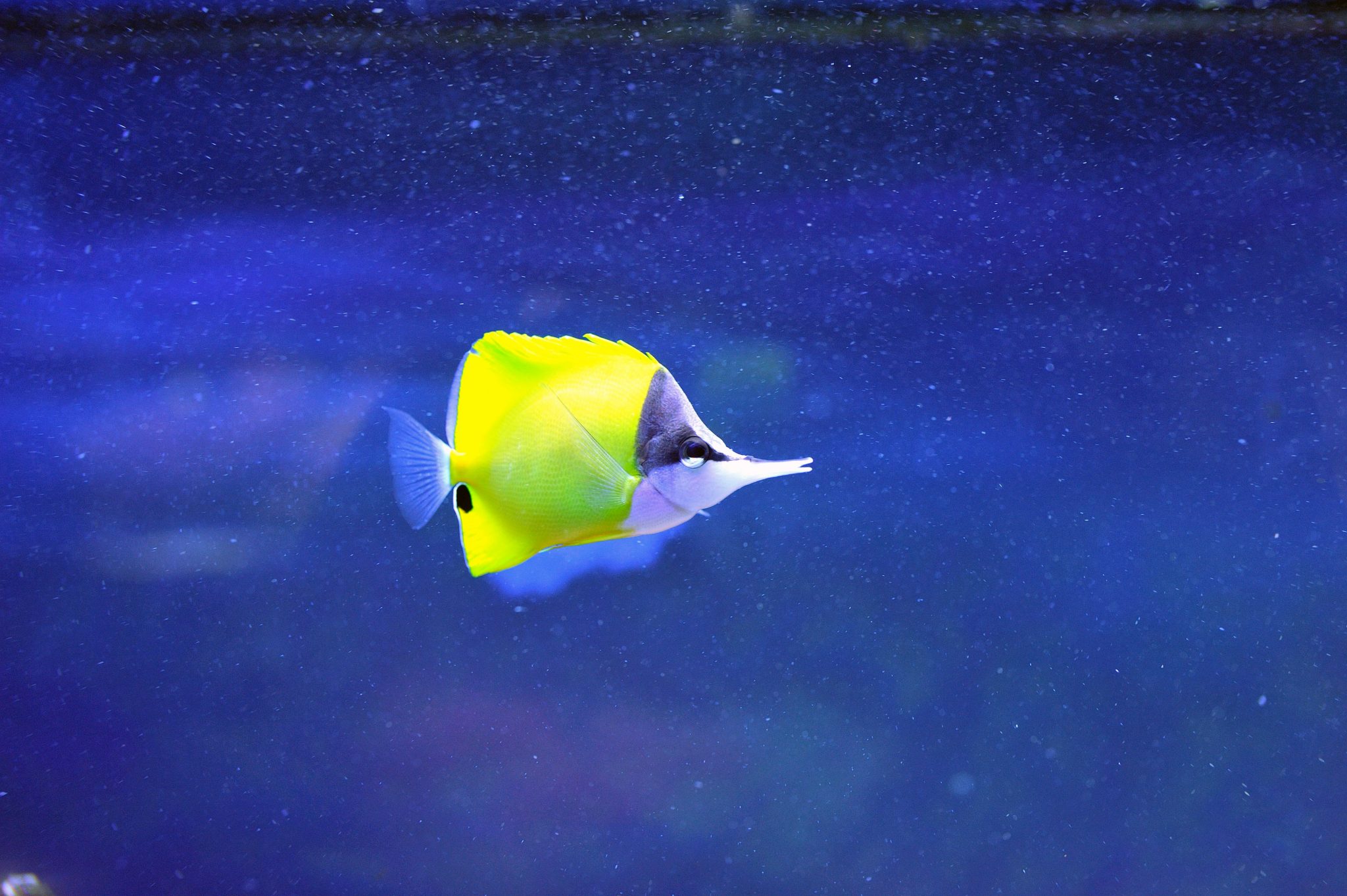
Forcipiger flavissimus
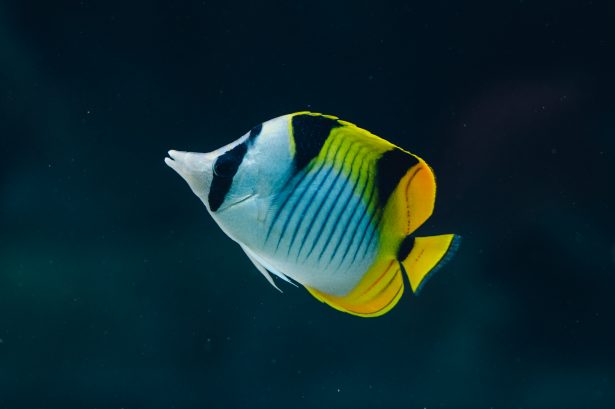
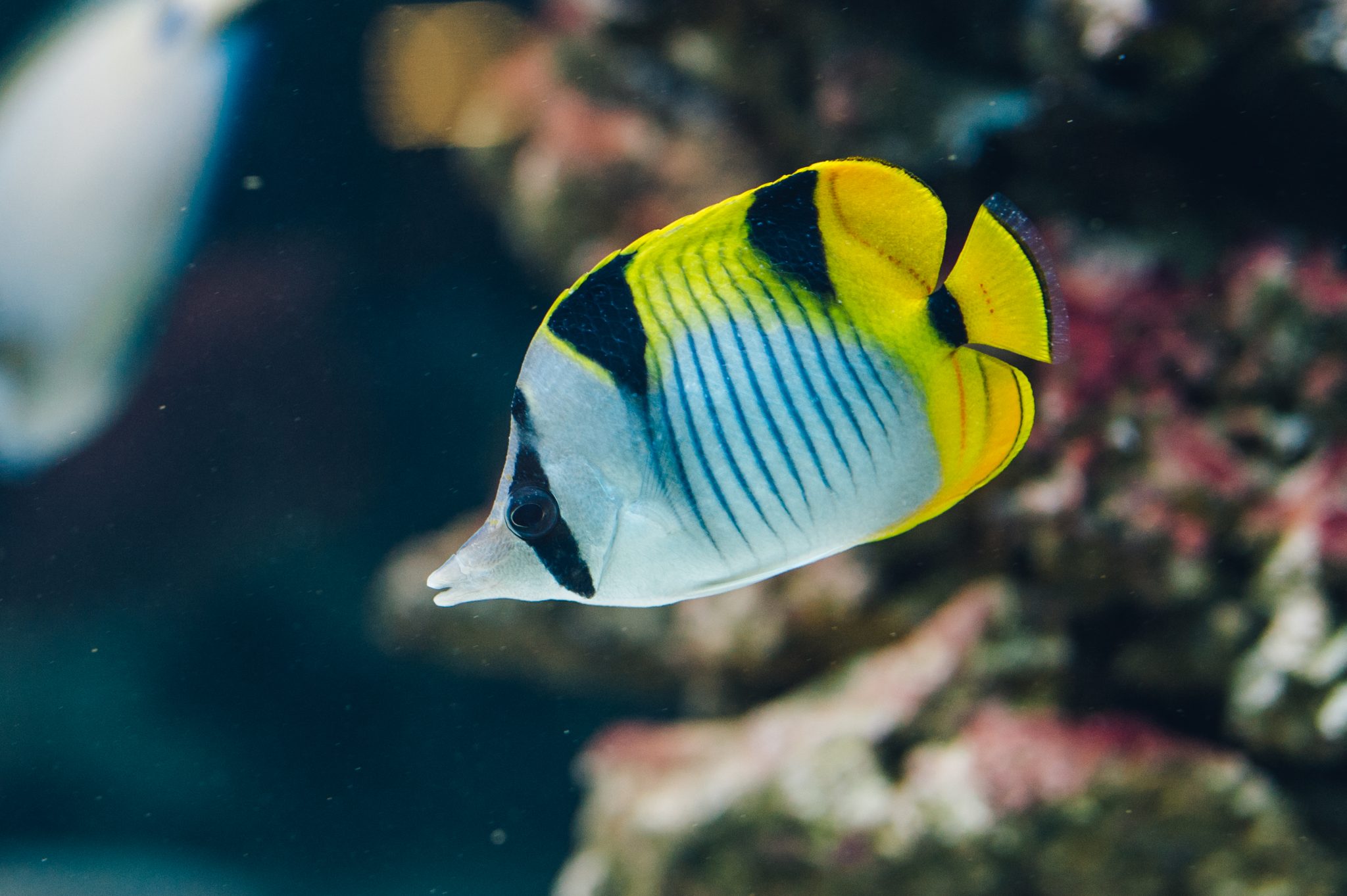
The English name of this family “butterflyfish” refers to butterflies, due to brightly colored and patterned bodies of many species, in shades of black, white, blue, red, orange and yellow. Many of them have eyelets on the sides of the body and dark streaks over the eyes, much like the patterns seen on butterfly wings. Their clear coloration can be used for interspecies communication. Although they differ significantly in color, they have some common features. They all have a deep, laterally flattened body. They look almost round from the side. Their dorsal and caudal fins are continuous, emphasizing the oval shape of the fish’s body. The scales covering the body also overlap the dorsal and anal fins. Their pointed snouts are tipped with tiny mouth armed with toothbrush-like teeth. The degree of elongation of the mouth depends on the food consumed. Some species, such as the Forceps butterflyfish (Forcipiger flavissimus), have extra-long tweezers-like jaws that can pick invertebrates from narrow slits. Others, such as the Ornate butterflyfish (Chaetodon ornatissimus), have short jaws for picking live coral polyps. The jaws of some butterflyfishes may account for more than 25% of the body length of a fish.
Feeding
Many species feed on small invertebrates, sponges, fish eggs, thread algae, and others on zooplankton. Some species only feed on coral polyps. Species that feed on algae growing on corals contribute to their protection by removing competing species that take away the light access.
Reproduction
They are dioecious, but there is no obvious sexual dimorphism. They are animals that form monogamous pairs. Most species stay with the same mate for several years, while some species mate for life. Couples accompanied by a juvenile were occasionally observed. This suggests that the young are asexual or capable of maturing into a male or a female, depending on the needs. However, this information has not been confirmed. Based on data collected for several species, it has been found that the spawning season in tropical waters peaks in winter and early spring, while species in temperate areas reproduce in the middle of summer. Some groups reproduce all year round. Spawning usually takes place at dusk. The male swims behind and under the female, poking her with his mouth in a belly filled with eggs. The release of gametes (eggs and sperm) takes place in the water column about 10-15 meters above the bottom. In some species, other males have been seen swimming in a pair during spawning and releasing their sperm. Approximately 28-30 hours after fertilization, a pelagic larva hatches from the egg and hangs upside down just below the water’s surface. This is due to the presence of oil droplets. In their development there is so called tholichthys larval stage, unique among reef fish, in which the animal’s head is covered with ‘armor’ made of thin bone plates that extend beyond the head to form dorsal and abdominal spines. The shape and form of the plates and spikes varies from species to species. All tholischthys larvae are silver in color, have a deep body flattened laterally. Bone plates are absorbed within a few weeks after the larvae sink to the bottom. The larvae settle during the night and quickly develop into juveniles. In many species, the coloration of juveniles is different from that of adults.
Masking coloration
Butterflyfishes do not take care for their offspring. Due to the small size of the body, they can easily fall prey to predators. Therefore, most species have a band covering the eye and a dark spot, the so-called false eye, located near the tail. These intend to confuse predators that aim for the head but actually attack the back of the fish’s body. Due to their attractive coloration, they are popular as aquarium fish. When selecting the appropriate species, however, it should be remembered that some of them feed on corals and anemones, which is why species that eat zooplankton are more popular.
Butterflyfishes as indicator species
Representatives of the Chetonidae family are considered indicator species that testify to the condition of coral reefs. This is due to the fact that they are bound to this habitat. Of the 5,000 species of fish that live on coral reefs, only 41 of them feed exclusively on corals. The majority, as much as 61%, belongs to the Chaetodontidae family, which is 25 species out of the previously mentioned 41. The dying of reefs contributes to the reduction of the number and diversity of butterflyfishes.
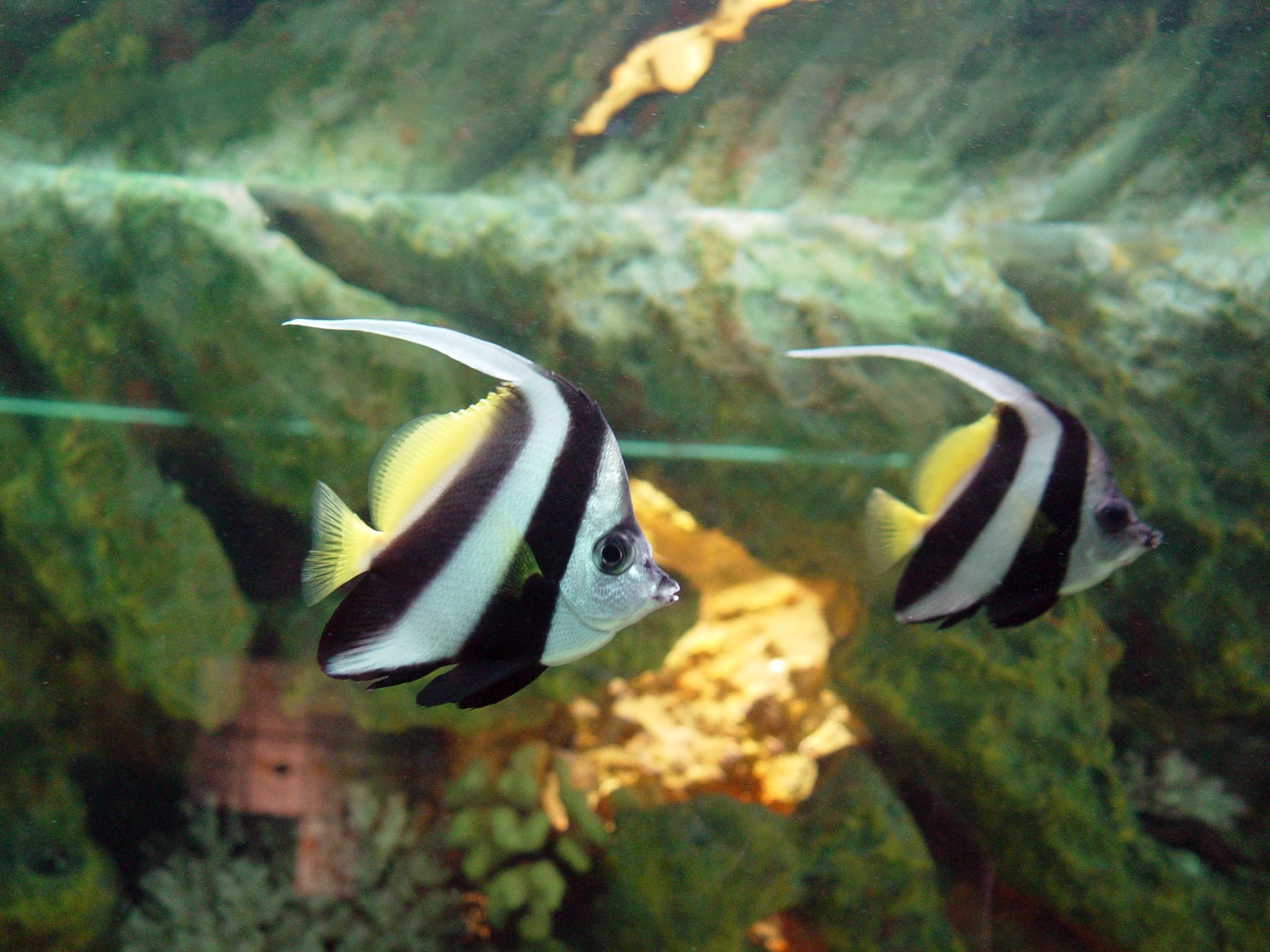
Pennant coralfish Heniochus acuminatus
Heniochus acuminatus
Butterflyfishes are the most popular tropical fish among divers and aquarists. Among them is the Pennant coralfish belonging to the genus Heniochus, inhabiting the tropical waters of the Indo-Pacific, from East Africa, through South Japan to New Guinea. It inhabits coral reefs and sheltered coastal bays. Mature individuals are usually found in pairs, sometimes forming herds, while juveniles are solitary. The body length of the Pennant coralfish ranges from 15 to 20 cm. It can be distinguished from other representatives of Chetonidae by its elongated back and bony protuberance on the head. The length of the ridge on the back increases as the fish matures. Its oval, laterally flattened body is white with two broad black bands running vertically behind the eye and behind the dorsal process. Yellow dorsal and caudal fins are also characteristic. This fish has a long snout that allows it to reach its main food source in the crevices of coral reefs, i.e. small invertebrates. It also does not despise coral polyps. Juveniles sometimes clear other fish of parasites. Little is known about the reproduction of this species. It produces small, floating pelagic eggs. Hatching time is 18 to 30 hours. The previously described stage of tholichthys is present in their larval development. The larvae remain at this stage for several months and are then planktonic. H. acuminatus is a very beautiful and popular fish, quite easy to care for, which is why it is sold as an aquarium fish.