Skip to content

Fish

  • Blind cave tetra

    Blind cave tetra

    Order: Characiformes

    Family: Characidae

    Astyanax mexicanus
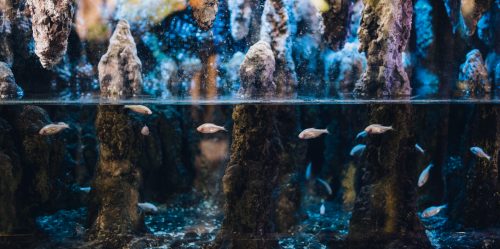
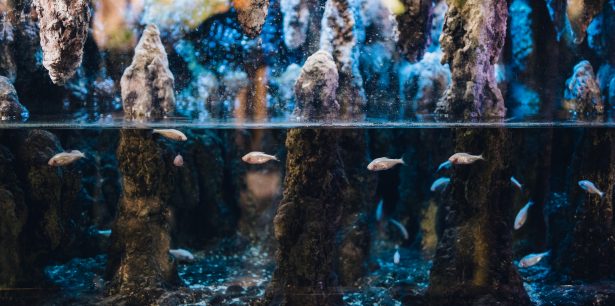
    It is a species of fish with an unclear taxonomic system. In literature on fishkeeping it can go to under different names. These discrepancies arose because the same fish was described as a separate species or subspecies. It was treated as a subspecies of A. fasciatus, but is now a separate species. It inhabits inland waters of Mexico and Guatemala and two US states – Texas and New Mexico. Its range in the southern US is expanding due to its use as bait. Prefers rocky and sandy bottoms of streams and small and large rivers.  The form inhabiting underwater caves is found Only in Mexico.

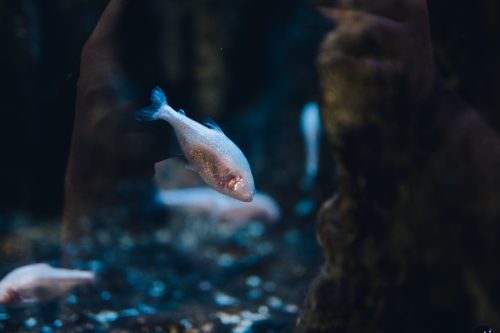
    A characteristic feature of the form living in darkness is the lack of eyes and loss of body pigmentation. Lack of sense of sight is compensated by sharp smell and hearing. The body length of an adult fish does not exceed 12 cm, on average it grows up to 7.5 cm.

    Commonly, the fish has a gray body, but the cave form has a pink and white body. Its natural diet consists of crustaceans, insects and ringworms, while the cave form feeds on invertebrates, which it finds with a strongly sharpened sense of smell. The Blind cave tetra uses a sensitive lateral line to detect small changes in water pressure around it, enabling it to navigate and get food. When the animal is placed in a new environment containing objects that it does not recognize, it begins to swim at a higher speed. In this way, it increases the lateral line stimulation enabling it to obtain information about the environment faster.

    It is known that this fish creates a detailed spatial map of its surroundings, which it remembers.

    It is a dioecious animal, very fertile. The female can lay up to 1000 eggs. Dimorphism is evident in the appearance of the anal fin. In the male it has a slightly curved edge, while in the female it is straight. In caves, the fry develop eyes in the early stages of life, but they disappear at a later stage of development. Individuals with eyes can interbreed with those without eyes giving fertile offspring. This makes this species an excellent model organism for studying convergent and parallel evolution, regressive evolution in cave animals, and the genetic basis of regressive traits. The standard variety living near the surface is not popular among aquarists, unlike the cave form. Initially, all aquarium specimens had been obtained from the natural environment, but this fish breeds perfectly in captivity, which is why its main exporter is now Asia. Interestingly, these fish begin to develop a silvery gloss on their sides, which may be the beginning of artificial adaptation to breeding outside the underground environment.

    A new diabetes medicine?
    Due to the natural environmental conditions of this fish, it had to develop a number of metabolic adaptations to survive. In caves, it is difficult to have constant access to food, which is why it is important to accumulate reserves in the form of large amounts of fat and resistance to hunger. This fish shows symptoms typical of diabetes and non-alcoholic fatty liver disease, but there are no obvious health problems. The discovery of the genetic basis for adaptation to an extreme environment may lead to the development of new treatments for diabetes and other diseases. Scientists are focusing on changes in fish metabolism that allow them to go through very long periods without food. Large “supplies” of food occur most likely once a year during the flooding of caves. The Blind cave tetra feed then intensively and increase body fat, afterwards it uses stored fat as the next meal. To be able to increase fatness, allowing them to survive during a period of lack of food, they become insulin resistant. Biologists have identified a genetic mutation that is responsible for this resistance. Nevertheless, it will take a long time before the discovery of scientists will bring solutions for patients.
  • Guineafowl puffer

    Guineafowl puffer

    Order: Tetraodontiformes

    Family: Tetraodontidae

    Arothron meleagris

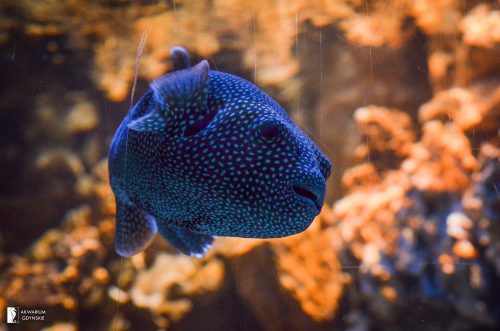
    This species is widespread in tropical Indo-Pacific regions from East Africa east to Mexico and Ecuador, north to Ryukyu Islands and Ogasawara Islands south to Lord Howe and Easter Islands, as well as Christmas Island. It is most often found around oceanic islands. It is closely related to coral reefs, where it occurs in large numbers. It is less common on the rocky reefs of the Eastern Pacific. Occurs at depths from 1 to 73 m, however, it can usually be found at a depth of 3 to 24 m.
    A mature individual can reach a maximum length of 50 cm and prefers a lonely lifestyle. This species has a strong, direct impact on coral communities. Due to its nutritional predisposition, it may limit the distribution and number of predatory corals. It feeds mainly on coral tops and to a lesser extent algae, bryozoans, foraminifers, tunicates, sponges, molluscs and detritus (dead organic particles). The massive four teeth resembling a beak support feeding.

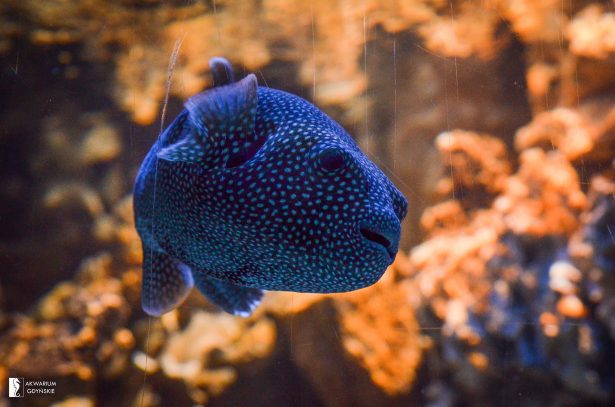
    Like other pufferfishes, its body is oval, almost round in cross-section, and the scales are transformed into small spikes resembling thick sandpaper. This species shows variable color, occurring in black and yellow forms. The dark variety is speckled with white spots, while the yellow variety has an almost uniform yellow coloration with individual black spots scattered throughout the body. It is a gonochoric, oviparous species.

    This fish has developed a successful strategy of defense against predators. First of all, in case of danger, it fills its body with water, increasing its volume considerably, additionally tiny spikes covering its body become visible. Increasing body size is supposed to discourage the predator from attacking. Moreover, it produces neurotoxins, tetrodotoxin and saxitoxin. The black species variety is more toxic, with the highest concentration of toxins found in the liver, while the yellow variety is less toxic and accumulates toxins in the mucosa. The degree of toxicity also depends on the geographical area and season. Due to its toxicity, it is not caught for consumption, but it is used as a decorative aquarium fish. It can get high prices of up to USD 200 per individual, while individuals from the yellow variety are more valuable and can cost up to USD 500.

    How do pufferfish swim?

    Due to the shape of its body, this fish cannot move at high speed, also the movement of the tail is hindered. When moving at a low speed, the fish changes its angle with its head higher by about 10 ° and moves the dorsal, anal and pectoral fins. The caudal fin does not make any movements that affect the animal’s speed, it only acts as a rudder. Body shape is similar to shape at rest.When the animal begins to move faster, the anterior abdominal part flattens, the mouth is wide enough to see the teeth and the caudal fin is activated.

  • Porcupine puffer

    Porcupine puffer

    Order: Tetraodontiformes

    Family: Diodontidae

    Diodon holocanthus

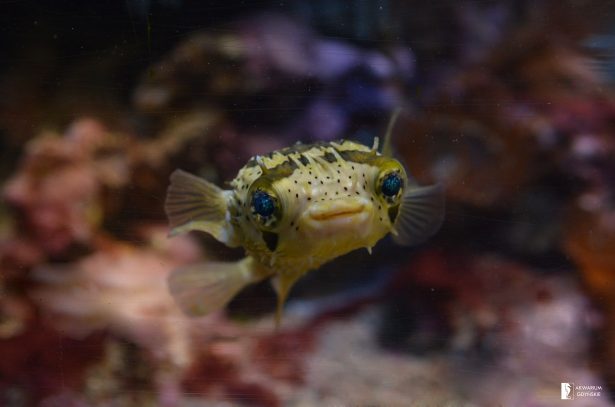
    This species has a wide range of occurrence concentrated on tropical and subtropical waters. Its range in the Pacific Ocean covers coastal waters from California to Columbia, the Galapagos Islands, Hawaii, Easter Islands and the area from southern Japan to Lord Howe Island. In the Atlantic, it is found from Florida to Brazil, including the Bahamas, and also in the eastern Atlantic between 30 ° N and 23 ° S, including around South Africa. In addition, it occurs in the West Indian Ocean from the Red Sea to Madagascar, in Mauritius and the island of Reunion. Adults are associated with the bottom at a depth of 2 to 100 m. They prefer the bottom covered with vegetation, lagoons, coral and rocky reefs, as well as the dim bottom near the mangrove trees. Juveniles are pelagic. Unlike adults, which are loners, juveniles form large schools. When they reach a length of 7 cm, they change the habitat and descend near the bottom.

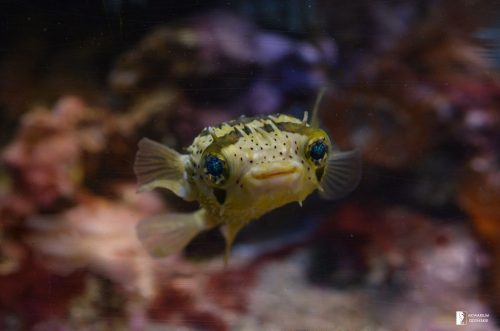
    The Porcupine puffer is active during the night and hides during the day. It grows up to 50 cm long (usually 35 cm). Its characteristic feature is the presence of scales transformed into spikes that are used for defense and arranged along the body. This fish moves slowly using the pectoral, anal and dorsal fins, the caudal fin acts as a rudder. Her bright body is covered with large, dark spots located on the sides of the body and on the back, which dominate in the coloring of the fish. Between them, small black spots are visible, which, unlike D. hystrix, do not extend to the fins. The vertical brown stripe above and below each eye is characteristic. Juveniles are from olive to brown with dark spots, which is to mask them among the vegetation.

    Thanks to its strong jaws and teeth, the Porcupine puffer specializes in eating hard invertebrates such as sea urchins, mussels and snails and crabs. Pocked teeth can catch and crush prey, while large, gummy lips protect against injury from spikes and broken crusts.

    Puffers are dioecious (meaning the male and female reproductive organs are always present in separate individuals). Fertilization usually occurs at dawn or dusk. Then the male gently pushes the female towards the water surface. Fertilization is external. The eggs released by the female are immediately fertilized by the semen of even a few males. The larva is planktonic, parents do not take care of the offspring. The body of the larva is yellow with distributed red spots. Just 10 days after hatching, the spikes appear on the body of larvae. After three weeks, larvae transforms into a juvenile with an olive or brown body, characteristic of mature individuals. Despite the presence of spikes on her body, it is consumed by large predatory fish, primarily by tuna and dolphins. Mature individuals fall prey to sharks. Although other representatives of the puffers are used in Asian cuisine, D. holocanthus is not widely consumed. Dried and inflated, they are sold as souvenirs. They are also used in Asian folk medicine.

    Defending tactics

    When the fish feels threatened, it pumps its body swallowing water. In this way, it gains a larger volume, additionally raises the spikes, which discourage predators from attacking. Its body coating is very flexible, allowing the body to expand by up to 40% from its original size. When the threat passes, excess water is excreted and the fish returns to normal size. In addition, this fish accumulates in its body a toxin – tetrodotoxin, which affects the nervous system.


  • Ocellate river stingray

    Ocellate river stingray

    Order: Myliobatiformes

    Family: Potamotrygonidae

    Potamotrygon motoro 

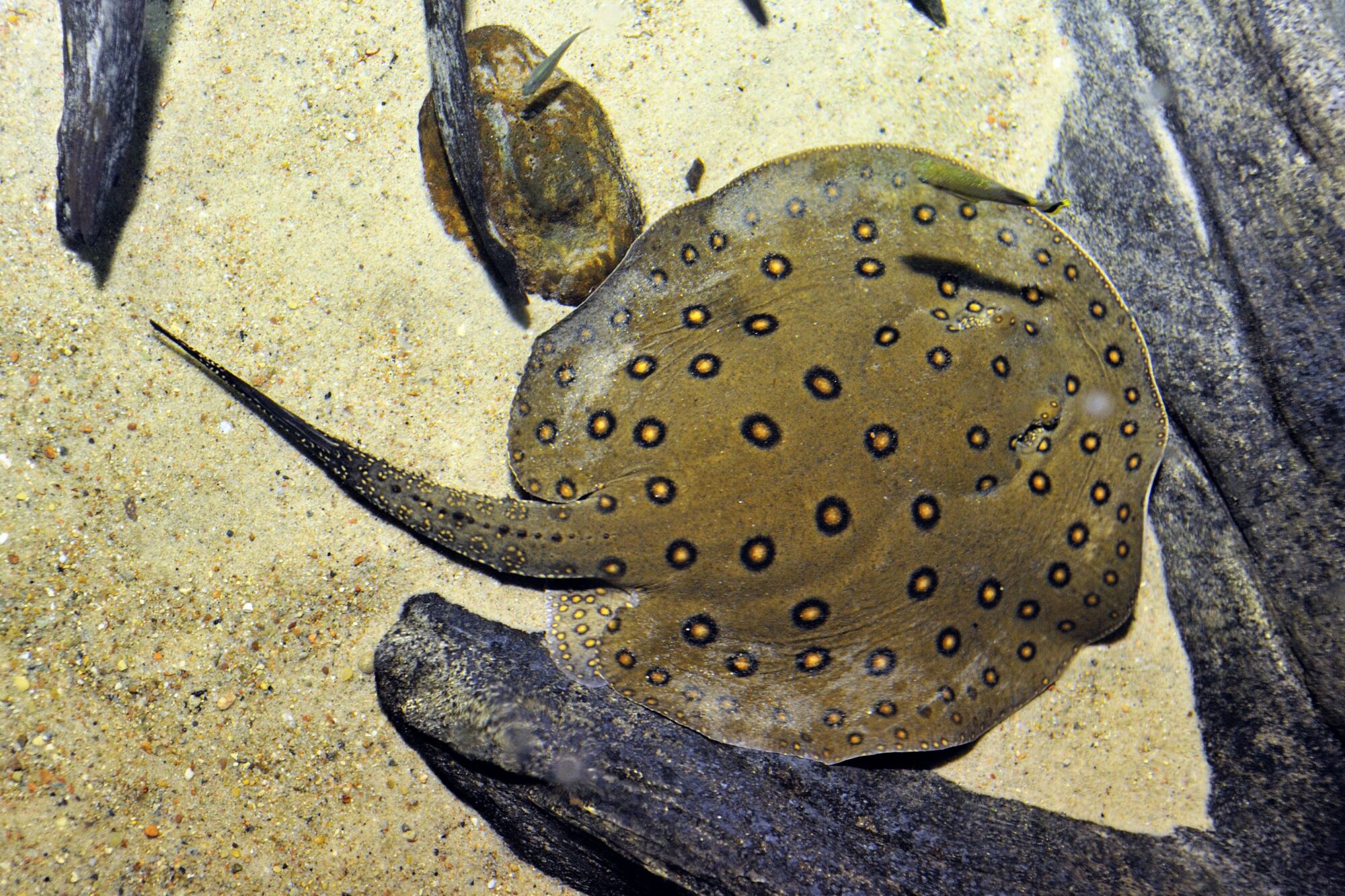
    This is one of seven species of the genus Potamotrygon inhabiting the southern part of South America. It is most commonly found in the Parana Basin, specifically in the midwestern part of Brazil, and can also be found in the Amazon, Uruguay, and Orinoco Basins. It prefers calm waters with a sandy base, especially streams and lagoons, and stays still during the day, buried in sandy sediments. It is closely associated with the base of rivers, so the depth at which it can be found depends on the depth of the river. In the upper Parana River, it occurs at depths of 0.5-2.5 meters, whereas in the Uruguay River, it occurs at depths of 7 to 10 meters. This cartilaginous fish defends its territory and leads a solitary life, undergoing migrations of unknown purpose that can cover more than 100 km. The information about its lifespan in the wild is unavailable, but in captivity it can reach the age of 15 years.

    It uses its sense of smell during hunting, and electroreceptors (ampullae of Lorenzini) are also helpful because they detect electric stimuli produced by organisms buried in the sand. The type of food it eats depends on age and habitat, with juveniles eating plankton and later expanding their diet to include mollusks, crustaceans, and aquatic insect larvae. Adults consume mainly fish and crustaceans.

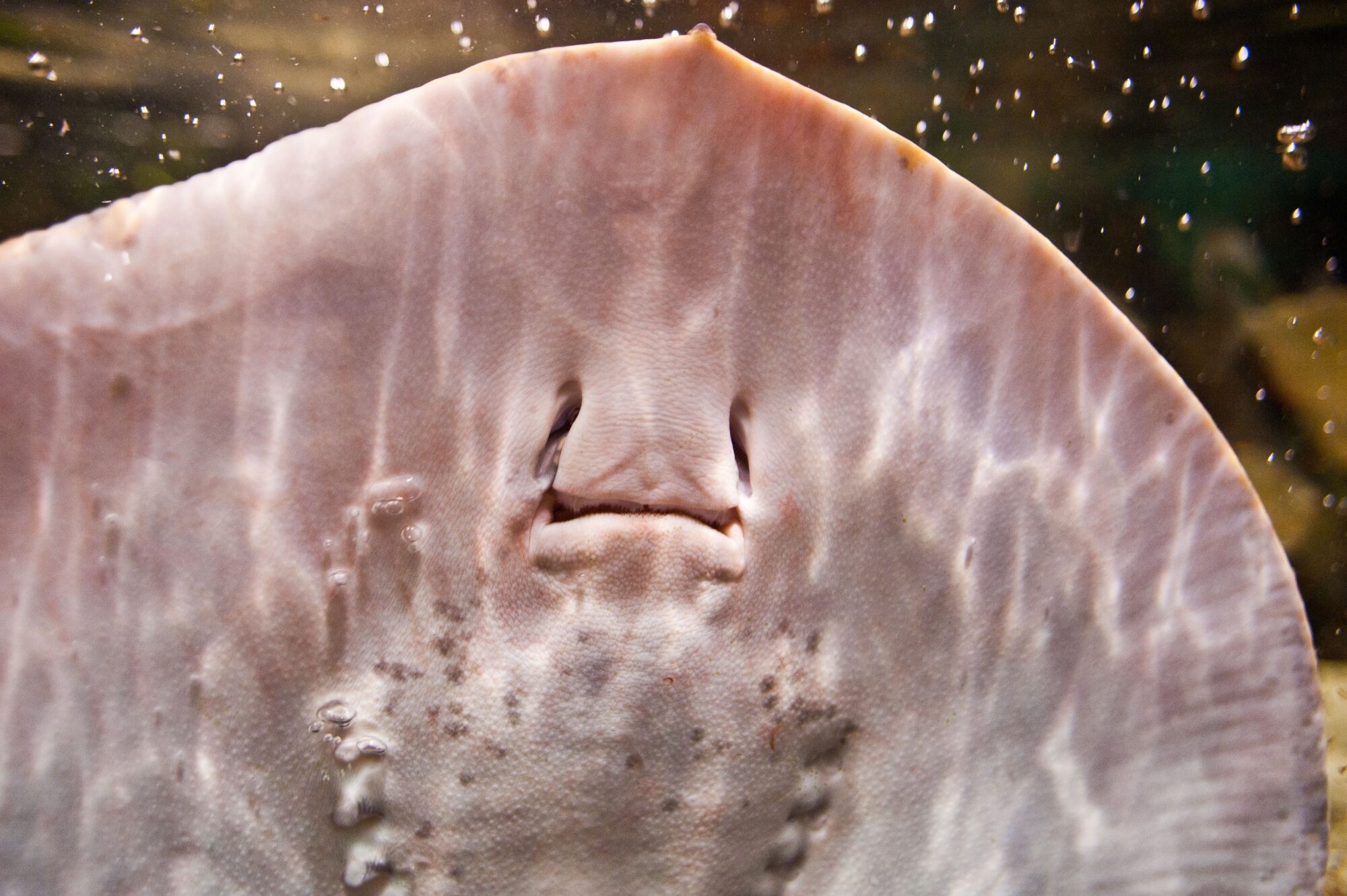
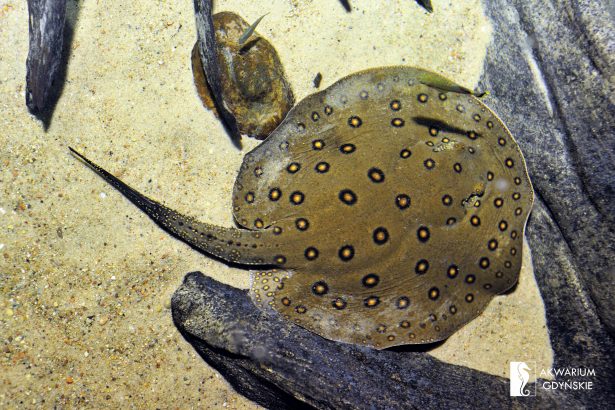
    The coloration of the animals also depends on the habitat. The dorsal side is beige, brown, or gray and has yellow-orange spots surrounded by black rings. The ventral side is light in color. Its flattened dorsal-ventral body has an oval shape with a robust tail that bears two venomous spines used for protection. The maximum length is 1 m with the shield being 50 cm wide and weight going up to even 35 kg, although usually they are smaller (60 cm long and 10 kg). The mouth is located on the ventral side, whereas the eyes are on the dorsal side of the head, which gives them a nearly 360° field of vision.

    Around the time of mating, the lips of the female’s cloaca become swollen and bloody, presumably from copulation (this may have given rise to the folk notion that female stingrays menstruate).

    This species exhibits polygyny, which means that one male can copulate with many females. At the beginning the eggs have the diameter of around 30 mm. During development their nutrition comes not only from gall bladder but also directly from the female’s womb. The secretion from the womb is rich in nutrients and it helps them develop way better compared to receiving nutrition from the gall bladder alone. Gestation lasts approximately 6 months and birthing usually takes place in the rainy season. From 3-21 pups may be born in a brood and the number of young in a brood is always odd. The younger females always have smaller broods. Juveniles are approximately 10 cm long. They will reach their sexual maturity at the age of 3. If the pregnant female gets caught, it will abort its embryos. Reproduction follows a cycle in which one brood is birthed every year for three years in a row, followed by a several-year reproductive inactivity. This fish is caught due to its tasty meat. Juveniles are popular on the market and sold as ornamental fish. It has few predators in its natural habitat. They themselves play an important role in controlling insect populations through their diet.

    How does the stingray move?

    When the stingray moves in the depth of water, it looks as if it were levitating. It uses its wide and well-developed pectoral fins, which can be found along the fish’s body, for swimming. When it moves along the base of the water it uses its pelvic fins with which it pushes itself of the ground.

    Below you can see the birth of stingrays in the Gdynia Aquarium.

  • Banded houndshark

    Banded houndshark

    order: Carcharhiniformes (ground sharks)
    family: Triakidae (houndsharks)

    Triakis scyllium

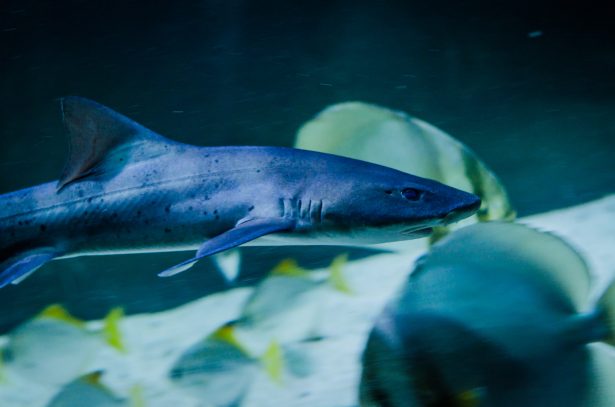
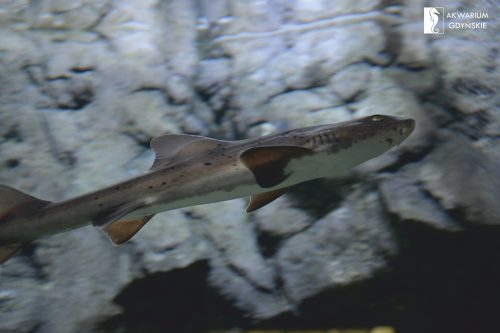
    This representative of cartilaginous fish inhabits the northwestern Pacific Ocean from southern Siberia, through Japan, Korea and China, to Taiwan. It is associated with the bottom of continental shelves, from very shallow depths up to 150 m. It tolerates lower salinity, which is why it is often found in estuaries and shallow bays, especially in sandy and vegetated areas, including seagrass medows. This medium-sized shark species grows up to 1.5 m in length. Males live 15 years, females 18. They lead a nocturnal life. During the day they look for hiding places, including in the caves.
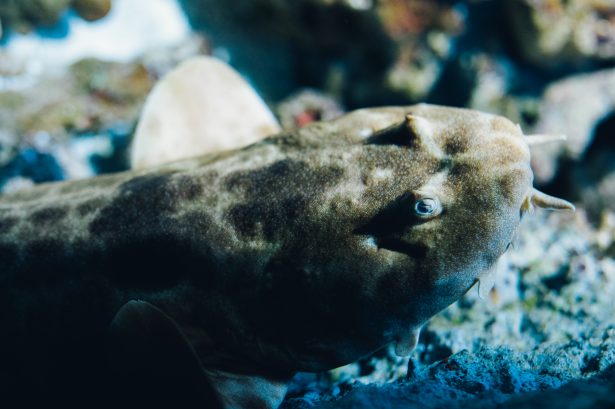
    The Banded houndshark is a solitary species, but sometimes it rests in groups of several individuals lying on top of each other. Its food preferences change with age. Also, the larger the shark, the more varied its diet. The basis of the diet of young individuals are various fish. Mature sharks feed on benthic invertebrates such as sea bream, crustaceans (e.g. shrimps, crabs and mantis prawns), as well as cephalopods, including octopuses. Less often they eat polychaetes, tunicates and small bottom fish such as flatfish, conger eels and herring.

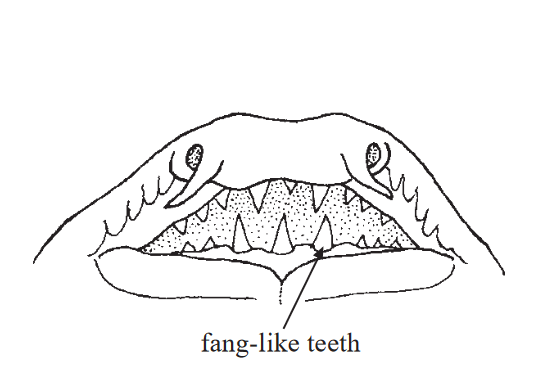
    The body of this species has a gray color on the dorsal part and a bright belly. In juveniles, darker stripes and dots are visible on the back, which fade with age. Its mouth is short, wide and rounded. Horizontally-oval eyes are placed high on the head. The mouth opening forms a short, wide arch and has long furrows in the corners that extend to both jaws. It has two dorsal fins, with the second one being slightly smaller. The caudal fin has a well developed lower lobe and a prominent notch near the top of the upper lobe. In juveniles, the lower lobe of the caudal fin is much less pronounced. Reproduction occurs in late summer.

    Courtship is brutal, the male swims parallel to the female and grabs her with teeth by the pectoral fin. Then she twists her body so that copulation is possible.

    It is an egg-bearing species, which means that the female produces eggs, but they remain in her body until the juveniles are ready to hatch. The female produces from 9 to 26 eggs, although batches as large as 42 young are also possible. Incubation lasts from 9 to 12 months. Juveniles are 18-20 cm long after hatching. Males reach maturity at the age of 5-6 years at a length of 93-106 cm, while females mature at the age of 6-7 years, when they are 106-107 cm long. The Banded houndshark does not pose a threat to people and adapts well to life in captivity. It is sometimes fished as by-catch (organisms accidentally entering the net), but its meat is not commonly consumed.

    Sharks – hope for human health

    Triakis is a typical cartilaginous fish. Due to its position in the process of evolution, both Banded houndshark and other shark species are used as genetic model species. Already in the 1970s, several biological substances derived from sharks were used in medicines or food additives. These included shark liver squalene, which was used in medicine and cosmetics, as well as shark cartilage extract, which strengthens bones and joints. For decades, more bioactive substances or biomaterials derived from sharks have been sought after, which is be useful in both medicine and industry.

  • Wobbegong shark

    Wobbegong shark

    Order: Orectolobiformes
    Family: Orectolobidae

    Orectolobus wardi

    The Northern Wobbegong is a representative of cartilaginous fish inhabiting the waters of the Western Pacific Ocean surrounding the northern part of Australia from Queensland through the Northern Territory to Western Australia. It is associated with coral reefs, where it is most often found at shallow depths of 1 to 3 meters, frequently in places with turbid water. Sometimes it is also found at a depth of up to 40 m.

    It leads a night life and reaches a small body size. Its total length is at least 63 cm, and individuals up to 1 m in length are also found. Its body is flattened due to its way of life, where it spends most of its time lying on the bottom. There are also characteristic growths on the head, resembling a beard, which are used to attract the victim as well as for camouflage. The very name ‘wobbegong’, derived from the Aboriginal language, means “shaggy beard” and it refers precisely to the appendages around a shark’s mouth. The colors of his body vary, but are mainly based on shades of brown. Rounded dark spots with light outlines interspersed with wide dark areas and several large dark spots (saddles) are visible on the back. Their coloration is ensured by an excellent camouflage, which is additionally supported by the ability to change the color of the body within a few days.

    Despite the fact that this animal lives in shallow waters, it is still poorly understood. Presumably it feeds on benthic invertebrates and fish, but its diet is still unknown.

    What is certain is that it is an ambush predator that uses its camouflage to hide among rocks and reefs and catch smaller fish that come too close.

    During attack, the wobeggong sucks prey into its mouth, where it is hooked on sharp teeth. It has two rows of enlarged canine-like teeth in the upper jaw and three in the lower jaw. Scuba divers have also observed a different way of hunting, where a shark creeps up on it. Due to their slow metabolism, they do not need to eat as often as other sharks.

    It is a dioecious and oviparous fish reaching sexual maturity with a total length of 45 cm. The female lays eggs that remain in her body, but are not connected to it in any way. The embryos get their nutrients only from the yolk. The number of laid eggs is unusual. Litters count 20 individuals and more. After hatching from the egg, a young, fully developed individual leaves the female’s body. Wobbegongs are used in Australia in the catering industry as a meat ingredient in “fish and fries”. Patterned leather is also used for the production of leather goods.

    How does a wobbegong breathe?

    Carpet sharks breathe differently than deepwater sharks, which swim with their mouths open, thus ensuring a continuous flow of oxygenated water through their gills. Due to the sedentary lifestyle of wobbegons and the location of their mouths on the underside of the body, taking oxygenated water through their mouths would also involve taking sand from the bottom. Consequently, the carpet shark breathes through its spiracles, which are of considerable size and just behind the eyes. They are more visible than the eyes, thus protecting them against attacks by other animals.

Skip to content