Skip to content

Invertebrates

  • Soft corals

    Soft corals

    Phylum: Cnidaria

    Class: Anthozoa

    Order: Alcyonacea (soft corals)
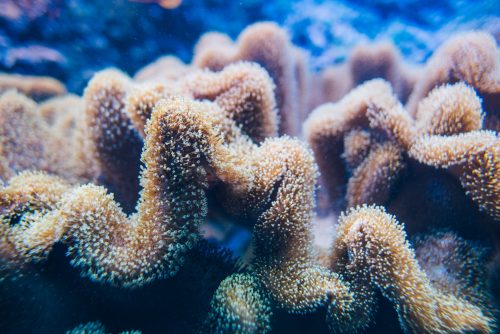
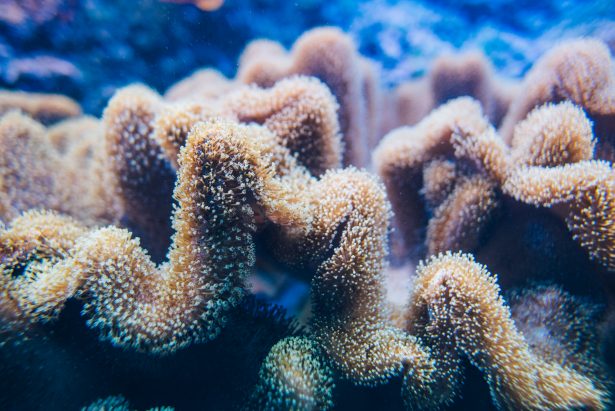
    Alcyonacea are purely marine animals occurring only in the form of polyps. There are approximately 1,290 species of soft corals belonging to 6 suborders and 41 families. Representatives of this order are related to reef-forming (stony) corals, but lack the massive calcified skeleton of calcium carbonate. Instead, they have small limestone sclerites (fine spiky skeletal elements) in their bodies that provide some support and give their flesh a spiky, grainy texture that scares off predators. Several species, incl. blue coral (Heliopora) or pipe coral (Tubipora), have a solid skeleton, seemingly resembling hard corals. Moreover, their polyps always have 8 arms, unlike the stony coral polyps which have 6 or a multiple of 6.

    Appearance

    Soft corals are one of the most colorful and diverse groups of invertebrates found on coral reefs. They create colonies of various forms, incl. membranous, inlaid, massive, lobed, finger-shaped, woody, fan-shaped, bushy and whip-shaped. In the Caribbean, branching gorgonians and sea fans are the predominant forms of growth, while in the Pacific they are much more diverse, including fleshy corals as well as gorgonians. Although soft coral colonies do not contribute to reef growth, they provide shelter for many reef dwellers. Many animals, such as hydrophilic species, hydrozoans, bryozoans, crinoids, molluscs, crustaceans, and fish, find their shelter among corals, largely only on specific coral colonies. Many species of seahorses look similar to their hosts, thanks to which they perfectly camouflage themselves, eg. Hippocampus bargibanti inhabits only two species of the corals of genus Muricella and Hippocampus denise (fine seahorse) inhabits, i.a., colonies of corals of the genus Muricella, Anella and Echinogorgia.

    Longevity

    Soft corals include species with different biological characteristics and different ecological requirements. Many species are long-lived with a slow growth rate, while others are fast colonizers with a short life span. Some large colonies of the genus Sinularia (family Alcyoniidae) are probably hundreds of years old. The life expectancy and growth rate of most soft corals is largely unknown as colonies can shrink, due to both biological and physical factors, so there is a poor relationship between colony size and age.

    Environment

    Most soft corals, unlike stony corals, thrive in nutrient-rich waters with less intense light. Their food consists of small particles caught directly from the water column in the form of phytoplankton, fine particles of detritus, ciliates, flagellates and very small zooplankton. In addition, almost all of them use a symbiotic relationship with photosynthetic zooxanthella (alga) as their primary energy source. In return, the coral provides the algae with nutrients and shelter. This symbiosis depends on the availability of light for photosynthesis. There are taxa that do not bond with algae. Their only food is particles suspended in water, so they are highly dependent on water currents, therefore they occur in habitats with a large flow of water. They can be easily distinguished from those living in symbiosis with algae by their light yellow, orange, red, pink, purple or snow-white color.

    Reproduction and colonisation

    The dispersal strategies for soft corals vary between species, and include both asexual and sexual reproduction. Rapid colonization of small surfaces of the substrate is mainly related to asexual reproduction. It often involves the formation of stolons, the budding of miniature colonies which then fall off the parent colony and settle nearby, and fragmentation. Larger areas of the bare substrate are usually colonized by settling pelagic larvae formed by sexual reproduction. Then, mature individuals release their gametes into the water column, where fertilization takes place. The resulting pelagic larvae are scattered by currents over long distances. Once they reach the right size, they will settle down to days or weeks after conception. Fertilized eggs of some species remain attached to the mother colony, and the resulting larvae develop on the surface of the colony. After a few days it separates and settles to the bottom near the mother colony.

    Diffence strategies

    Many species protect themselves from predators, algae or contamination by neighboring organisms by releasing repellants, which are sometimes toxic. Many of these substances have been tested for their bioactivity, and some of them may become useful in the pharmaceutical industry. The main defense products are terpenoid in origin and despite their toxicity to fish, some specialized fish species are able to feed on corals. E.g. corals of the genus Sarcophyton sp. produce toxic sarcophytoxide, which released to aquatic environment causes reduction in the photosynthesis of the algae living in the symbiosis with coral Acropora formosa. Thus, it serves not only as a means of protection against being eaten by predators, but also provides an advantage in competing for living space with other corals. Sarcophytoxide, however, is not an obstacle for the gastropod Ovula ovum, which feeds on those corals and the toxin most probably is metabolised and detoxified in the intestines of the snail. Among the representatives of the gorgonias, such as the species Leptogorgia virgulata, there are substances such as lophotoxin. Their main task is to scare off the fish through stimulating vomits. In addition, they have antimicrobial properties, preventing coral overgrowth. Antarctic corals are protected either exclusively by limestone splinters or by chemicals. Eg., coral Ainigmaptilon antarcticus produces sesquiterpene that prevents starfish from feeding and inhibits development of the bacteria and diatoms. Separate strategy of the chemical defense can be observed in species Plexaura homomalla that produces large quantities of toxic prostaglandines and make the coral flesh untasty for, e.g., fish.

    Significance

    Soft corals are animals that produce many bioactive compounds with various effects, including antibacterial, antiviral, anticoagulant, antidepressant, antihypertensive, analgesic, anthelmintic, etc. Therefore, they are very commercially important. They are very easy to breed in captivity, much easier than hard corals that are susceptible to infection or damage. Soft corals grow quickly and are easy to divide into new individuals, therefore aquacultured corals are often more durable and cheaper than those imported from nature. Moreover, thanks to such farms it is possible to protect wild reefs. In the past it was believed that soft corals are not able to produce new fundaments for future coral reefs, however, recent discoveries suggest that the colonies of the genus Sinularia have an ability to cement their sclerites and fix them at the base, what makes them reef-building animals.
  • Spiny lobster

    Spiny lobster

    Order: Decapoda
    Family: Palinuridae

    Palinurus elephas

    This crustacean occurs along the northeastern Atlantic coast, from Norway to Morocco and the Azores, and in the Mediterranean, except at its eastern extremities. It prefers a rocky bottom and a coral substrate, where there are many holes and small caves in which it can hide during the day. It lives only in clean waters – the presence of spiny lobsters indicates a low degree of environmental pollution. The depth range at which it can be observed is 5-200 meters, however, it usually stays at a depth of 10 to 70 meters. It can live alone, in pairs or small groups.

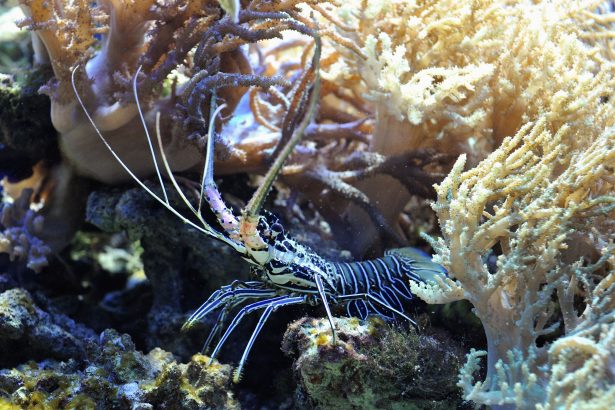
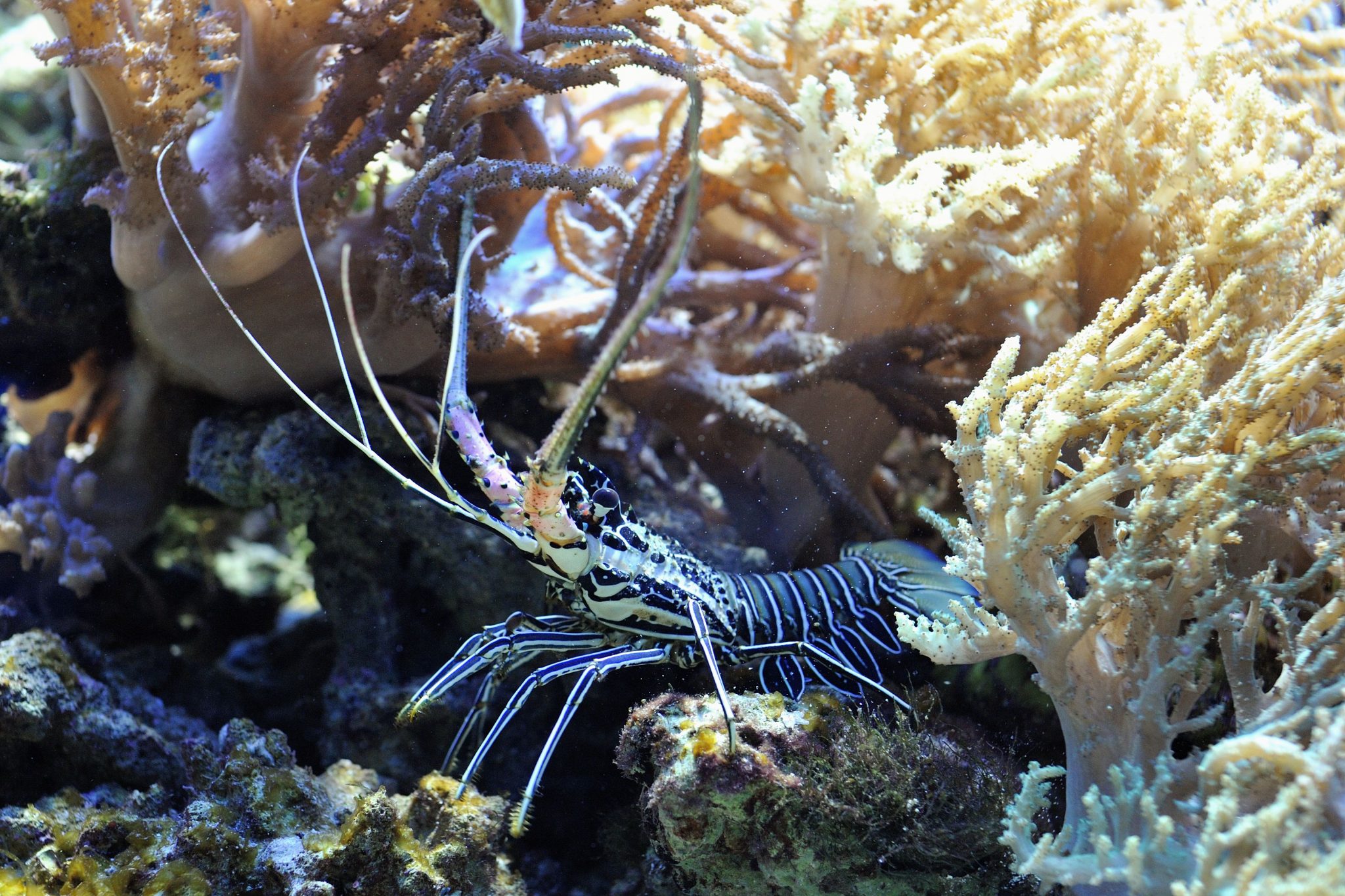
    The Spiny lobster can reach a maximum length of 50 cm, however, it is usually 25-30 cm, and can reach a weight of up to several kg. The maximum verified age of this animal was 15 years. To increase body size, the animal sheds old armor, in its place a new, larger one is created. During moulting, the animal is vulnerable and may more easily fall prey to predators. The Spiny lobster’s exoskeleton consists of two parts covering the cephalothorax (fused head and body segments) and the body is finished with a telson (tail). It has a red-brown color, additionally there are symmetrical white spots on the abdomen and telson. The abdominal side is white, although sometimes brown, sandy and purple discolorations. The head is covered with spikes pointing forward. The antennas are very long and massive with orange and white stripes. The first of five pairs of legs is equipped with small claws, and the remaining 4 pairs with sharp single claw at each leg. There are also legs under the abdomen, they are much shorter and are used for swimming and supporting eggs by the female.

    The Spiny lobster is a night predator. It is omnivorous and its diet changes depending on the number of benthic organisms present in the foraging area. It feeds on macroalgae, bryozoans, polychaetes, crustaceans and carrion, however, molluscs and sea urchins are the most important element of her diet. In addition to the daily feeding cycle, these animals also have a monthly cycle associated with moonlight. One should not go fishing for the lobsters during the full moon, because the most intensive foraging of lobsters is during the new moon.

    The Spiny lobster is a dioecious animal. During the mating season, interesting behavior can be observed, when the animals move one after other in a string.

    Reproduction occurs once a year from June to October, with larger females breeding first, smaller ones later. The fertilization is internal and immediately after it the female lays eggs, which she sticks under the abdomen and cares for them until the larvae hatch (phyllosoma stage), i.e. for about 6 months. The larvae are leaf-shaped and planktonic. After some time, the larva settles on the rocky bottom and transforms into a juvenile individual, which reaches sexual maturity at a length of about 7-8 cm. The Spiny lobster is commonly caught for consumption and is a culinary delicacy, mainly in the Mediterranean. Traditionally they are trapped or collected manually, but these techniques have been replaced with trammels (fishing gear).

    Can a lobster sense a threat?

    Yes, a lobster can avoid areas where it senses a threat. An experiment was carried out in which crawfish were admitted into the tank with the octopus Octopus vulgaris. The lobster showed chemosensory behavior in response to the smell of octopus. She was able to detect the predator’s odor among others and avoid the place where the octopus was.

  • Pacific cleaner shrimp

    Pacific cleaner shrimp

    Order: Decapoda
    Family: Hippolytidae

     Lysmata amboinensis 

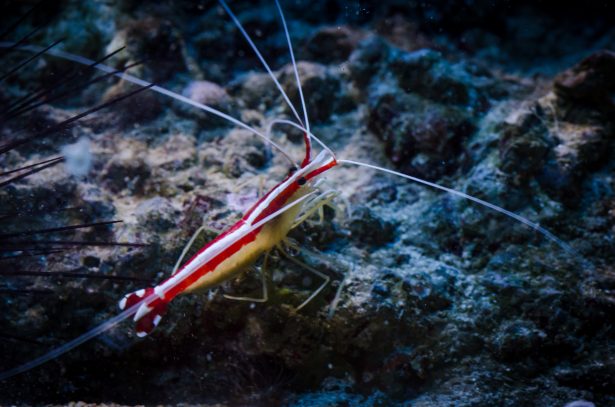
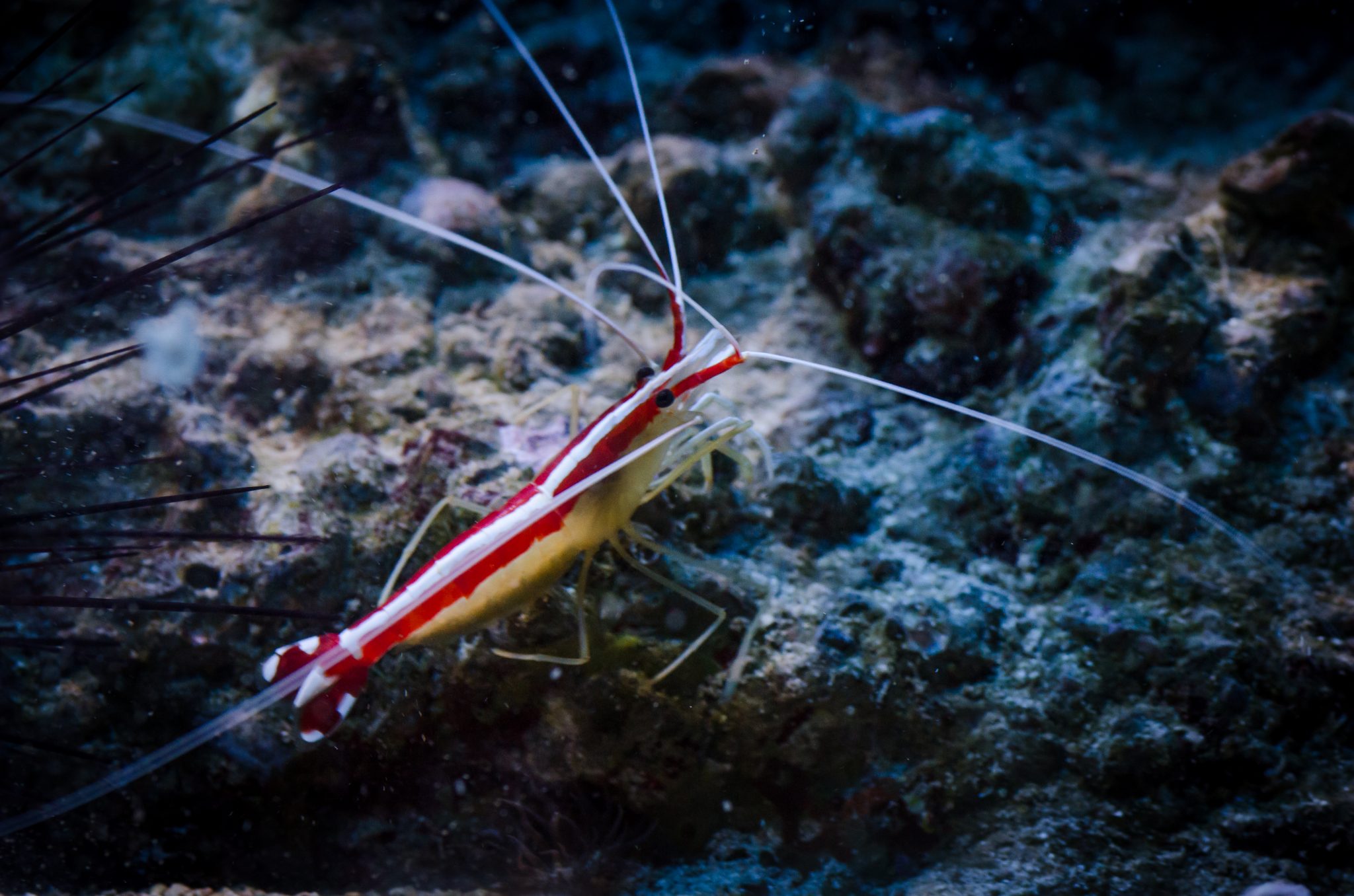
    The species is widespread in the Indo-West Pacific from Kenya to Japan, French Polynesia and Hawaii. It is also found in the Red Sea. It is a natural part of the tropical coral reef ecosystem at a depth of 5 to 40 meters. Usually found in caves or on rock ledges. Cleaning shrimp does not form large groups, most often it is observed in pairs. Reaches a length of 5-6 cm. Its light yellow body has a characteristic coloration with two red stripes on the back with white one in between them. Long antennas are also white. This shrimp has 5 pairs of walking legs, the first of which is transformed into forceps, which are used for food and defense. Under the abdomen there are short legs for swimming and for supporting eggs as they develop. Although shrimp is considered an omnivorous species, most of its nutrients come from symbiotic relationship with fish that are cleaned of parasites and dead tissue. Both species benefit. The shrimp is provided a meal while the fish are free of parasites. Additionally, the cleaning services offered by the shrimp help in healing injured fish. The cleaner shrimp is often found in the company of moray eels that provide protection from predators. After reaching sexual maturity, all shrimps become males that after a few consecutive moultions (change to a larger exoskeleton due to the increase in the body size) become hermaphrodites. They can then function in relationships with other individuals both as male and female. This form of sexual maturation is unique to Lysmata shrimp. A pair of mature shrimps alternately change the moulting time. Fertilization occurs right after moulting, in which case the shrimp acting as the male fertilizes the other one acting as the female. As the next shrimp moults, the roles flip. During spawning, the female lays between 200 and 500 eggs, which it places under the abdomen and looks after until the larvae hatch. About 6 months after spawning, the juvenile organisms reach sexual maturity. It is popular in domestic and public aquariums due to interesting coloration and cleaning functions that apply to both tank and fish. They are also used for educational purposes, as they are released into touch tanks, where visitors can put their hand in to undergo a shrimp cleaning treatment.

    Cleaning stations

    The cleaning shrimps and fish gather in one place on the reef, at the so-called “cleaning station”. The cleaning station is visited by various species of fish, including those that can be a threat to cleaner shrimps because they eat shellfish similar in size. If a customer is a fish that does not pose a threat, the shrimp immediately goes to work. The situation is slightly different when a predatory fish arrives for the cleaning procedure. Then the cleaning shrimp must signal more clearly to the predator that it is its partner and not a victim. It performs a specific dance while moving sideways, intensely sways its legs and touches the fish with its antennae. When the predator shows no interest, it proceeds with cleaning work.

  • Sunflower sea star

    Sunflower sea star

    Order: Forcipulatida
    Family: Asteriidae

    Pycnopodia helianthoides

    Starfish (Asteroidea), like sea urchins, sea cucumbers, ophiuroids and crinoids belong to the phylum of echinoderms, i.e. animals characterized by a radial body symmetry. The Sunflower sea star is the only representative of the genus Pycnopodia occurring only in the northeastern part of the Pacific. Before 2013, it was commonly found in the area ranging from the Aleutian Islands in Alaska to San Diego, California. It prefers a tidal zone with sandy, muddy, gravel as well as rocky bottoms. It also lives among meadows of underwater vegetation. The body of this starfish is fleshy and requires constant contact with water, so in the event of a high outflow it will move into deeper areas. Most often it occurs up to a depth of 120m, although it was also observed at a depth of 435 m.

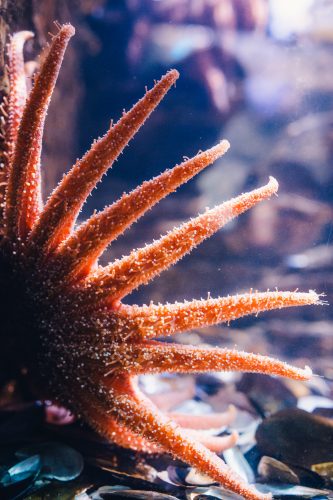
    It is one of the largest and heaviest starfish in the world. The maximum span of its arms is about 1m (usually 80 cm), and the weight reaches 5 kg. It also has the highest number of arms, ranging from 16 to 24, while most starfishes have 5 to 14. It is also the fastest starfish. It can move at a speed of 3m per min. and cover a distance of at least 3km. Over 15 000 ambulacral feet are used for movement. They are ended with suction cups that allow an animal to stick to the rocks. The body can have different colors, i.a. yellow, light orange and red to brown, and sometimes purple.

    This animal leads a solitary life. It is a predator which uses a strong sense of smell and receptors that are very sensitive to light in order to gain prey. Its mouth is at the bottom of the body. It mainly feeds on sea urchins. This diet is supplemented with algae, sponges, mussels, snails, sea cucumbers, other starfish, crustaceans and fish. Diet varies depending on geographical location and food availability. By eating sea urchins, it regulates the structure of the bottom communities.

    It is a gonochoric species, but there is no clear sexual dimorphism. Fertilization is external and random, individuals release gametes directly into the water. The larva is planktonic and feeds on phytoplankton. After a few weeks, it settles at the bottom and transforms into a young individual that feeds on plants. The young starfish has 5 arms. With age, more arms grow in pairs on both sides. Each new pair is inserted between the last pair created and the adjacent original arms. Juveniles fall prey to predators such as big fish, king crabs and otters.

    When threatened, it may throw away a part of its body and move away from a danger.

    It also releases a chemical substance into the water that alerts other individuals of the danger. After some time, the lost arm will grow back. If the detached arm had a fragment of the central body part, a completely new individual will grow out of it. This is a regeneration phenomenon. Regeneration is also a form of asexual reproduction in these animals.

    What happened in 2013?

    In the years 2013–2015, the number of this species dropped due to the sea star wasting disease and the increased water temperature caused by global climate change. The species disappeared from habitats off the coast of California and Oregon, and its population decreased by 99.2% in waters near Washington State. In 2016, a team of environmentalists studying the area of 3,000 km found a decrease in the population of the Sunflower sea star by 80-100% compared to 2013.

  • Sea cucumbers

    Sea cucumbers

    phylum: Echinodermata
    class: Holothuroidea

    Sea cucumbers

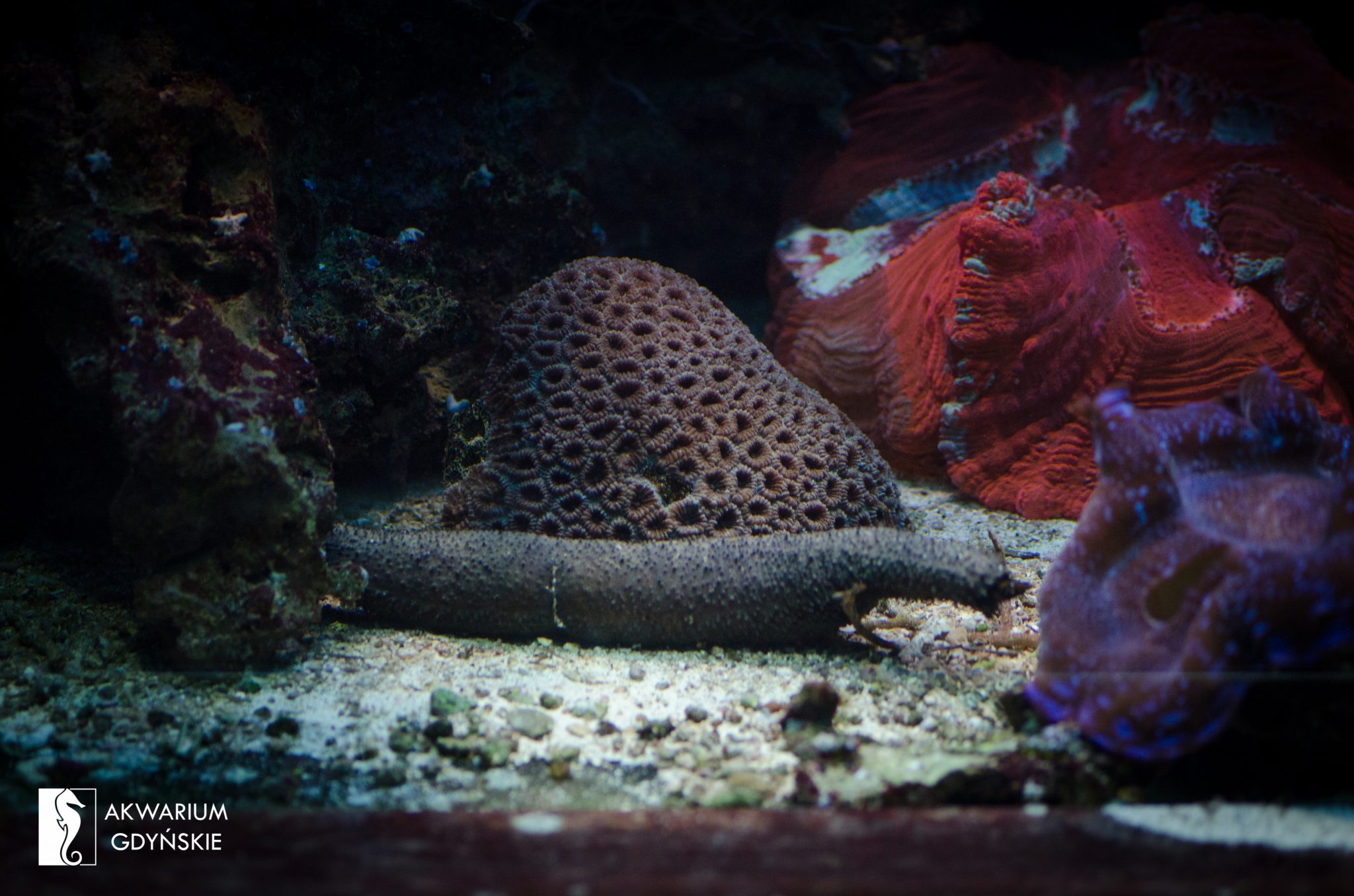
    At first glance, the sea cucumbers are not reminiscent of other representatives of the echinoderms, whose characteristic five-ray symmetry is lost in sea cucumbers to varying degrees. In some species central symmetry is visible through five “rays” extending from the mouth to the anus. In these rays pseudopodia (ambulacral legs) are located, i.e. the endings of the water system, which serve for locomotion, food tracking and attach an animal to the surface.

    The appearance of their body also differs from the appearance of other echinoderms, the mouth of which is located on the abdominal side, and the anal on the dorsal side. The body is elongated, bilaterally symmetrical, and their mouth and rectal opening are located at two opposite ends. The body has a ventral side (trivium) with three rows of ambulacral feet and a dorsal side (bivium) with two rows of pseudopodia.

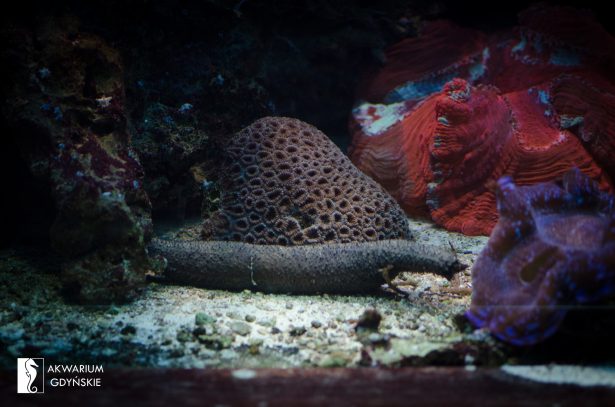
    Due to their body shape, they are called sea cucumbers, although the shape may vary depending on the species from almost circular, through a sausage-like or serpentine caterpillar.

    They usually measure from 10 to 30 cm, but in extreme cases they are a few mm or over 3 m long. They do not have an outer skeleton, instead they have calcified structures reduced to microscopic cubes connected with connective tissue just under the skin. In some species these structures may have the form of flattened plates forming armor, while in some species the internal skeleton does not occur at all, e.g. in Palagothuria natatrix. Collagen tissues are also built into the body, which can change their mechanical properties, thanks to which the animal, by softening them, can squeeze through a small gap. However, to ensure safety, collagen fibers are shortened, then the body becomes firmer. This process is controlled by the nervous system and coordinated with muscle activity.

    These animals are associated with the seabed and are spread all over the world, but most of them occur in the Asia-Pacific region. It is estimated that among the 7 orders, containing 30 families, there are 1717 species of the sea cucumbers. Many of them are collected for human consumption. They play a useful role in the marine ecosystem because they help clean the bottom of decaying organic residues and fertilize bottom sediment. They form flocks that move across the bottom in search of food.

    Their mouth is surrounded by a crown of 8-30 tentacles, which can be straight, feathered, branched or branched and are used for feeding. The tentacles are modified ambulacral feet that can be hidden inside the mouth. Their appearance is one of the ways to identify particular orders. Identification of various species is also based on the appearance of limestone cubes embedded in the body walls. A significant part of the skeleton is a ring formed of ten limestone plaques surrounding the larynx. It is the attachment for the muscles that hide the tentacles, as well as for the main muscles of the body wall. Their digestive system is very simple. Many species have the esophagus and stomach, but for some, the throat opens directly into the intestine, which is usually long, curled, and passes through the body three times before it ends in the cloaca or directly as a rectum.

    Sea cucumbers do not have distinct sense organs, despite the fact that various nerve endings are scattered on the skin providing sensitivity, also to the presence of light. There are also tree-shaped breathing channels that open into the cloaca. To breathe, an animal draws water with oxygen through the anus and then expels it. Together with the intestines, they also act as excretory organs.

    In addition to the water system responsible for the movement of the ambulacral feet, they have a blood circulatory system.

    The blood vessels are connected by over 100 small muscle ampoules that act as miniature hearts.

    Due to the presence of white blood cells containing hemoglobin, their blood is red. Sea cucumbers are found in large quantities on the deep seabed, where they often make up the majority of animal biomass. They are the best adapted echinoderms to extreme depths. They vary greatly even at depths exceeding 5000 m. Moreover, at depths exceeding 9 km they account for 90% of the total biomass of macrofauna. The body of some deep-sea species, such as Enypniastes eximia, Peniagone leander and Paelopatides confundens, is built of hard, gelatinous tissue with unique properties that allow animals to control their own buoyancy, allowing them to move across the ocean floor, float or swim actively. Additional appendages on the body, e.g. resembling an umbrella, help them in swimming. Only one species, Pelagothuria natatrix, is typically pelagic because it never approaches the bottom. Sea cucumbers are scavengers. Their diet consists of plankton and decaying organic matter. In search of food, they sift the bottom sediment with the help of tentacles surrounding the mouth. 40 animals per square meter can process 19 kg of sludge per year. Some animals expose their tentacles towards sea currents and grab food directly from the water. The shape of the tentacles is adapted to the diet and size of the particles consumed.

    Mostly they are gonochoric species, with the reproductive system consisting of a single gonada which opens at the dorsal side of the animal, close to the mouth. Most sea cucumbers reproduce by releasing semen and ova directly into the water. In some species, e.g. Pseudocnella insolens, internal fertilization occurs. The fertilized zygote is transferred with one of the tentacles to a pocket located on the body of an adult, where it develops and eventually hatches as a young sea cucumber. It is known that several species give birth to their young in the body cavity through a small crack in the body wall near the anus.

    Many small animals can live in symbiosis with sea cucumbers. Some cleaning shrimps, in particular Periclimenes imperator, live on the body of sea cucumbers. Also, pearlfish is a commensal of cucumbers.

    Fry hides in a sea cucumber cloaka, which becomes a shelter from predators, in addition, the nutrients found in the cloaka are the source of nutrtion.

    Some species of polychaetes and crabs living inside the sea cucumber protect its mouth or breathing ducts. Not every species hosts free passengers, and so representatives of the Actinopyga genus have anal teeth that prevent visitors from penetrating it. As a rule, these animals have no enemies. They are ignored by predators because of the toxins they contain. Nevertheless, the molluscs of the species Tonna galea and Perdix tonna can paralyze sea cucumbers with a strong poison, and then swallow them. Some sea cucumbers defend themselves by expelling sticky tubules that stick to the predator.

    In case of danger, they remove part of their internal organs through the anus, including sticky tubules, which are food for the predator.

    Sometimes the removal of internal organs is also accompanied by the release of poison outside, which can kill other animals nearby. Removed internal organs regenerate within a few weeks.

    Sea cucumbers play an important commercial role. They are consumed by people in various forms. They are also widely used in folk medicine, as well as in the pharmaceutical industry for the production of cosmetics and medicines, including those for joints. It is suggested that sea cucumbers can be used to treat cancer and malaria. Unfortunately, due to the high use of these animals, they are caught, both legally and illegally. They are also increasingly grown in aquaculture. Their popularity as luxury seafood in East Asian countries poses a serious threat to their population.

  • Black long spine urchin

    Black long spine urchin

    Diadema setosum

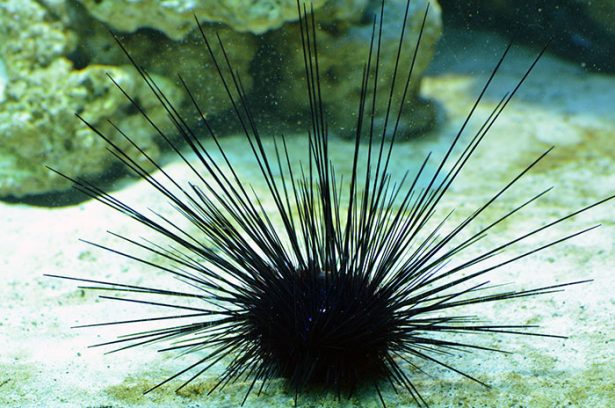
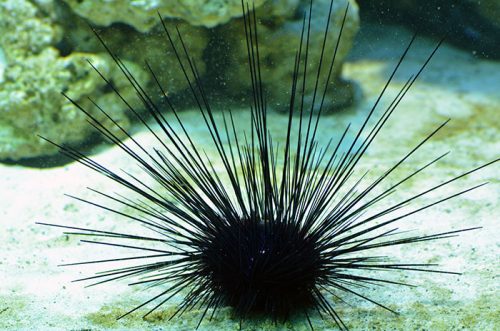
    The Black long spine urchin is mainly found in shallow waters from 1 to 6 m, however it has been observed at depths up to 70 m. It lives on various types of soil, most often on rocky shores and dying coral reefs. It feeds on small algae, which it scrapes with five chisel teeth placed in the mouth opening on the underside of the body. This species has characteristic sharp spines ending with venom glands. On the dorsal side of the sea urchin an anus is placed, marked with interesting colours. Despite their inhospitable appearance, spines are a haven for animals. Razorfishes suspended in water vertically, head down, thus protect themselves from larger predators. A prick of a spike causes a very painful wound and an itchy rash. These symptoms disappear after a few hours, but removing spines from the skin is very difficult, while leaving residue can cause infection.

Skip to content