On the occasion of the upcoming Easter holiday, we wish you joy, good health, and time to spend with your loved ones.
If you would like to spend it by visiting the Gdynia Aquarium, we would like to remind you that the exhibition will be closed on Easter Sunday. On other days, including Easter Monday, we invite you to visit us from 9 am to 7 pm. If you would like to visit us in April, please note that the Aquarium is closed on April 24th.
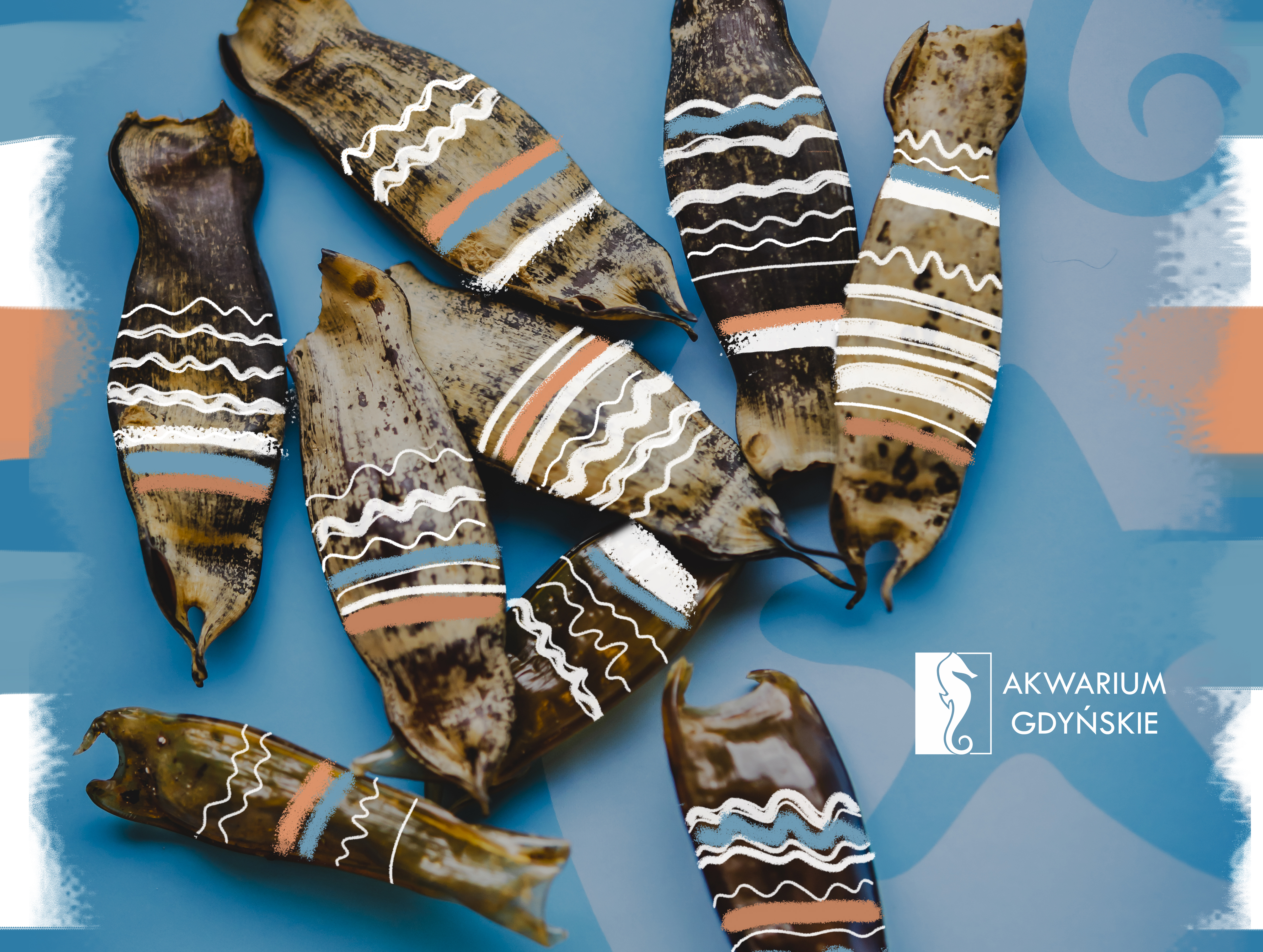
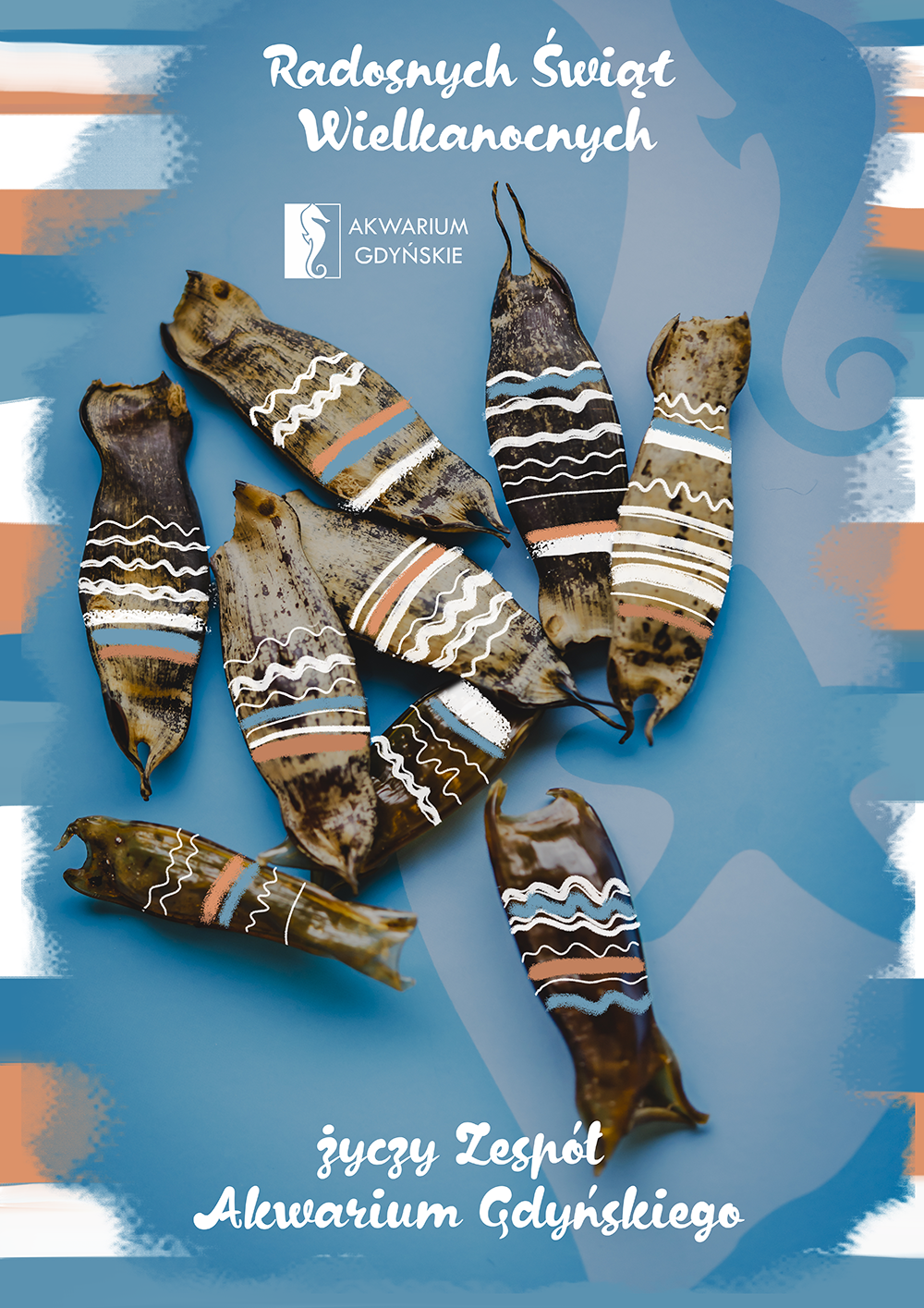
Why are those Easter eggs on the paper so strange?
This is our variation on ‘Easter eggs’ – a picture of eggs from our marble sharks in the form of Easter eggs 😉
For those interested – here’s a little piece of what it’s like to be an aquarist – Easter version – eggs.
We collect newly laid eggs of the marble sharks and transfer them to breeding tanks where conditions are suitable for their incubation.
There are special racks in the breeding tanks, where we attach the eggs using their tendrils.
It’s important that water flows through the eggs, to wash and oxygenate them at the same time.
After about 50 days, a delicate ‘unsealing’ of the egg occurs. At that point, the embryo is no longer tightly enclosed in its shell. This allows it to live and function in the surrounding water.
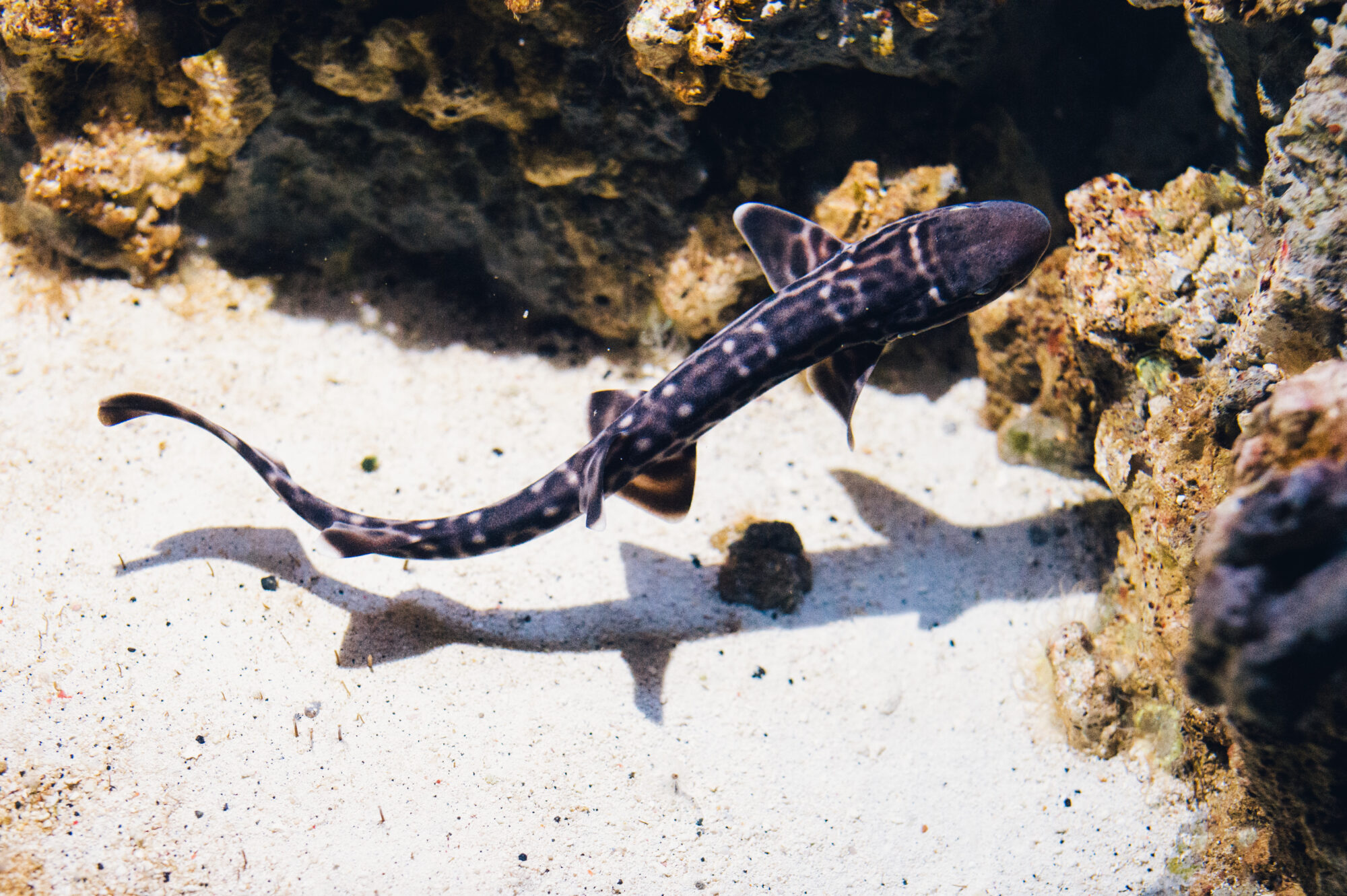
Incubation takes about 90-100 days. In the final period, the young shark no longer fits inside its capsule. It wriggles and nibbles at the capsule. If it can’t get out of the egg, it could lead to its death! Therefore, careful observation is important at this stage.
Often, the young hatch still with remnants of the yolk sac attached to their bellies, which will be absorbed within a few days.
During hatching, young marbled catsharks are about 10 cm long.
Newly “born” individuals are transferred to another tank. Each litter has its own tank, which helps to avoid situations in which older and stronger individuals would steal food from younger and weaker ones.
Feeding trials start with giving them plankton: first live, then frozen. The next step is trying to feed them mussels, shrimps, and chopped fish.
The young have specially prepared hiding places in their tanks. As a secretive species, they need such places.
Shape your future. Small waves create a big ocean!
Network of European Blue Schools
In the period from April to December 2021, the NMFRI Gdynia Aquarium in cooperation with the Environmental Department of the City of Gdynia implemented an education project called “European Blue School Network”. The NMFRI Gdynia Aquarium is an institution committed to providing reliable information about seas and oceans, supporting initiatives for water protection, arousing curiosity and sensitivity in the younger generation, and creating a space for participants of educational meetings to exchange thoughts, opinions, and experiences.
It has been a year since the Aquarium Education Center of Gdynia began building the network of European Blue Schools. In 2021, eleven educational institutions from Gdynia responded to the call of the European Commission’s “Find the Blue” initiative and obtained the certification of a European Blue School through project experience.
We invite you to watch a movie about the project!
On a journey where water was our element, we took 11 schools from Gdynia, which were:
Early Education Team No. 1 (Primary School No. 45)
General Secondary Schools No. 6 (Primary School No. 53 and Primary School No. 49 for the Hearing Impaired)
Primary School No. 8 named after the Defenders of Hel
Primary School No. 21
Primary School No. 34 with Integration Classes named after Leonid Teliga
Primary School No. 35 named after Captain Stanisław Kosko
Primary School No. 37
Primary School No. 40 named after Captain Navy Karol Olgierd Borchardt
Primary School No. 48 named after Professor Kazimierz Demel
Liber Private Primary School
Gdynia Community School
The Network of Blue Schools are educational institutions that include “marine awareness” education in their teaching programs. This is realised through school projects carried out by students under the supervision of teachers or by incorporating knowledge about the sea into various subjects such as biology, geography, art, music, and even foreign languages. Spreading Ocean Literacy is particularly important in the context of the United Nations Decade of Ocean Science for Sustainable Development (2021-2030), whose theme is “the science we need for the ocean we want.”
The NETWORK OF EUROPEAN BLUE SCHOOLS is an initiative of the European Commission, supported by the Directorate-General for Maritime Affairs and Fisheries, developed by partners of the EU4Ocean Coalition.
Discover the Blue
European Blue Schools bring the ocean into the classrooms. On their journey to become part of the network, teachers and students acquire knowledge and begin to better understand and appreciate the impact that the vast body of saltwater has on life on the blue planet. Building awareness and a sense of responsibility encourages students to become more engaged citizens of Europe and the world. The program challenges schools to “Discover the Blue” and investigate their relationship with the ocean while creating networks across Europe.
Why is it worth becoming a European Blue School?
Schools that would like to take on the “Discover the Blue” challenge must identify a marine environment-related topic that is important to their students, and then create a school project related to it. The goal is to make seas and oceans a central part of the curriculum through project-based learning. Student self-reliance, cooperation with people involved in research and protection of aquatic ecosystems, and building communities with similar interests are key values of these initiatives. After successfully completing the “Discover the Blue” challenge, schools receive the European Blue School certificate.
All certified educational institutions become initiators of change for sustainable ocean development, share experiences with teachers and students from other schools in the network, and connect with a wider community engaged in combating marine illiteracy.
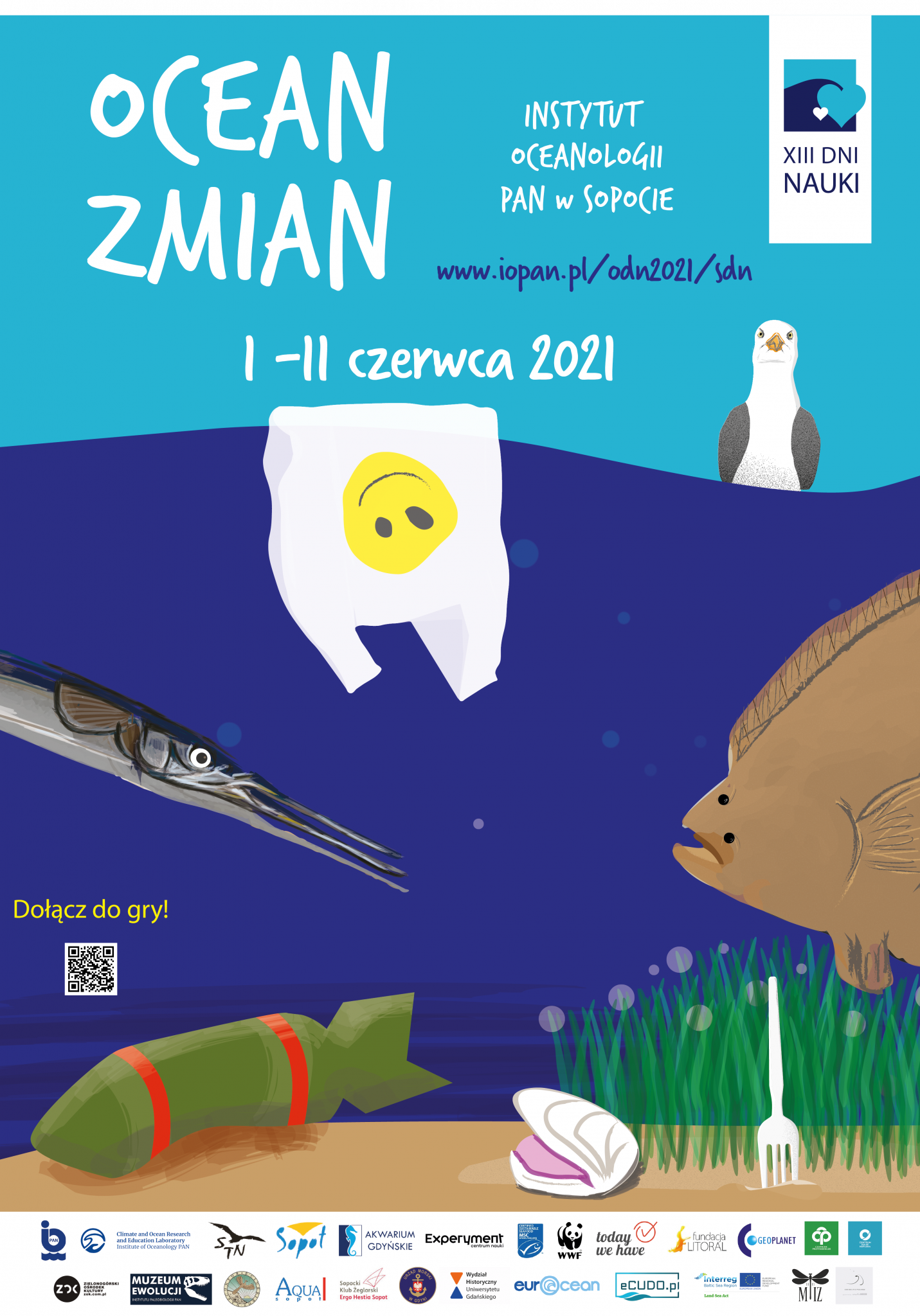
During the “Ocean of Changes” event, we invite participants to explore, experience and discover information about the marine environment. We have only one ocean that provides food, jobs and supports the economies of countries, is a source of inspiration, recreation and discovery, and an important element in the heritage of many cultures. So we invite you to play the municipal game prepared by science-related institutions from all over the Tri-City! The game is played online.
What is it about?
In the game “The Science Agency: In Defense of Truth”, you can visit 15 different Institutions, which will allow you to face a different set of tasks to be solved. It is worth visiting every point, because for each correct solution your position in the Science Agency will increase! As a reward for your progress, you will be given the chance to advance through the ranks of the Science Agency, finally putting your environmental knowledge to the test and earning the title of Doubter’s Fear! More information about the game can be found on the website of the Institute of Oceanology of the Polish Academy of Sciences.
The ocean is a beautiful and rich world, so it must be protected!
On 1-11.06, the combined virtual, city and exhibition space of the Gdynia Aquarium will offer scientific issues as well as those that affect the human imagination. We will discover the stories of the Baltic Sea, show the species diversity of organisms with a typically marine origin and trace the impact of humans on aquatic ecosystems.
If you wander into the Gdynia Aquarium, find 12 animals marked with posters WANTED ALIVE. You will find information that will help to answer the questions of the Science Agency. You have a chance to personally meet the organisms, which are discussed in the marine adventure. However, if you would like to here about them only online, take part in the game or visit our education section.
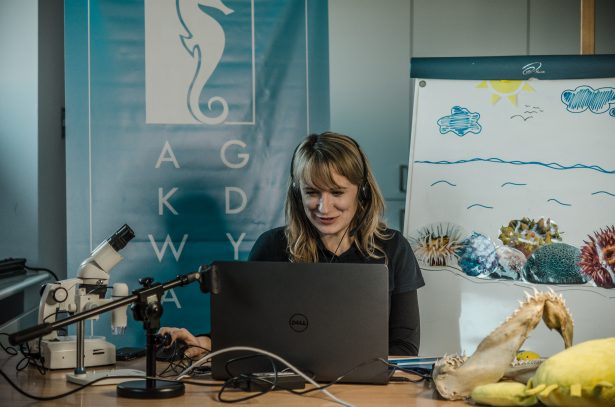
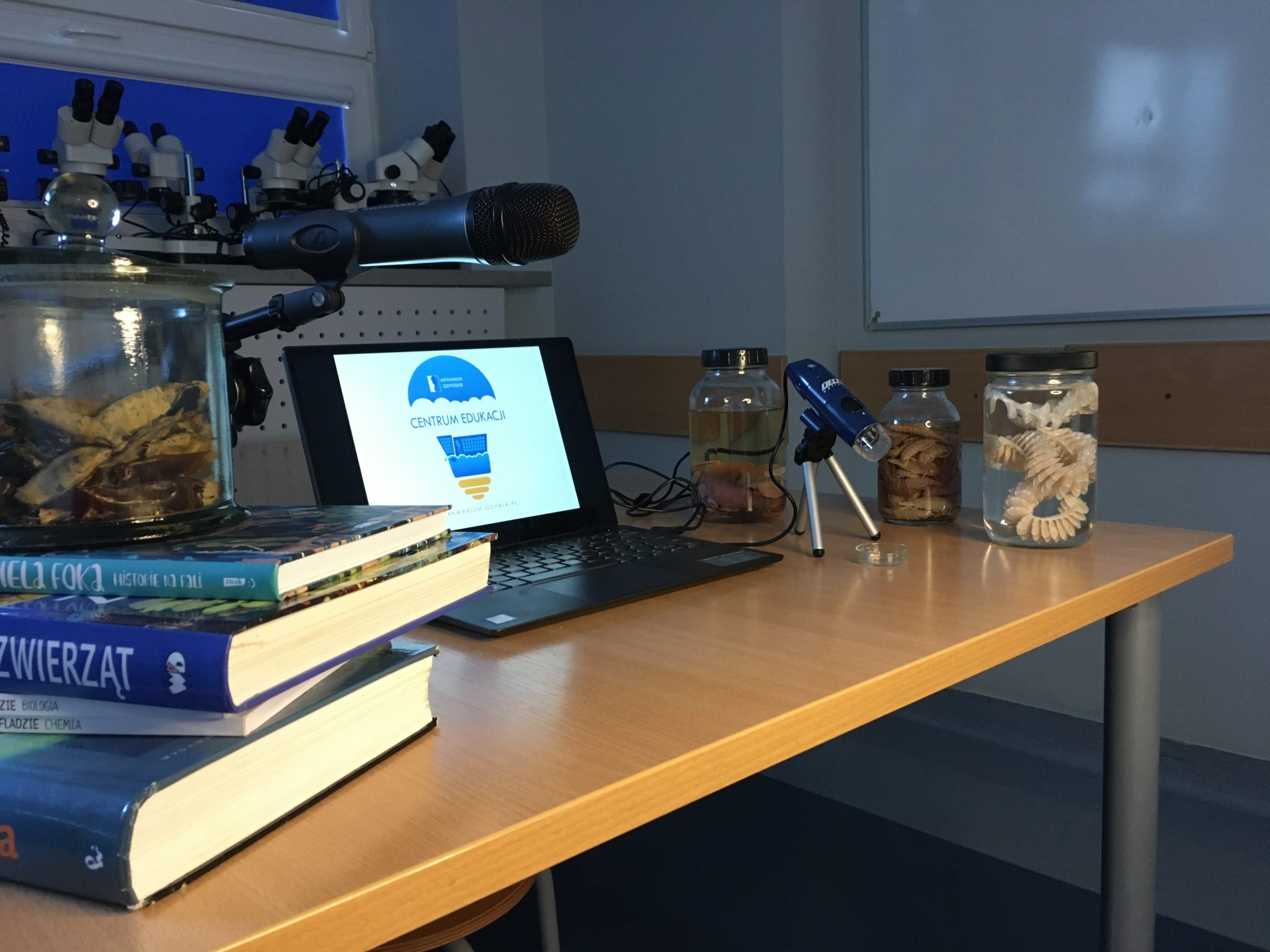
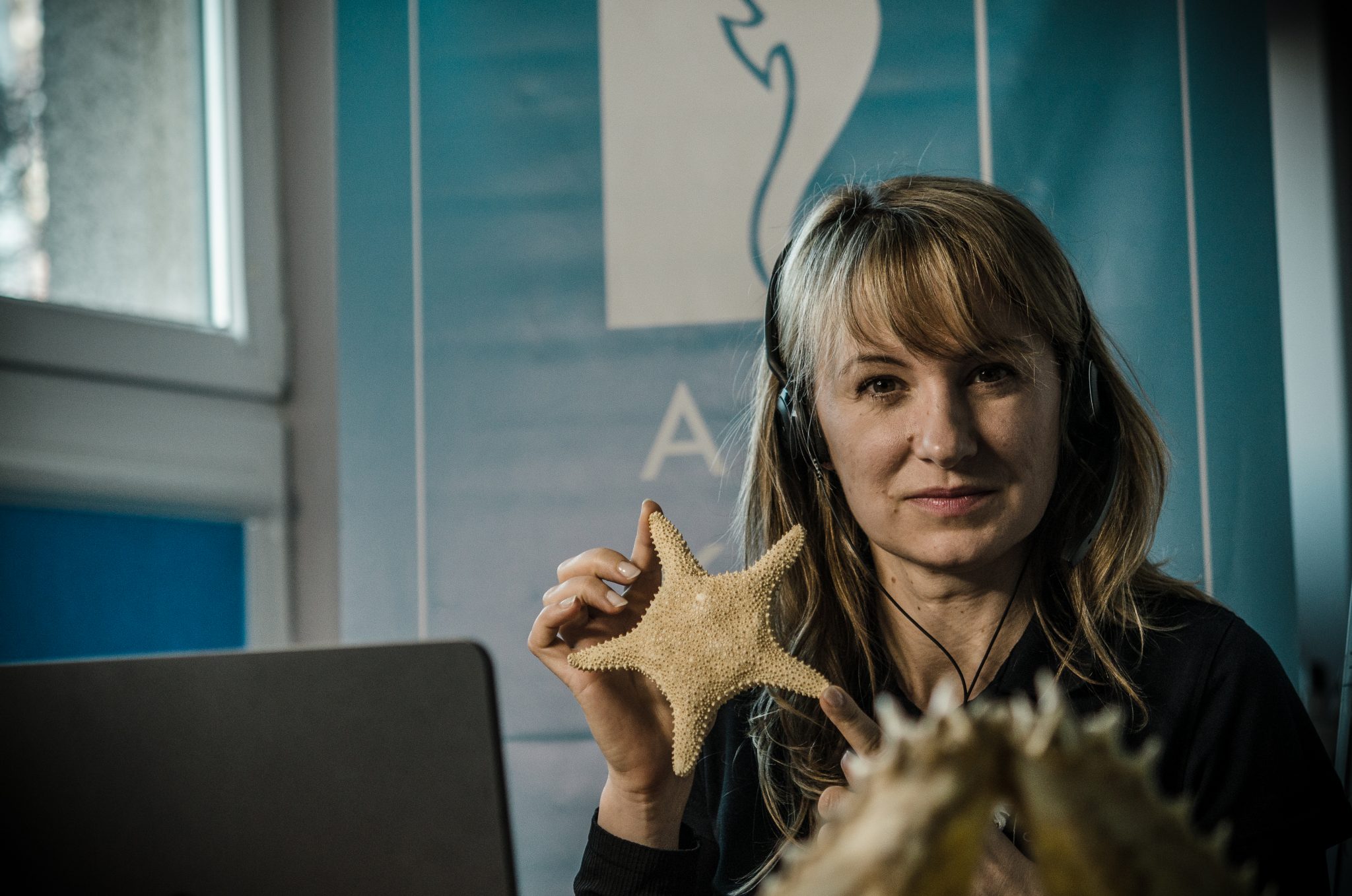
Gdynia Aquarium Education Center invites organized groups to participate in ONLINE CLASSES.
The topics of the classes and their scenarios were prepared on the basis of over 20 years of experience in conducting active marine education by the Gdynia Aquarium and in cooperation with teachers and school groups who helped us test online solutions. Both the enthusiasm of the students and the results of the questionnaire filled in by the group supervisors turned out to be very successful, and therefore we invite you to sign up for online educational classes from the NMFRI Gdynia Aquarium Education Center.
The regular price is PLN 100 per group (up to 30 people).
As in case of the regular classes, the offer is adapted to the age of the participants:
Colorful Life on the Coral Reef (age 4-6)
We live at the Baltic (age 4-6)
The Baltic Sea at large (1-4 class of primary school)
Inhabitants of the Coral Reef (1-4 class of primary school)
Fauna and flora of the Baltic (>4 class of primary school)
Great Barrier Reef (>4 class of primary school)
Let’s meet sharks (>4 class of primary school)
The animals of the Gdynia Aquarium.
Why should you use this offer now?
Year 2021 has officialy begun the Decade for Oceans.
Despite the restrictions related to the pandemic and the difficult situation in schools, neither the natural world nor the sensitivity shaped in young people stand still.
Online classes conducted by the Gdynia Aquarium Education Center are an opportunity to learn about the inhabitants of the underwater world from specialists and without geographical limitations.
Technical requirements
Internet connection speed requirements ensuring smooth connection during online classes are 5 Mb / s data download and 1 Mb / s data upload. With a slower connection, there may be problems with the display of the image and the sound transmission.
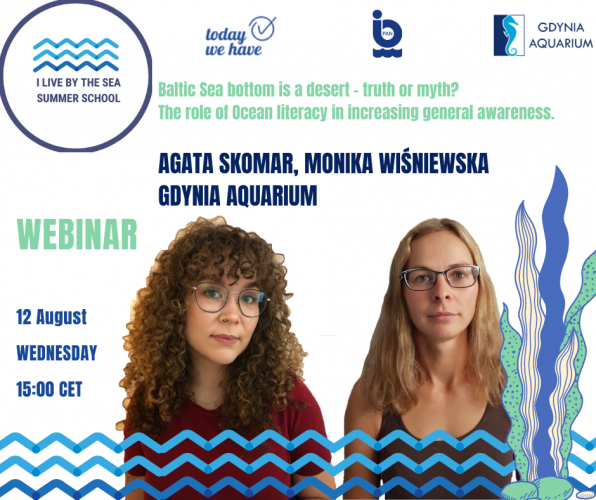
By many of us, the Baltic Sea is treated as a lifeless underwater desert, while in fact, the bottom zone is rich in flora and fauna. We will focus on zoobenthos, which includes organisms that dwell on the seabed regardless of whether they bury in sediments, walk on the bottom or simply just lie/sit on it. We will meet members of a few groups living in the Baltic – oligochaetes, polychaetes, molluscs and crustaceans. It is true however, that, due to periodic or permanent oxygen deficits, lifeless areas occur on the Baltic seabed. Oxygen depletion is mainly caused by eutrophication. Another significant environmental problems involve remnants after World War II that pollute the sea water. Will the pollution deprive the Baltic Sea of life? You will receive the answer during a webinar with educators from the Gdynia Aquarium.