Skip to content

Reptiles and amphibians

  • Dwarf crocodile

    Dwarf crocodile

    Osteolaemus tetraspis

    Order: Crocodilia | Family: Crocodylidae
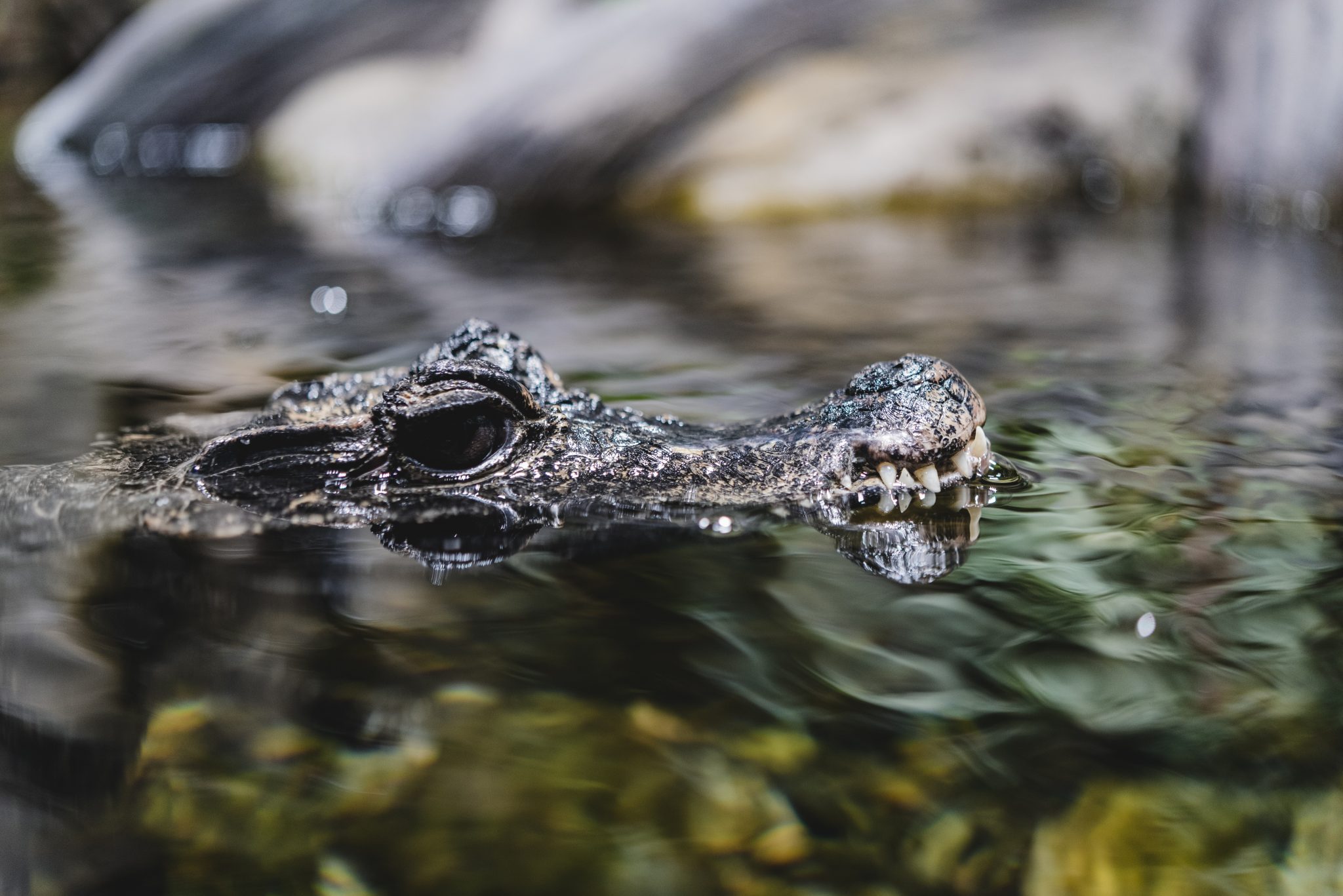
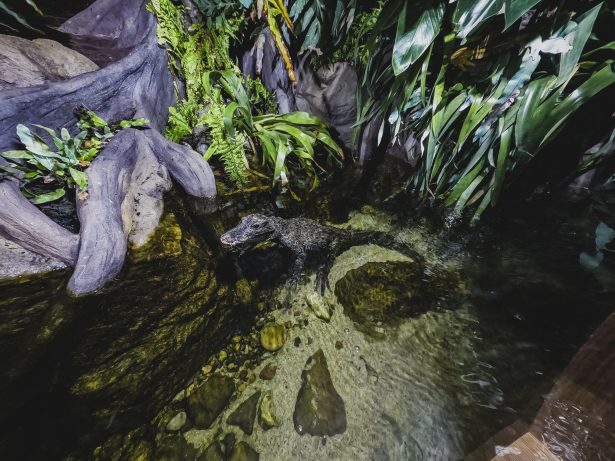
    The dwarf crocodile, the smallest species of crocodile, can be found in the tropical regions of Western and Southern Africa, including Senegal in the west, Uganda in the east, and Angola in the south. So far, two subspecies have been identified, O. tetraspis tetraspis and O. tetraspis osborni, but genetic analysis has revealed three distinct populations that should be treated as separate species. Each of these populations lives in a different region: O. tetraspis in Central Africa (excluding the Congo River Basin), O. osborni in the Congo River Basin, and an as-yet unnamed species that occurs in Western Africa. This crocodile prefers to live in shadowed, boggy forests or small, muddy, forested ponds that are often far away from large rivers, streams, and small rivers. It can also be found in saltwater in mangrove areas, but it avoids large rivers in their main sections. During the day, it hides in dug-out burrows or under flooded tree roots, whereas at night it is active and hunts both in water and on land at a certain distance away from water. Its diet consists of small animals, such as annelids, snails, insects, crabs, frogs, lizards, fish, water birds, and bats.

    Interestingly enough, it will also eat fruit.

    The largest specimen of this species was 1.9 m long, while the average length is around 1.5 m. O. osborni is the smallest of the separate species, not growing larger than 1.2 m, but it is also the most bulky of the crocodiles. Adults usually weigh between 18 and 32 kg, while the largest females can weigh up to 40 kg, and the largest males up to 80 kg. Its head is characterized by its blunt, short snout, with teeth adapted to crushing the shells of mollusks and the carapaces of crabs. Due to its small body size, the dwarf crocodile has a strongly armored neck, back, and tail, as well as osteoderms on its belly and the underside of its neck. Its eye color is unusual, appearing brown instead of the yellow-green found in other types of crocodiles. Adults have dark bodies with black patches that are also present on their yellow bellies. Individuals living in caves can have orange patches, probably due to bat guano that erodes the crocodile’s skin. Juveniles have a dark coloration with brown stripes on their body.

    When the young are ready to hatch, they produce sounds that attract the female. She helps them get out of the eggs and carries them to water. The young, after leaving their eggs, communicate with the female and between themselves through characteristic sounds.

    The dwarf crocodile leads a solitary life, gathering in groups only during the breeding season, which coincides with the wet season. During this time, females build nests out of decaying plants, where they lay around 10 eggs, although they may lay up to 20 eggs. These plants provide the ideal temperature for the incubation of the eggs, which the female guards. When the young are ready to hatch, they produce sounds that attract the female, who then helps them emerge from the eggs and carries them to water. The young communicate with the female and among themselves through characteristic sounds. The female looks after the young in the water because they may fall prey to predators. The young reach sexual maturity at a length of 1 meter for females and 1.3 meters for males. This species is successfully reproduced in captivity, and while juveniles are docile and non-aggressive, adults can be aggressive, depending on the individual’s territorial instincts.

    The Dwarf crocodile on the IUCN list

    This species is considered vulnerable and is under international protection. It is listed in Appendix I of CITES and Appendix A of the EU. Its population in the wild is said to be between 25 and 100 thousand, but it is hard to estimate due to the crocodile’s tendency to hide. Humans are the biggest threat to these animals. Indigenous people hunt them for their meat and skin.
  • Common snapping turtle

    Common snapping turtle

    Chelydra serpentina

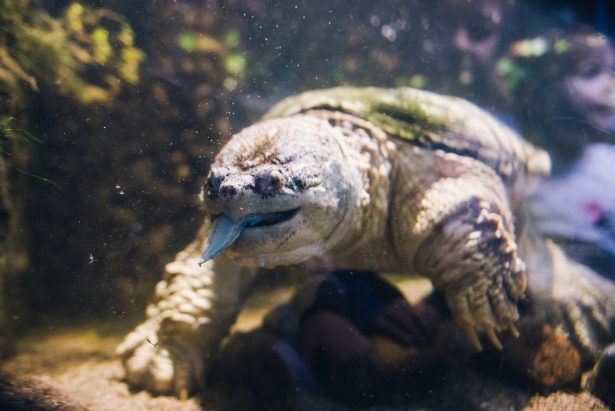
    The Common snapping turtle inhabit different types of freshwater reservoirs: rivers, lakes, reservoirs and swamps. They feed on both plant and animal food. They also supplement their diet with fish, small birds and plants with carrion. In the wild, lizard turtles can live 30 years, in breeding conditions up to 50. Because they can not hide completely in their shell to protect themselves from danger, they defend themselves by snapping their mouths formed in a sharp beak. They can be very aggressive.

  • Mexican walking fish

    Mexican walking fish

    Order: Amphibia
    Family: Ambystomatidae

    Ambystoma mexicanum

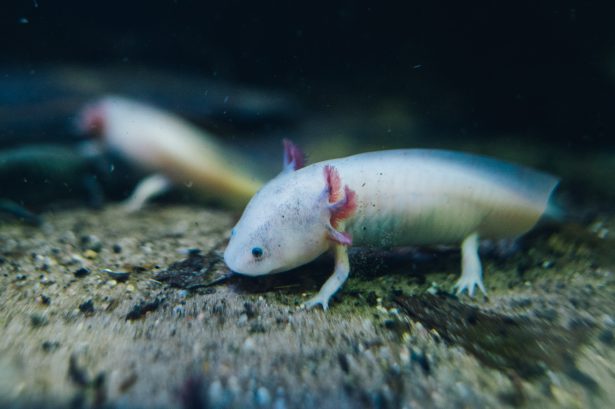
    The axolotl is an endemic species (i.e., that it is unique to a site or region and does not naturally occur outside of it) to the freshwater waters of Lake Xochimilco, located south of Mexico City. Previously, this species was also found in Lake Chalco, but it was practically completely dried to prevent periodic flooding. Thus, the natural range of the axolotl was limited only to water channels with an area of about 40 km². This does not mean, however, that it can be found in Lake Xochimilco, because its environmental requirements are high, and the progressive environmental degradation and water pollution are not conducive to its development.

    This animal prefers clean, well-oxygenated, cold waters with a sandy bottom abundantly covered with vegetation. It mainly leads a nocturnal lifestyle, and during the day it most often stays close to the bottom, where it looks for a hideout. This amphibian grows up to about 30 cm in length, and the average life expectancy is 10 years, although there are also specimens that live up to 25 years. The axolotl spends all its life in the larval stage. This is due to the low functionality of the thyroid gland, which is responsible for the production of the hormone (thyroxine) responsible for the transformation into the terrestrial form.

    On both sides of the flat head there are 3 pairs of branched external gills, which are typical of the larval forms of amphibians. Its appearance is characterized by a wide mouth, thanks to which the animal looks eternally smiling, and small, black eyes. Its body is massive, flattened on the back and ends with a massive tail with a tall caudal fin. The limbs are short and delicate. In the wild, its body is dark gray or brown in color with numerous dark spots. Breeding forms show a greater variety of coloration. From practically transparent, through white, white-pink, beige, golden, copper, through various shades of gray to brown. An axolotl is a predator with rudimentary teeth that locates its prey by its sense of smell. It feeds at dusk on small aquatic animals that fit in its mouth. His menu includes, among others molluscs, insects, crustaceans and small fish. It can also eat other members of its species. When the density of individuals is too high, they bite each other, biting off legs and tails, but due to the high regenerative capacity of these animals, the limbs grow back.

    The axolotl is a dioecious species. The male and female can be distinguished by the appearance of the cloaca. There is a bulge in the male near the cloaca, while in the female it is flattened. Despite the fact that axolotls remain in a larval form throughout their life, they reach sexual maturity and are capable of reproduction (neotenia). Breeding is preceded by matings, which consist in poking the cloaca area of ​​the opposite sex, making the animals move in a circle, which looks like a waltz. The male then moves away, undulating with his back and tail, resembling a hula dance, and the female follows him. The male lays the spermatophore (a bundle of sperm surrounded by a sheath), which the female then collects into her cloaca. A few weeks after fertilization, the female lays gelatinous squawk that it sticks to the plants with its hind legs. It can contain from 100 to 800 eggs, of which, after about two weeks, larvae less than 2 cm long hatch. After about a year and a half, the young reach sexual maturity. In their natural environment, axolotls were the leading predators until the water bodies were enriched with large predatory fish that feed on these amphibians. In the past, they were also eaten by local people and generally available for purchase at fairs, but due to the degradation of their natural environment and the drastically declining population, they have been legally protected, and selling them is prohibited. In the Red List of Threatened Species, the axolotl has the status of an extremely endangered species. Since 1975, it is also on the II list of the Washington CITES Convention on international trade in endangered species of wild animals and plants. In order to prevent further changes in their natural environment, also the remnant of the once large Lake Xochimilco was inscribed on the UNESCO World Heritage List in 1987. Despite these efforts, the population of the axolotl in nature is still very low. In 2008, their estimated number was 100 individuals per km², but it is still significantly decreasing. In 2013, only 2 individuals were caught.

    The use of the Mexican axolotl in medicine

    The axolotl can regenerate a bitten off limb, gills, tail, and internal organs such as the heart and brain. It can also regenerate a damaged spinal cord. This gives hope to use it as a preclinical model in regenerative medicine and integrative biology. This can help patients with diseases of the central and peripheral nervous system. In addition to their high ability to regenerate tissues, these amphibians show remarkable resistance to cancer. Using it as a model organism offers a unique opportunity to research cancer and discover anti-cancer drugs and mechanisms responsible for controlled cell growth and regeneration. Overall, the axolotl is an important research animal used in research in the fields of transplantation, gene expression regulation, embryology, neurobiology and regeneration.

    Polish contribution to axolotl research

    Axolotls have been bred since the 19th century. Due to their form of life and high regenerative abilities, they have become the focus of research. In 1917, the Polish researcher Laura Kaufmann, by administering thyroid hormone to ambystomas, transformed them into a land form. During the transformation, the appearance of these animals changes, the external gills and caudal fin gradually disappear, and the end of the tail becomes rounded.

     text prepaired by Monika Wiśniewska


  • Green anaconda

    Green anaconda

    Eunectes murinus

    Legends about the deadly man-eaters, reaching monstrous dimensions, have often found their reflection in mass culture. Certainly they were the inspiration to create entertainment class B movies. The Green anaconda belongs to the subfamily boa (Boa). It is noteworthy that all anacondas are found only in South America and are viviparous.

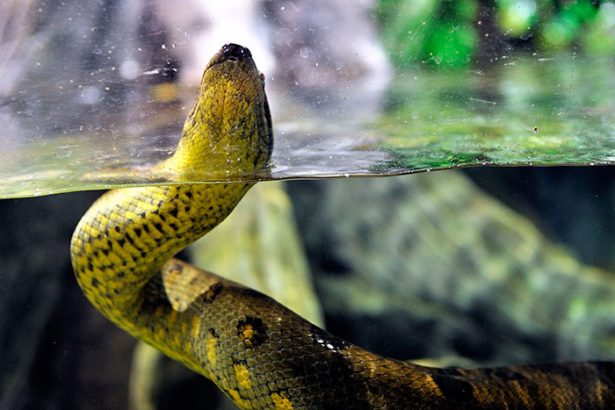
    The animal leads an amphibious lifestyle. This snake inhabits shallow, slowly flowing freshwater habitats, as well as tropical meadows and rainforests with dense litter. The Latin part of the name Eunectes comes from the Greek language and means “good swimmer”. On land it is slow and sluggish while in water it can reach speeds of up to 20km/h. The Green anaconda has pronounced sexual dimorphism. Males grow up to about 3 meters in length, while females rarely exceed 6 meters and these are cases mainly of captive individuals.

    Anaconda definitely doesn’t hunt people. On the contrary. The folklore of indigenous peoples of Brazil and Peru considers this creature magical, which is why body parts are sold for the purpose of performing rituals and treating various ailments. It should be noted that this strangler is one of the few snakes whose body proportions in fact would allow human consumption. However, our body structure, and precisely the shoulder width and width do not allow us to join this reptile’s menu. All snakes in the world swallow their prey starting from the head, so especially for us, the Green anaconda would have to change its current hunting technique. If it comes to meeting a human, the snake will try to bury itself in the litter or mud, or run to the nearest water. If that’s not enough, it will shoot a smelly substance  towards the attacker from the anal glands.

    The Green anaconda, despite its deadly snake patch, is not really a threat to humans. Scientists agree that the population of this species, although still stable, requires protection. Shrinking habitats, caused by draining wetlands for arable fields and massive felling of forests cause that there is slowly no more place in the world for this snake. Hunting does not help in the condition of the species. Despite its longevity, strong anthropopressure, unfortunately, does not allow these reptiles to grow to a larger size in peace. If this continues the fate of the anaconda, it will inevitably turn out that we will only be able to admire six-meter specimens in zoos. Environmental degradation, as well as man himself, contribute to the fact that the impressive dimensions of this reptile are significantly reduced.

    The Green Anaconda is included in Appendix II of the CITES.

Skip to content