Skip to content

Uncategorized

  • Yellow tang

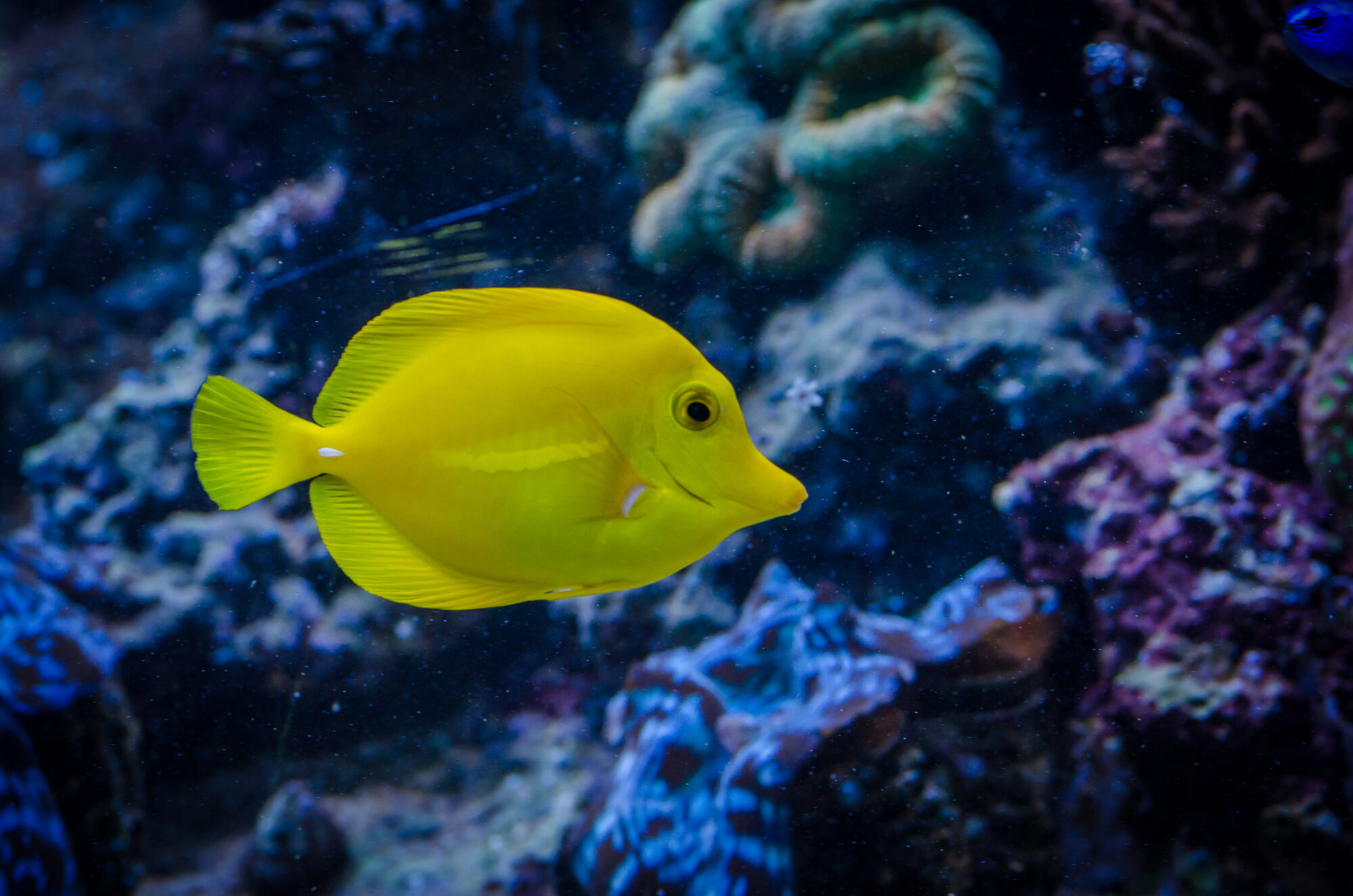
    Yellow tang

    Zebrasoma flavescens

    Order: Perciformes | Family: Acanthuriade
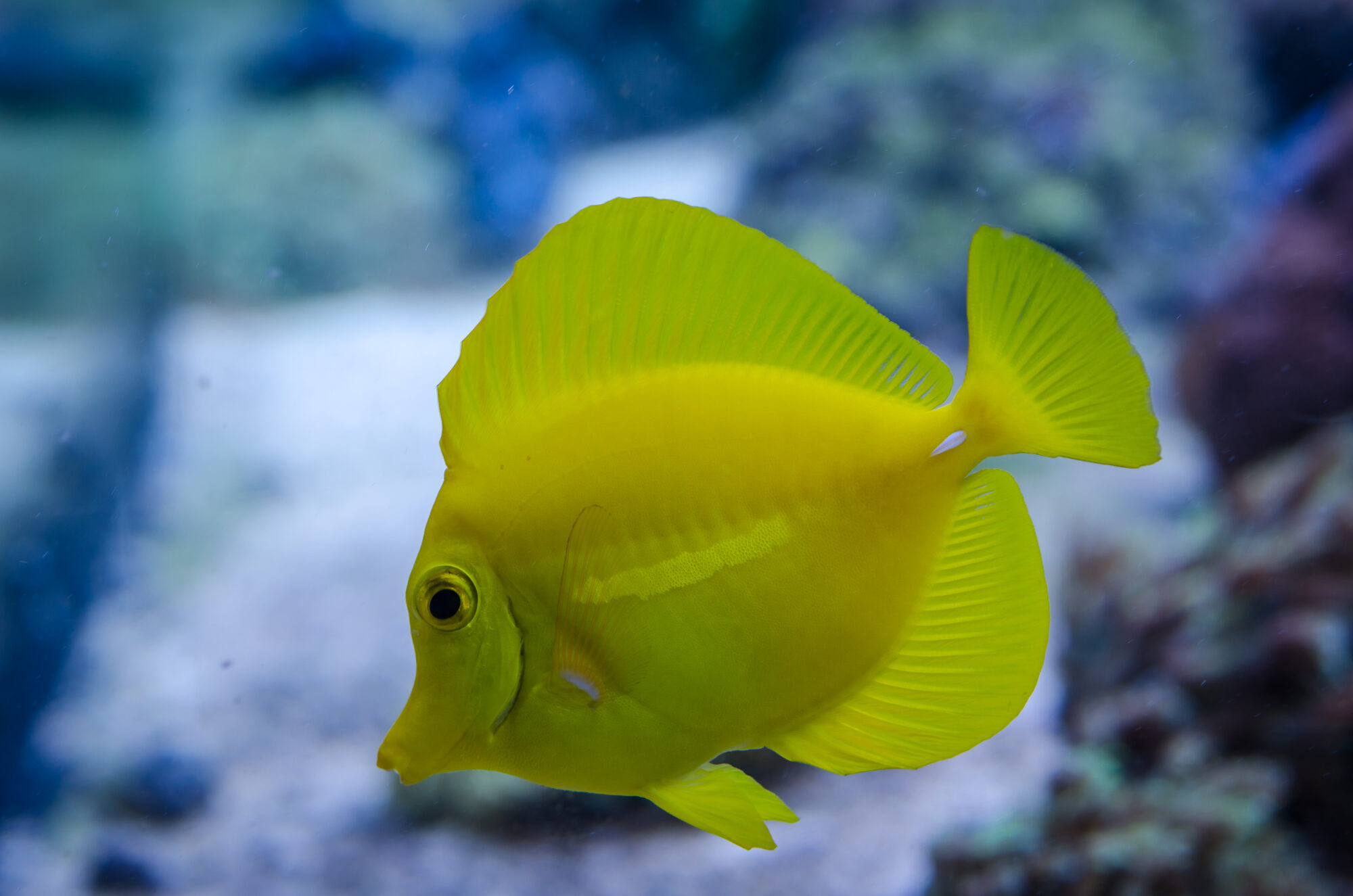
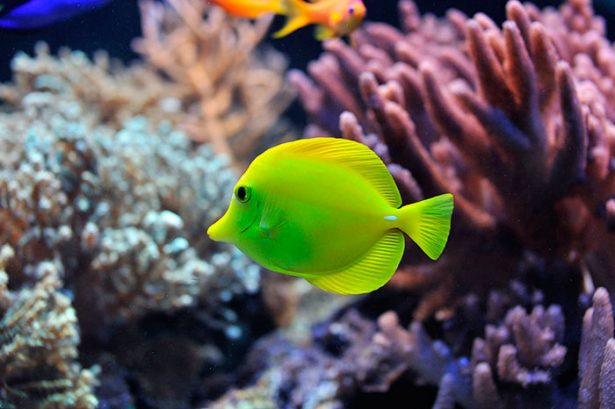
    This species can be found in the waters of the Eastern and Southern Pacific Ocean, around the Philippines, Vietnam, Papua New Guinea, Guam, Southern Japan, Micronesia, Hawaii, and the Marshall Islands. It is most prominently found in Hawaii, where it’s used as an aquarium fish. It inhabits regions with a lot of coral and lagoons on the edges of reefs. It is possible to find this fish anywhere from 20 to 40 meters below the surface, but it’s more common to appear around the 20-meter mark. Its sustenance is comprised mainly of algae that grows on corals and the seabed. It has the habit of cleaning the algae that grows on the shells of turtles. It can live longer than 40 years, and it can grow to 20 cm in length. It grows very quickly in the first years of its life; a two-year-old fish can already be 10 cm long. After reaching maturity at around 5 years, the growth slows down heavily. Females reach maturity earlier, at around 3-4 years of age, while males take 4-5 years. As a result, females tend to be smaller. It can be found alone, in pairs, or in small groups in the wild, but it doesn’t stay in those groups for life. It is aggressive towards other representatives of the Acanthuridae family. It’s a very active and curious fish during the day, and at night, it looks for shelter.

    The body of the yellow tang has a characteristic vibrant yellow color, which pales during the night, and its sides develop a darker coloring.

    Like other Acanthuridae, it has two sharp spikes at the base of its tail to protect itself or to help during battles for territory. It most probably does not have a poisonous gland next to those spikes. It is dioecious and egg-laying. Spawning occurs in pairs or small groups, and it’s tightly connected to the phases of the Moon. Males demonstrate interesting mating dances during spawning.

    Daily travels of the yellow tang

    There is a distinct division in terms of habitat between juvenile and adult fish. The juveniles inhabit the deeper regions of coral reefs, where they find shelter. After reaching maturity, they change their habitat to shallower regions, which have abundant algae growth and greater biodiversity. The daily migration of juveniles isn’t as extensive as the migration of adults, which can cover even 800 meters between their day and night shelters. They spend their day seeking food in the shallow (<10m) regions rich in algae, and at night, they look for shelter in the deeper parts of the reefs.
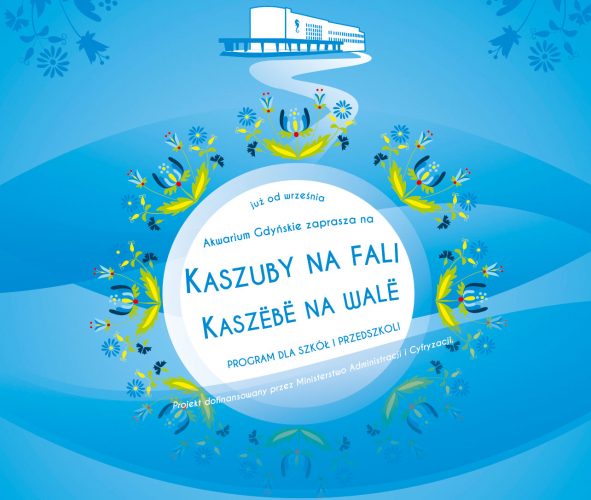
  • Kashubia on the wave 2017

    Kashubia on the wave 2017


    Classes co-financed by Ministry of Internal Affairs and Administration.
    Age group: preschoolers, primary school students
    Cost: free
    Sign up!

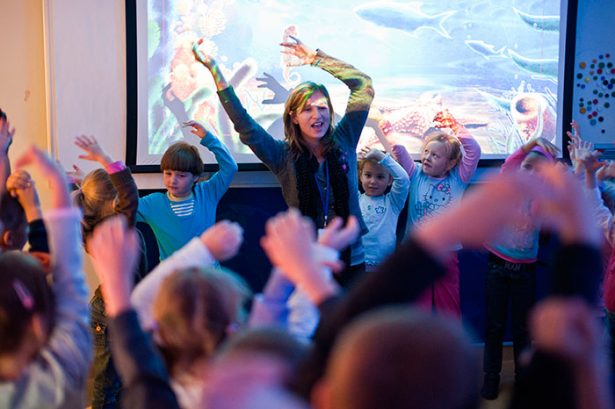
    The “Kaszuby on the wave” project, co-funded by the Ministry of Internal Affairs and Administration, is a unique form of natural-language education. In the regional Kashubian language, participants learn about the marine environment. The Kashubian mentality was influenced by the presence of lakes, forests and the sea. Fisheries were – apart from agriculture – a leading occupation of the Kashubian population. That is why it is so important to educate younger generations and to raise awareness of the threats to Baltic fauna and flora caused by human activities.

    “Learn to keep” is the slogan of this project. By learning the language, culture, and the world around us, we build a sense of responsibility for the sustainability of our cultural heritage.

    Classes are performed by a Kashubian teacher and a specialist responsible for the correctness of the biological content. The Kashubian-Pomeranian Association is our partner in this project.

    Classes booking: +48 587 326 620
    Project coordinator: Mirosława Raczkowska | +48 587 326 624 | e-mail:mira@mir.gdynia.pl


      • Early education classes

        Early education classes


        Educational space: Preschool Room
        Maximum number of participants: 30
        Classes duration: 60-90 min.
        Cost: 175 zł

        Classes in the Gdynia Aquarium are suited to the needs of the audience. The following classes are recommended for the preschools.


            • CITES

              CITES

              According to the World Union for Conservation of Nature (IUCN) one of the most important factors influencing the reduction of biodiversity on Earth is overexploitation of species by humans. In the early 1970s, a special international agreement was established, called the Convention on International Trade in Endangered Species of Wild Fauna and Flora (CITES).

              The Washington Convention, through a system of special permits, regulates the international (cross-border) trade in specimens of certain plant and animal species, as well as products derived from them, such as watch straps made of crocodile skin. Presently CITES covers about 30 thousand plant species and 5.6 thous. animal species. Species included in the Washington Convention are in 3 annexes (denoted by Roman numbers: I, II and III) and, depending on the annex they appear, the agreements differ slightly.

              Aquarium is a shelter for animals from the CITES list. Some of them come from illegal transports detained in Poland by customs officers. Most of the CITES species in the aquarium are from Annex II.

              Annex I

              Contains a list of endangered species for which trade for commercial purposes is prohibited.

                Annex II

                Contains a list of species that are not necessarily endangered by extinction, but uncontrolled trading could quickly lead to their extinction. Therefore, the export or import of these species (as well as the products thereof) must be authorized.

                  Annex III

                  Lists the species that are protected in a given countries.

                  Skip to content